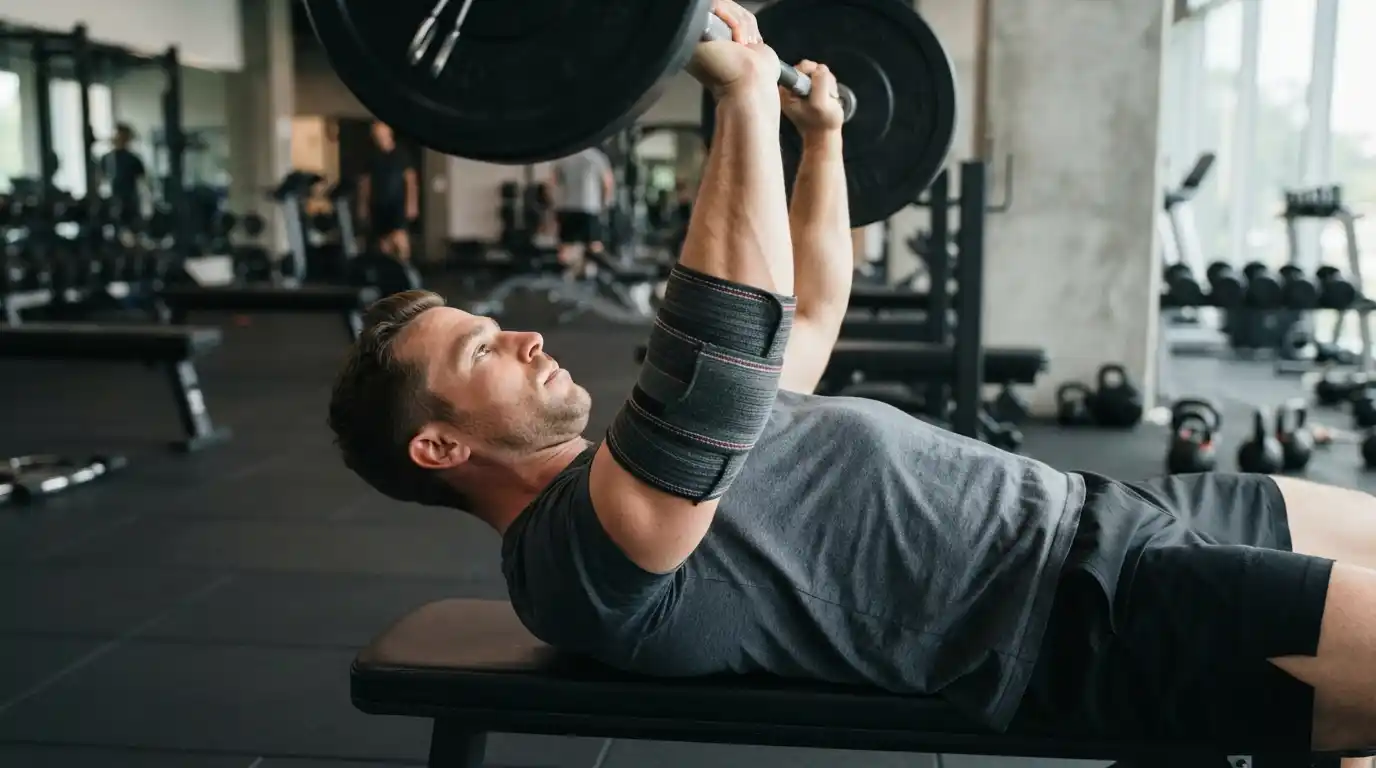
Elbow wraps are not a replacement for sound technique, progressive programming, recovery, or professional medical care. Instead, they can be used as part of a broader training strategy designed to improve joint support and help athletes feel more secure during demanding sessions.
This guide explains what PR Lifestyle elbow wraps are, how they can fit into strength training, what to look for when choosing elbow support, how to wear and maintain wraps, and which training habits can complement their use.
What Are PR Lifestyle Elbow Wraps?
PR Lifestyle elbow wraps are designed to provide compression and support around the elbow during physical activity. The basic purpose of an elbow wrap is to create a secure feeling around the joint while still allowing the arm to move through its normal range of motion.
For athletes, that combination matters. A support that is excessively rigid may interfere with movement, while one that is too loose may move around during a workout. A well-fitted wrap aims to find a practical middle ground between stability and mobility.
Elbow wraps can be particularly useful during exercises that place considerable demands on the arms and elbows. Bench pressing, overhead pressing, triceps work, curls, and other upper-body movements may all involve repeated elbow flexion and extension.
That makes proper equipment selection important, but it should always be considered alongside good training habits. Readers interested in the wider connection between physical activity and wellness may also benefit from exploring total wellness and fitness strategies.
Why Elbow Support Matters During Strength Training
The elbow is involved in a huge number of upper-body movements. Every repetition of a curl, press, push-up, or triceps exercise requires coordinated movement between the upper arm, forearm, muscles, tendons, and surrounding connective tissues.
When training volume becomes high, repetitive loading can make joint comfort increasingly important. This is especially true for athletes who train several times each week or regularly work with challenging weights.
An elbow wrap can provide a feeling of compression and stability that helps an athlete remain focused on the movement instead of constantly thinking about joint positioning. That psychological component can be valuable during demanding sessions.
However, support equipment works best when it complements fundamentals rather than compensating for poor technique. A strong training foundation should include appropriate warm-ups, controlled repetitions, sensible progression, adequate recovery, and exercises suited to the athlete’s ability.
Potential Benefits of PR Lifestyle Elbow Wraps
1. Added Joint Support
The most obvious reason to use an elbow wrap is support. A properly positioned wrap can create a snug layer around the joint, giving the athlete a greater sense of stability during demanding movements.
This can be especially noticeable during pressing exercises where the elbows repeatedly move under resistance. The feeling of additional support may make the movement feel more controlled and predictable.
2. Greater Training Confidence
Confidence matters when performing strength exercises. Hesitation can affect concentration, movement consistency, and willingness to complete a challenging set.
Wearing an elbow wrap can provide reassuring physical feedback. When an athlete knows the joint is supported, it may become easier to concentrate on technique, breathing, tempo, and the intended movement pattern.
3. Comfortable Compression
Compression is another important feature of elbow support. A wrap that fits correctly can provide consistent contact around the elbow without becoming distracting during movement.
The goal should never be maximum tightness. The best fit is one that provides useful support while allowing normal movement and avoiding excessive pressure.
4. Support During Repetitive Training
Athletes who perform repetitive upper-body exercises may appreciate additional support during selected workouts. This can be particularly relevant for people whose training includes frequent pressing, pulling, curling, or triceps-focused movements.
Still, wraps should not be used to ignore persistent pain. If discomfort continues, worsens, or affects normal movement, training should be reassessed and appropriate professional advice should be considered.
How Elbow Wraps Can Fit Into a Training Routine
Elbow wraps are most useful when they become part of a thoughtful training routine rather than something used randomly. Start by identifying the exercises where additional support is genuinely useful.
For example, an athlete may choose to use wraps for heavier pressing sets while completing lighter warm-up movements without them. Another athlete may prefer using them during high-volume upper-body sessions when repeated elbow movement becomes more demanding.
The right approach depends on the individual’s training goals, comfort, experience, and equipment preferences.
For athletes interested in broader sports and performance topics, sports performance and limitless potential provide useful context for thinking about consistency, preparation, and long-term progress.
Best Exercises to Consider With Elbow Wraps
Bench Press
Bench pressing involves significant elbow movement and is one of the exercises where some lifters prefer additional elbow support. Wraps can help create a secure feeling around the joint while the athlete concentrates on bar control and pressing mechanics.
Overhead Press
Overhead pressing places repeated demands on the shoulders, arms, and elbows. A properly fitted wrap may provide additional support without preventing the elbow from moving naturally.
Triceps Exercises
Exercises such as extensions, pushdowns, and close-grip pressing repeatedly involve elbow extension. Athletes who perform substantial triceps volume may find elbow support useful during selected portions of their workouts.
Biceps Curls
Curls require repeated elbow flexion and can become demanding when performed with heavy loads or high volume. A wrap can provide a feeling of stability around the joint, although correct lifting technique remains the priority.
Anyone building a more complete fitness routine should also consider the relationship between exercise and overall health. Health and wellness planning can provide useful perspective when developing sustainable habits.
How to Wear PR Lifestyle Elbow Wraps Correctly
Correct positioning is just as important as the wrap itself. Start by placing the wrap around the elbow area according to its intended design and secure it so that it feels supportive without creating excessive pressure.
The wrap should remain stable as the arm moves. If it continually slips, bunches up, or becomes uncomfortable, the positioning or tightness may need adjustment.
Athletes should pay attention to how their hands and forearms feel after putting on the wraps. Numbness, unusual tingling, excessive pressure, or changes in normal circulation are signs that the wrap is too tight or needs to be repositioned.
It is also worth practicing with the wraps during moderate training before relying on them for a demanding workout. This gives the athlete an opportunity to learn how the support feels during different exercises.
Elbow Wraps vs. Generic Support Bands
Not every elbow support product provides the same experience. Generic elastic bands may offer basic compression, but they may not provide the same level of stability, adjustability, or training-specific support that athletes expect from purpose-designed wraps.
When comparing options, consider material quality, elasticity, width, closure system, comfort, durability, and how securely the wrap stays in position during movement.
The right choice ultimately depends on the athlete’s training style. Someone performing occasional recreational workouts may have different requirements from a powerlifter or strength athlete who trains several days each week.
Training Support Is About More Than Equipment
Elbow wraps can be useful, but they should be one small part of a complete approach to performance. Equipment cannot replace proper movement mechanics, sensible programming, recovery, or adequate preparation.
A strong routine should include a gradual warm-up before demanding sets. Starting with lighter resistance allows the body to prepare for heavier work while giving the athlete an opportunity to assess how the joints feel that day.
Training variety can also be useful. Repeating the exact same movement patterns with high volume can make recovery more difficult, so balanced programming should consider exercise selection, intensity, volume, and rest periods.
For a broader look at physical activity and lifestyle habits, understanding sedentary lifestyle risks highlights why regular movement and healthy routines matter beyond individual gym sessions.
Common Mistakes When Using Elbow Wraps
Wearing Them Too Tight
Tighter does not automatically mean better. Excessive pressure can make a wrap uncomfortable and may interfere with normal circulation or movement.
Using Them to Ignore Pain
An elbow wrap should not be treated as permission to train through persistent or worsening pain. Support equipment may improve comfort, but it does not diagnose or resolve an underlying injury.
Depending on Them for Every Exercise
Some athletes may benefit from using wraps selectively rather than keeping them on throughout an entire workout. This can help maintain a balanced approach to training support.
Ignoring Technique
Even the best support equipment cannot correct poor lifting mechanics. Controlled repetitions, appropriate loads, and sound exercise technique remain essential.
Neglecting Recovery
Recovery is a major part of performance. Adequate sleep, nutrition, rest days, mobility work, and sensible training volume all contribute to long-term progress.
How to Maintain Elbow Wraps
Regular maintenance can extend the useful life of training equipment. Follow the manufacturer’s care instructions whenever available, particularly when it comes to washing and drying.
In general, inspect the wrap regularly for stretched material, damaged stitching, weakened fasteners, or other signs of excessive wear. A wrap that no longer stays securely positioned may not provide the support expected from it.
Keeping workout equipment clean is also important. Sweat and repeated use can affect fabric over time, so proper cleaning and thorough drying can help maintain comfort and freshness.
Who May Benefit From Elbow Wraps?
Elbow wraps may appeal to a wide range of active people, including recreational gym users, strength-training enthusiasts, powerlifters, athletes, and individuals who regularly perform upper-body resistance exercises.
They can be particularly appealing to people who value a secure feeling around their elbows during heavier or higher-volume training sessions.
However, not everyone needs elbow wraps. If your workouts are light, your elbows feel comfortable, and you have no reason to seek additional support, using wraps may not provide a meaningful advantage.
The key is to treat them as optional training equipment rather than an essential requirement for making progress.
Building a Safer and More Consistent Fitness Routine
Long-term performance comes from consistency. Instead of relying on one piece of equipment to solve every training challenge, combine appropriate support with good programming and healthy lifestyle habits.
Strength athletes can also benefit from understanding their broader physical preparation. For example, sports physicals and training readiness can be part of a responsible approach to athletic participation.
People who participate in different sporting activities may also find value in exploring sports and athletic performance, athletic training opportunities, and active sports experiences when considering how different forms of activity contribute to an active lifestyle.
What to Look for When Choosing Elbow Wraps
If you are comparing elbow wraps, focus on practical features rather than marketing claims. Material quality should be high enough to withstand repeated training sessions, while the construction should allow the wrap to maintain its shape and support.
- Comfort: The material should feel secure without becoming irritating during movement.
- Adjustability: A useful closure system makes it easier to achieve a consistent fit.
- Stability: The wrap should remain in place during the exercises for which it is intended.
- Durability: Reinforced construction can be important for frequent users.
- Flexibility: Support should not unnecessarily restrict normal elbow movement.
- Easy maintenance: Practical care requirements make equipment easier to use consistently.
These factors are generally more useful than choosing a product simply because it appears highly specialized or heavily marketed.
PR Lifestyle Elbow Wraps and Long-Term Performance
The biggest value of an elbow wrap is not necessarily an immediate increase in strength. Instead, the more practical benefit can be the combination of support, confidence, comfort, and consistency it brings to selected training sessions.
When equipment fits well and supports the athlete’s training strategy, it can become a useful part of a repeatable routine. That consistency is important because meaningful strength and fitness improvements usually develop through months and years of structured effort.
For athletes interested in maintaining an active lifestyle outside the gym, active lifestyle habits and personal development can also complement a broader approach to physical performance.
Final Thoughts
PR Lifestyle elbow wraps can be a practical addition to strength-training equipment for people who want additional support around the elbows during demanding workouts. Their potential value comes from a combination of compression, stability, comfort, and the confidence that can come from feeling properly supported.
The most effective approach is to use elbow wraps intelligently. Choose an appropriate fit, avoid excessive tightness, maintain the equipment properly, and use it alongside sound technique and sensible programming.
Whether you are working toward heavier lifts, more consistent training, or simply greater comfort during upper-body workouts, the right support equipment can complement a well-structured fitness routine without becoming a substitute for responsible training.