New Orleans runs on rituals: jazz funerals, Mardi Gras throws, and the po’boy. This overstuffed sandwich on crackly French bread is the city’s working lunch, its late-night savior, and its most delicious piece of history. Finding the best po’boys in New Orleans means understanding a story that began with a 1929 streetcar strike and ended with a sandwich so beloved it got its own festival. Here is your complete guide to ordering, eating, and loving them.
The Po’boy Story: From Strike Lines to Sandwich Legend
In July 1929, streetcar motormen and transit employees in New Orleans walked off the job over wages and contracts. Bennie and Clovis Martin, brothers who owned the Martin Brothers Coffee Stand and Restaurant in the French Market, were former streetcar conductors themselves. They pledged in writing that their meal would be free to any member of the transit union’s Division 194, then fed hundreds of hungry strikers with hearty sandwiches.
Whenever a striking worker approached the stand, someone would call out, “Here comes another poor boy.” The name stuck, pronounced with a New Orleans accent that turns it into “po’boy.” The Martins worked with baker John Gendusa to develop a long loaf that gave the sandwich its signature shape. In solidarity that same year, the Parkway Bakery set up a “Poor Boy” shop and fed union members for free, baking bread around the clock for the cause.
The sandwich survived the Depression and became a defining food of the city. Neighborhood restaurants built loyal followings around their versions, from fried shrimp and oysters to roast beef drowned in debris gravy. The best po’boys in New Orleans still carry that democratic spirit: big, affordable, and meant to fill you up completely.
What Makes a Real Po’boy
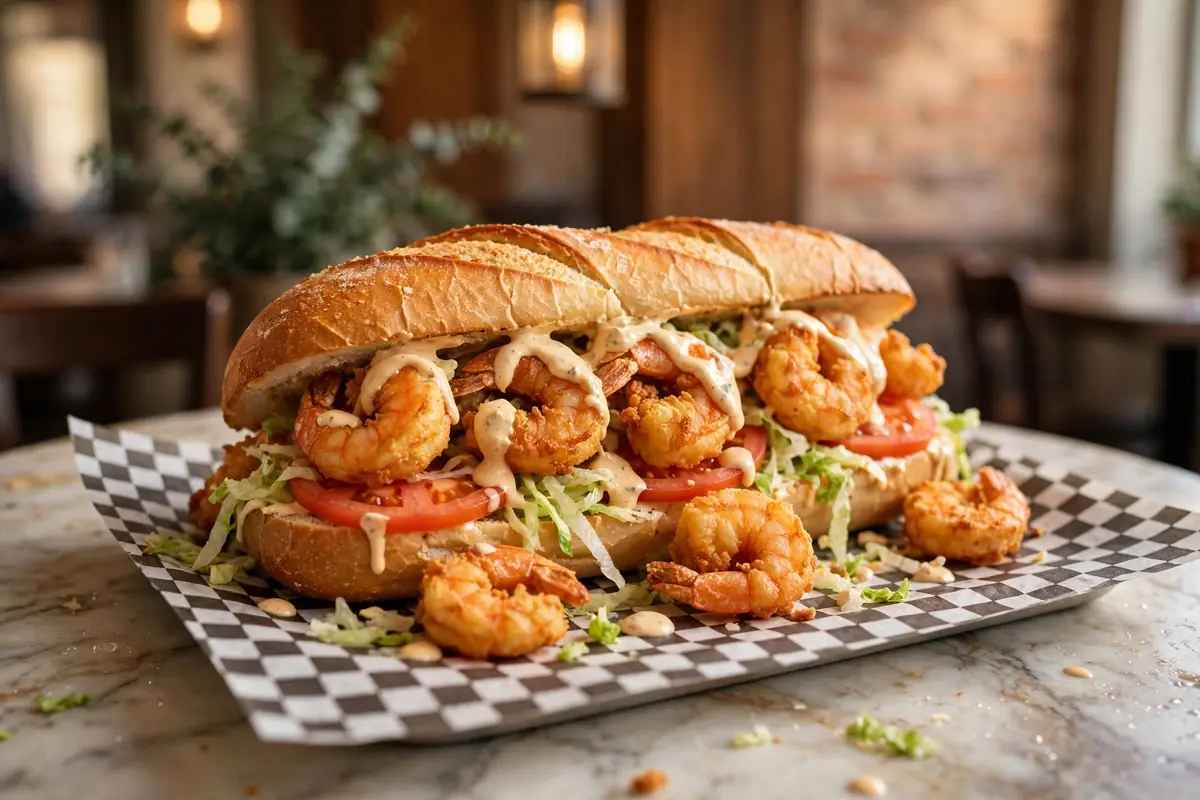
The bread makes or breaks the sandwich. A proper po’boy uses fresh-baked French bread with a crusty, shattering exterior and a soft, yeasty interior. Leidenheimer Baking Company supplies many of the city’s top shops with loaves baked fresh daily, and the contrast between crackle and chew is what separates a real po’boy from any ordinary sub. When the bread is right, you hear it before you taste it.
The fillings go far beyond cold cuts. Classic choices include fried shrimp, fried oysters, fried catfish, fried crawfish, and roast beef with gravy. The roast beef version arrives “debris style” at the best shops, meaning the meat is shredded and soaked in its own rich gravy until it nearly falls apart. Ham and cheese, hot sausage, and french fry po’boys round out the traditional menu.
Ordering “dressed” means the full treatment: shredded lettuce, sliced tomato, pickles, and mayonnaise. Purists debate whether certain fillings should be dressed or not, but newcomers should start dressed to experience the complete sandwich. Hot sauce lives on every table, and a few shakes of Crystal or Tabasco wake up even the mildest fried shrimp.
Where to Find the Best Po’boys in New Orleans
Parkway Bakery and Tavern in Mid-City is the essential stop. Open since 1911 and serving po’boys since 1929, the tavern sits near Bayou St. John in a room packed with vintage memorabilia. The roast beef with debris gravy and the fried shrimp po’boy are the orders that built its legend. Adventurous eaters should try the James Brown, an overstuffed creation layered with slow-cooked barbecue beef, Louisiana fried shrimp, melted pepper jack, and hot-sauce mayo. President Obama stopped in, and the room still hums with neighborhood energy.
Domilise’s Po-Boy and Bar in Uptown is the neighborhood institution. “Miss Dot” Domilise, the Po’boy Queen of Uptown, cooked here for 75 years until her passing in 2013, and her recipes and traditions live on. The room is small and straightforward, with old photographs and signs covering the walls. The fried oyster po’boy and the roast beef po’boy are the classics, and the catfish po’boy honors her legacy. Arrive ready to wait, because the line moves at neighborhood pace.
Mahony’s Po-Boy Shop on Magazine Street brings a modern touch to the tradition. The Peacemaker, packed with fried oysters, cheddar cheese, and bacon, won awards and earned its name honestly. The shop bridges old and new New Orleans, and it is an easy stop on a Magazine Street crawl. For a French Quarter base, Mother’s Restaurant serves the famous Ferdi Special, a po’boy piled with baked ham, roast beef, debris, and gravy that has fueled tourists and locals for generations.
Beyond the famous names, the Bywater and Marigny neighborhoods hide gems like Frady’s, where locals grab shrimp po’boys without the crowds. Killer Poboys in the French Quarter and Erin Rose serves creative takes on the classic for visitors who want tradition with a twist. The best po’boys in New Orleans reward wanderers, so follow the smell of frying shrimp down any side street.
How to Order Your Po’boy Like a Local
Decide on your filling before you reach the counter, because the best shops move fast. First-timers should start with fried shrimp or roast beef debris, the two pillars of the tradition. Say “dressed” unless you have a reason not to. Ask about the daily special, because many shops rotate creative fillings that never make the printed menu.
Size your order honestly. A full po’boy is a serious sandwich, often a foot long and packed dense. Half po’boys exist at most shops and are the smart move if you plan to eat at multiple spots in one day. Sharing a full with a friend lets you try two fillings without waste. The bread goes stale fast, so eat immediately and never save half for later.
Pair it right. Barq’s root beer in a chilled bottle is the traditional drink, and its vanilla bite cuts through fried richness perfectly. A cold Abita Amber, brewed just across the lake, works for the evening crowd. Save room, because the city’s sweets demand attention too. Our guide to the best beignets in New Orleans covers where to find your powdered-sugar fix after the sandwich.
Building a New Orleans Food Day
The po’boy anchors a perfect food day, but the city offers much more. Start with beignets and cafe au lait in the morning, grab a po’boy for lunch, snack on chargrilled oysters in the afternoon, and finish with gumbo or jambalaya for dinner. Each meal tells a different chapter of the city’s story, from French colonial roots to the working-class solidarity of the po’boy itself.
The sandwich tradition connects to other American food pilgrimages. Sandwich lovers should compare notes with Philadelphia’s cheesesteak scene and Chicago’s Italian beef stands, where the same debates about bread, meat, and authenticity rage just as fiercely. The Chicago hot dog stands enforce their own topping rules with similar passion.
Seafood fans can extend the trip’s theme with Boston’s seafood restaurants or Baltimore’s crab cake legends, where fried oysters and crab cakes play the starring roles that shrimp plays in New Orleans. The Nashville hot chicken pilgrimage offers another Southern food journey with its own fiery rituals.
The Po’boy Festival and Beyond
Each fall, Oak Street in the Carrollton neighborhood hosts a festival celebrating the sandwich, with dozens of vendors serving creative and classic po’boys. The event draws tens of thousands of eaters and turns the humble sandwich into a full street party. If your visit lines up with the festival, plan your whole trip around it. Arrive hungry, pace yourself, and vote for your favorite.
The sandwich has also traveled. Po’boy shops now operate in cities across the country, from Houston to Los Angeles, run by Louisiana transplants and converts. They are worth trying, but the bread never quite matches. Leidenheimer’s loaves and the New Orleans humidity create a texture that resists replication, which is exactly why the pilgrimage matters. Some foods belong to their cities, and the po’boy belongs to New Orleans.
For the full American sandwich education, keep traveling after New Orleans. The best burger joints in America span the country, food trucks reinvent classics in every city, and Texas BBQ shows what happens when a region commits fully to one craft. Each stop deepens your appreciation for how American cities express themselves through food.
Po’boy Prices and Practical Tips
The po’boy remains one of America’s great food bargains. At neighborhood shops, a full po’boy typically costs less than a fast-casual salad in most big cities, and a half costs even less. The famous spots charge a small premium for their reputation, but nothing approaching fine-dining prices. This affordability is part of the tradition: the sandwich was invented to feed striking workers for free, and it has stayed within reach of working people ever since.
Most classic po’boy shops are cash-friendly and counter-service, so expect a line rather than a host stand. Lunch is the peak hour, and the best shops can sell out of popular fillings by mid-afternoon. Go before noon for the widest selection and the freshest bread. Parking in neighborhoods like Uptown can be tricky, so rideshares or streetcars make the trip easier.
Conclusion
The best po’boys in New Orleans are history you can eat. They carry the story of the 1929 streetcar strike, the generosity of the Martin brothers, and nearly a century of neighborhood loyalty in every crackly bite. Order it dressed, eat it fast, and wash it down with a Barq’s. Then start planning your return, because one po’boy is never enough.