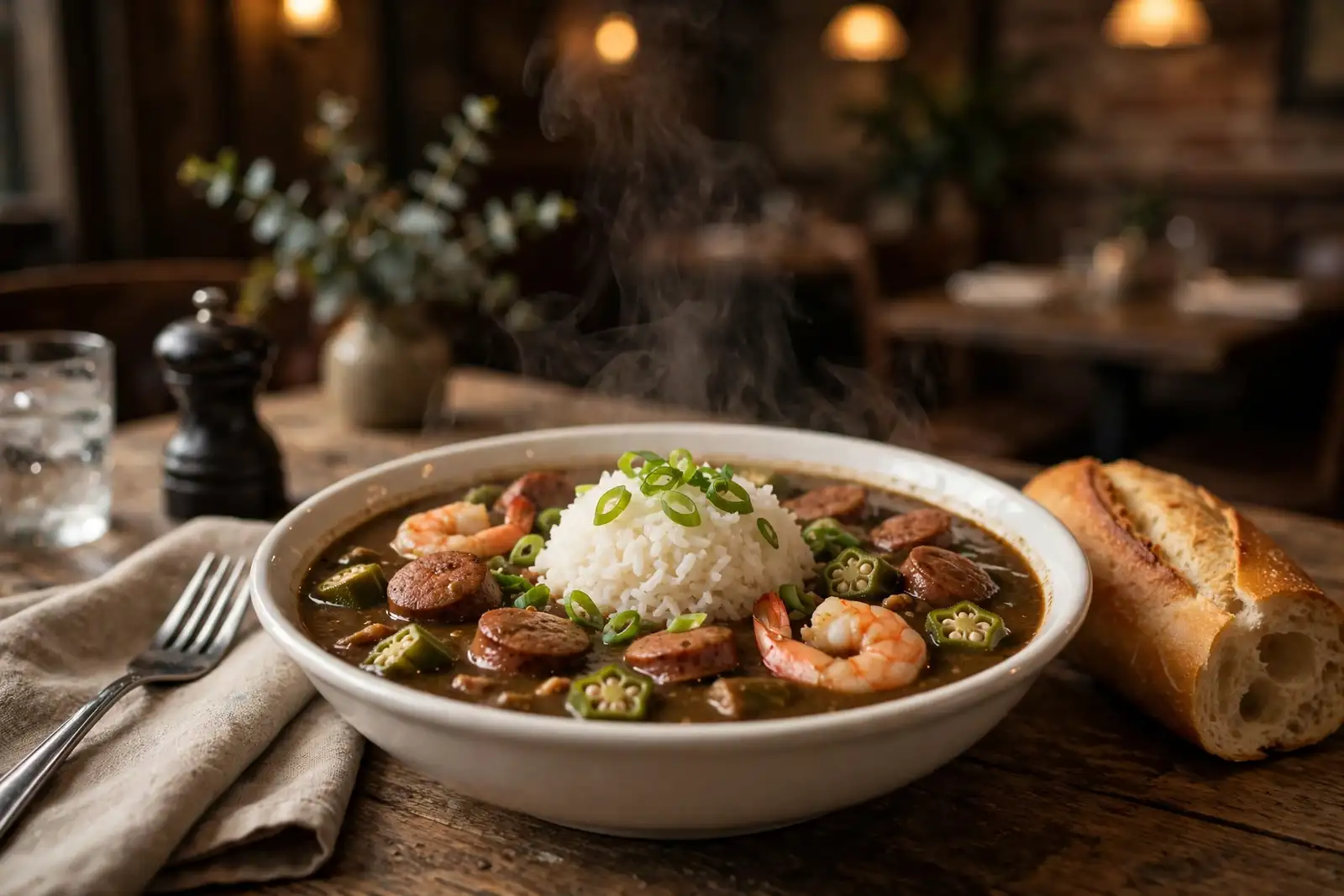
Few dishes carry a city’s soul the way gumbo carries New Orleans. It is not just a soup or a stew — it is a bowl of history, built from French roux technique, West African okra, Spanish peppers, and Native American filé, simmered into something that tastes like nowhere else on earth. Finding the best gumbo in New Orleans is one of the great American food quests, and this guide will lead you to the bowls that earn the title.
Gumbo is personal in New Orleans. Families guard their recipes, restaurants stake their reputations on it, and locals will tell you — at length — why their grandmother’s version is the correct one. The bowls below represent the consensus picks: the places where the roux is dark, the seasoning is bold, and the rice is always served the right way.
What Makes a Great Gumbo
Three elements define gumbo. First, the roux: flour and fat cooked slowly until it turns the color of dark chocolate, sometimes for an hour or more. A pale roux makes a pale gumbo — the depth of color is the depth of flavor. Second, the holy trinity: onion, celery, and bell pepper, the aromatic base of Louisiana cooking. Third, the thickener and the protein: okra or filé (ground sassafras leaves) for body, and a combination of sausage, chicken, shrimp, crab, or duck for substance.
There are two great families of gumbo — Creole (with tomato, city-style) and Cajun (without tomato, country-style) — and New Orleans serves both proudly. Neither is “correct.” The correct gumbo is the one with a dark roux, proper seasoning, and rice that has not turned to mush.
The Best Gumbo in New Orleans: Bowls Worth the Trip
1. Dooky Chase’s Restaurant — The Historic Standard
Dooky Chase’s in the Tremé is hallowed ground. Leah Chase — the “Queen of Creole Cuisine” — built this restaurant into a civil rights landmark and a culinary institution, and her gumbo z’herbes (a green gumbo traditionally served during Lent) is one of the great dishes in American food. The regular seafood and chicken-and-sausage gumbos are equally revered. Eating here is both dinner and a history lesson.
2. Commander’s Palace — The Grand Dame’s Bowl
Commander’s Palace in the Garden District is New Orleans fine dining at its most joyful, and its turtle soup gets the headlines — but the gumbo is no afterthought. Rich, refined, and perfectly seasoned, it shows what the dish becomes in the hands of a top-tier kitchen. The 25-cent martini lunch tradition makes it the city’s most civilized midday meal.
3. Galatoire’s — Friday Lunch Legend
Galatoire’s on Bourbon Street has served its crab-and-shrimp gumbo to Friday lunch crowds for generations. The room — tile floors, buzzing waiters in tuxedos, no reservations for the main dining room — is half the experience. The gumbo is classic Creole: dark roux, shellfish stock, and the kind of seasoning that builds rather than burns.
4. Herbsaint — Modern Creole Precision
Herbsaint brought a chef-driven sensibility to New Orleans cooking without losing its roots, and its gumbo reflects that balance. The duck and andouille gumbo is a standout — smoky, rich, and deeply savory. This is the bowl for visitors who want tradition executed with modern-kitchen consistency.
5. Cochon — Cajun Country in the Warehouse District
Cochon leans Cajun, and its rabbit and dumpling gumbo (when on the menu) plus the classic chicken-and-sausage versions show off the country style: no tomato, dark roux, and a rustic heartiness that city gumbos sometimes polish away. The wood-fired cooking throughout the menu gives everything a smoky backbone.
6. Li’l Dizzy’s Cafe — Tremé Neighborhood Classic
Li’l Dizzy’s is the neighborhood joint that locals actually eat at weekly. The fried chicken gets the fame, but the gumbo — thick, dark, and generously portioned — is the insider’s order. It is affordable, unpretentious, and exactly the kind of place that makes New Orleans food culture feel alive rather than preserved.
7. The Gumbo Shop — The French Quarter Workhorse
The Gumbo Shop does exactly what the name promises, right in the French Quarter. Multiple gumbos on the menu — seafood okra, chicken andouille, and others — let you taste the range in one sitting. It is tourist-accessible without being a tourist trap, and the quality has held steady for years.
8. Brigtsen’s — The Uptown Insider Pick
Frank Brigtsen’s Uptown restaurant is where New Orleans chefs eat on their nights off, and the gumbo is a big reason why. The menu changes with the seasons and the market, but a dark-roux gumbo with whatever is freshest is a frequent anchor. It is the connoisseur’s choice — quiet, consistent, and exceptional.
9. Casamento’s — The Oyster Bar’s Gumbo
Casamento’s is famous for oysters, but its gumbo — made with the same obsessive attention as everything else in the tiled dining room — deserves its own reputation. The seafood gumbo here tastes like the Gulf in a bowl. Note the old-school hours (closed in summer, closed Mondays) — plan ahead.
10. Mother’s Restaurant — The Poydras Street Institution
Mother’s has fed downtown workers and visitors since the 1930s, and its seafood gumbo is a proper introduction to the dish for first-timers. The cafeteria-style line moves fast, the portions are generous, and the debris po’boy on the same menu makes it a two-birds lunch stop.
11. Mr. B’s Bistro — The Gumbo Ya-Ya
Mr. B’s “gumbo ya-ya” — chicken and andouille with a dark roux — is one of the French Quarter’s most ordered bowls, and for good reason. It is rich without being heavy, spicy without being hot, and consistent to a fault. The BBQ shrimp is the other signature, making Mr. B’s an easy two-course decision.
12. Backatown Coffee Parlour — The Modern Take
Backatown in the Tremé serves a contemporary gumbo that respects the old rules while tasting fresh and current. It is a good reminder that New Orleans cooking is a living tradition, not a museum piece — and a pleasant stop in a neighborhood rich with food history.
Creole vs. Cajun Gumbo: What to Know
You will hear the debate everywhere, so here is the short version. Creole gumbo — the city style — often includes tomatoes and a wider range of seafood, reflecting New Orleans’ port-city pantry. Cajun gumbo — the country style — skips the tomato, leans on sausage and chicken or game, and tends toward a darker, smokier profile. Great examples of both exist across the city, and the bowls on this list cover the full spectrum.
One rule both sides agree on: the rice goes in the bowl as a scoop or on the side, never cooked in the gumbo. And filé is passed at the table for those who want it — never boiled in the pot, or it turns stringy.
How to Eat Gumbo Like a Local
Start with a cup, not a bowl, if you are sampling multiple spots — gumbo is rich, and a crawl of three bowls will defeat you. Hot sauce is always on the table; add it yourself rather than asking for the gumbo to be made spicy. French bread is for sopping, not for show. And if a restaurant offers a gumbo-and-salad lunch special, take it — it is one of the city’s great midday values.
Pair your gumbo crawl with the rest of New Orleans’ iconic foods. The city’s sandwich culture is legendary — our best po’boys in New Orleans guide is the natural companion piece — and no visit is complete without the sweet finish in our best beignets in New Orleans roundup.
Beyond Gumbo: The New Orleans Food Trip
Gumbo is the headline, but New Orleans rewards the curious eater. The city’s seafood traditions run deep — compare with our best seafood restaurants in Boston for a different coast’s take on shellfish, or our best shrimp and grits in Charleston for another Southern classic built on similar foundations.
For more regional American specialties in the same spirit, explore our best crab cakes in Baltimore, our best hot chicken in Nashville, and our best cheesesteaks in Philadelphia guides.
When to Go for Gumbo
Gumbo is year-round in New Orleans, but it tastes best when the weather gives you an excuse — fall through spring is peak gumbo season, and Lenten menus bring out the traditional gumbo z’herbes. Summer visitors should not worry; the great rooms serve it twelve months a year, and air conditioning was practically invented for this purpose.
For a special-occasion gumbo dinner, our fine dining in New York City guide shows how the dish’s upscale cousins present elsewhere — though nothing quite matches eating it in the city that invented it.
Understanding Roux: The Soul of the Bowl
Ask any New Orleans cook what makes their gumbo and the answer starts with roux. The color tells the story: a pale blond roux thickens gently and tastes mild, while a dark chocolate-colored roux — stirred patiently for the better part of an hour — brings deep, nutty complexity that defines the city’s most celebrated bowls. Darker roux thickens less, so cooks compensate with okra or file powder. When you taste two gumbos side by side, you are really tasting two different roux philosophies, and knowing that makes every spoonful more interesting.
Conclusion
The best gumbo in New Orleans is not a single bowl — it is the dark-roux tradition itself, expressed a dozen different ways across the city’s historic rooms and neighborhood joints. Start with the legends on this list, order the cup before the bowl, and let the holy trinity do the rest.
Keep the Southern food tour going with our best lobster rolls in Portland Maine for a northern seafood icon, or our best Italian beef in Chicago for another city-defining sandwich.