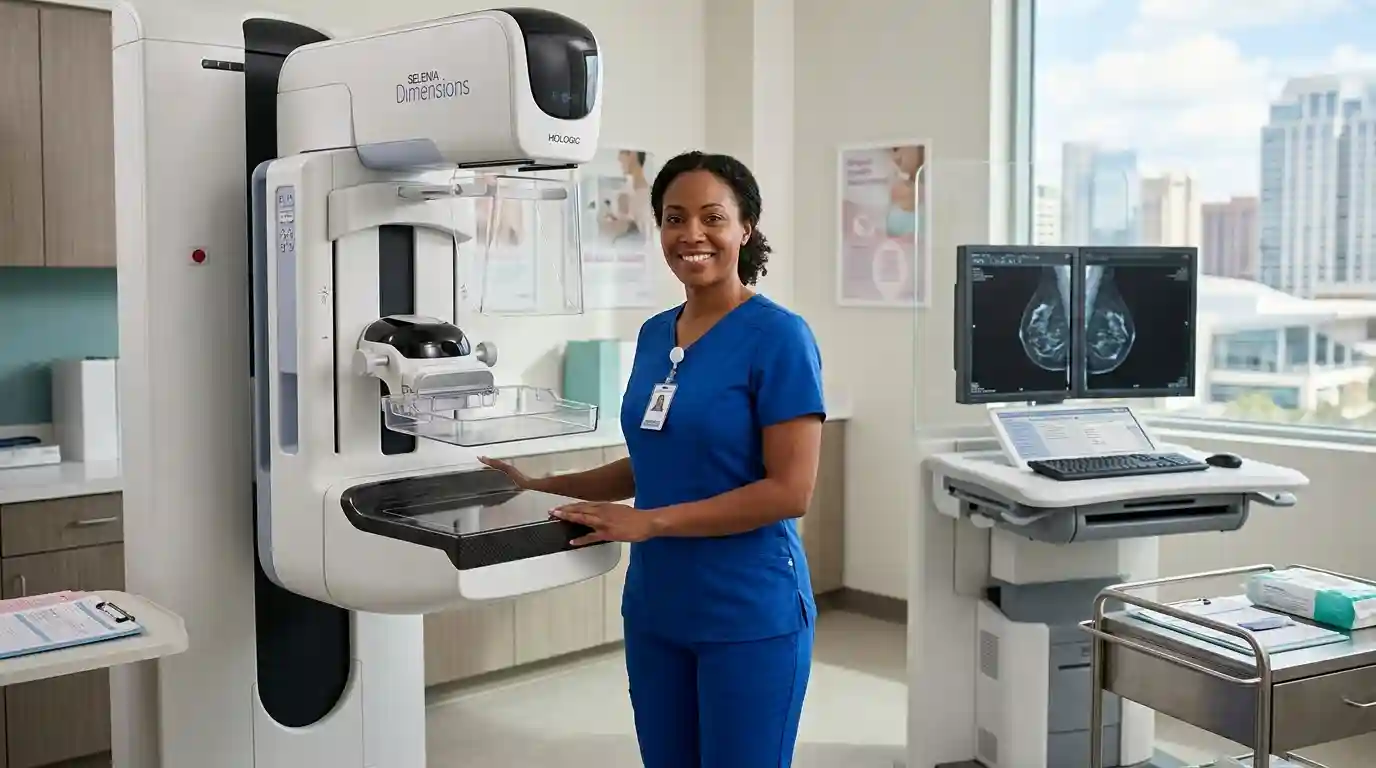
However, successful travel work involves more than choosing an attractive destination. Credentials, state licensing, clinical experience, contract terms, housing, and assignment expectations all affect whether an opportunity is a good fit. This guide explains how travel mammography jobs work, what qualifications employers may require, how compensation is structured, and how to prepare for your first assignment.
What Are Travel Mammography Tech Jobs?
A travel mammography technologist is a medical imaging professional who accepts a temporary position at a hospital, outpatient imaging center, breast care clinic, or another eligible healthcare facility. These assignments help facilities maintain imaging services when they need temporary staffing coverage, additional capacity, or specialized expertise.
Unlike a permanent employee who generally works at one location, a travel technologist moves between assignments according to contract dates and personal preferences. Some contracts last around 13 weeks, while others may be shorter or longer. The actual duration depends on the employer’s needs and the written agreement.
Travel mammography is a specialized branch of allied healthcare. Professionals exploring other temporary healthcare opportunities can also learn about PICC nurse travel jobs to understand how travel-based clinical careers can differ by specialty, credential, and assignment requirements.
What Does a Travel Mammography Technologist Do?
Travel mammography technologists perform the core responsibilities of breast imaging while adapting to the procedures and systems used at each facility. Their work supports clinicians who evaluate breast health and determine whether further assessment is needed.
Common responsibilities
- Prepare mammography equipment and examination rooms according to facility procedures.
- Confirm patient identity and follow applicable patient identification and safety protocols.
- Explain the examination process and help patients feel informed and comfortable.
- Position patients correctly to obtain appropriate screening or diagnostic images.
- Operate approved mammography equipment and follow radiation-safety requirements.
- Review image quality and repeat images when clinically appropriate and consistent with protocol.
- Document examinations accurately in the facility’s electronic systems.
- Follow privacy, infection-control, quality-assurance, and equipment-check procedures.
- Coordinate with radiologists, nurses, imaging colleagues, and other members of the care team.
Specific duties vary by assignment. A position focused on routine screening may have different expectations from one involving diagnostic examinations, additional breast-imaging procedures, or advanced equipment. Candidates should confirm the exact scope of work before accepting an offer.
Why Consider a Travel Mammography Career?
1. Explore different locations
Temporary assignments can introduce technologists to new cities, communities, and lifestyles. Depending on the position, a contract may place you near a major metropolitan area, a smaller community, or a destination with outdoor recreation and cultural attractions.
Travel is not automatically a vacation, because working hours, commuting, and recovery time still matter. Nevertheless, a well-planned assignment can create opportunities to explore outside scheduled shifts.
2. Build experience across healthcare settings
Working in different facilities can expose you to varying patient volumes, equipment configurations, documentation systems, and team structures. This experience can help you become more adaptable, provided each assignment matches your training and competence.
3. Evaluate different schedules
Contract opportunities may offer weekday shifts, longer workdays, or other schedules depending on the facility. Compare the actual shift pattern, weekend expectations, holiday coverage, overtime rules, and on-call requirements rather than assuming every travel position offers the same flexibility.
4. Compare compensation packages
Some travel positions provide a combination of taxable wages and eligible travel-related stipends or reimbursements. Others may use different pay structures. The total package should be evaluated alongside housing costs, transportation, insurance, unpaid gaps between contracts, and other expenses.
5. Develop professional confidence
Adapting to a new department encourages communication, organization, and problem-solving. These skills are valuable in many healthcare environments, including those described in WordTrailZone’s overview of healthcare and patient-care services.
Qualifications for Travel Mammography Tech Jobs
Requirements vary by employer, state, facility, and contract. Many travel assignments expect candidates to have formal radiologic technology education, appropriate professional credentials, relevant mammography experience, and any licenses required for the location.
Education and foundational training
Most candidates begin by completing an appropriate radiologic technology education pathway and gaining supervised clinical experience. Before applying, review the requirements that apply to your professional route and the type of facility where you intend to work.
Professional certification
Employers commonly look for relevant radiography and mammography credentials, such as applicable American Registry of Radiologic Technologists (ARRT) registration and mammography qualifications. Exact credential requirements should be checked against the current job posting and the rules governing the intended workplace.
State licensing and facility requirements
Some locations require state-specific licenses or permits for radiologic or mammography practice. A credential that qualifies you for one assignment does not necessarily satisfy the requirements of another state. Start the licensing process early, and obtain written confirmation of which credentials must be active before the contract begins.
Clinical experience
Travel employers often prefer technologists who can work safely with limited onboarding. Depending on the assignment, they may request recent mammography experience, proficiency in screening and diagnostic examinations, or experience with particular imaging systems and procedures.
There is no single experience threshold that applies to every contract. Review each position’s stated requirements and be accurate about your competencies. Do not accept duties for which you lack the necessary training or authorization.
Additional documentation
Recruiters or facilities may request a current résumé, credential verification, employment history, references, skills checklists, background screening, health documentation, or required life-support certification. Maintain an organized professional file so that credentialing delays do not jeopardize a suitable offer.
How Much Do Travel Mammography Technologists Earn?
Compensation depends on location, contract duration, clinical experience, shift requirements, facility needs, and the details of the pay package. A higher advertised weekly amount does not always mean a better financial outcome.
Before comparing offers, request a written breakdown of the following:
- Taxable hourly rate: The wage paid for the hours worked under the contract.
- Guaranteed hours: The hours covered by the agreement and the conditions under which they may be reduced.
- Overtime: Eligibility, applicable rates, and the process for authorizing extra shifts.
- Housing support: Whether accommodation is provided, reimbursed, or covered by an allowance.
- Travel reimbursement: Eligibility, limits, documentation, and payment timing.
- Benefits: Health insurance, retirement options, paid leave, and when coverage starts or ends.
- Cancellation terms: What happens if the facility cancels, reduces hours, or ends the contract early.
- Additional expenses: Licensing fees, credentialing costs, parking, local transportation, and temporary accommodation.
Travel-related stipends are not automatically tax-free. Their tax treatment depends on the applicable rules and the worker’s circumstances, including eligibility and tax-home requirements. Seek advice from a qualified tax professional familiar with travel healthcare work before relying on a quoted take-home amount.
To compare offers fairly, calculate estimated net income after normal living costs and travel expenses. A contract with a slightly lower headline rate may be more attractive if it offers stable hours, manageable housing costs, suitable benefits, and clear cancellation terms.
How to Find Legitimate Travel Mammography Tech Jobs
Work with specialized healthcare recruiters
Healthcare staffing agencies can connect qualified technologists with temporary hospital and outpatient positions. Ask whether the recruiter regularly handles mammography assignments and understands the credentialing requirements in your preferred states.
Request the facility name, job description, schedule, pay breakdown, assignment dates, and contract conditions in writing. Ask who will employ you, who will supervise your work, and whom you should contact if the assignment changes.
Search employer career pages
Hospitals, imaging networks, and outpatient centers may advertise temporary roles directly. Review the employer’s official recruitment information and confirm that the advertised position matches the terms provided by any recruiter.
Use professional networking
Colleagues, former supervisors, and professional contacts can help you learn about staffing needs and workplace expectations. Keep your professional profile current and describe your qualifications precisely.
Build a focused application package
Prepare a résumé that highlights recent mammography experience, relevant credentials, equipment familiarity, screening and diagnostic competencies, and any additional skills requested by the employer. Include accurate dates and be ready to verify your work history.
Healthcare career decisions also benefit from understanding adjacent roles and working environments. For example, WordTrailZone’s guide to career paths and job opportunities offers a broader perspective on evaluating work options, although logistics and mammography are distinct professions.
Choosing the Right Travel Assignment
The best assignment is not necessarily the one with the highest advertised pay or the most exciting destination. It is the position that fits your clinical experience, professional goals, budget, and personal circumstances.
Check the clinical expectations
Confirm the types of examinations performed, equipment used, expected patient volume, orientation length, documentation system, and whether floating to another location or department is required. Ask how the facility handles questions, technical issues, and escalation of clinical concerns.
Review the complete schedule
Ask about shift start and end times, weekend rotations, holidays, on-call duties, breaks, and any required overtime. Clarify whether the stated hours are guaranteed and how schedule changes are communicated.
Research housing and transportation
Estimate rent, utilities, deposits, parking, fuel, public transportation, and the distance between your accommodation and the facility. If housing is arranged through a recruiter, ask what happens if the assignment is delayed or cancelled.
Consider life outside work
Think about access to groceries, healthcare, recreation, reliable transport, and a comfortable place to rest. If the contract is in an unfamiliar region, destination guides such as places to visit across the United States can help inspire personal exploration once your work and accommodation arrangements are settled.
Travel Planning and Life Between Shifts
One attraction of travel mammography work is the ability to experience different communities. Planning ahead helps you enjoy that benefit without sacrificing rest, punctuality, or financial stability.
Before accepting a contract, map out the commute, check typical local transport options, and decide how much time and money you can realistically allocate to recreation. Keep the first few days relatively flexible so that you can complete orientation and settle into the new environment.
Depending on where an assignment takes you, you might explore city attractions, local museums, walking routes, or outdoor areas on days off. Destination articles such as places to visit in Nashville during the day, Philadelphia attractions at night, and places to visit in Atlanta illustrate the kinds of local research that can make a temporary stay more enjoyable.
Other guides, including places to visit in Massachusetts, places near Providence, Rhode Island, and places near West Chester, Pennsylvania, can provide ideas for exploring when your actual assignment or personal travels take you to those areas. They should not be treated as evidence that travel mammography vacancies are currently available there.
If you enjoy seasonal travel, you can also plan personal outings using guides to Wisconsin in spring, winter destinations in Ontario, and warm places in the United States during winter. Always check local conditions, travel times, and opening information before setting out.
For professionals who prefer independent exploration, the guide to solo travel and independent experiences can help with general trip-planning inspiration. Keep your work schedule, safety, and budget as the priorities.
Challenges to Consider Before Accepting a Contract
Adjusting to a new workplace
Every facility has its own protocols, equipment, documentation practices, and communication patterns. Ask about orientation and local procedures before starting independent duties. Take notes, confirm unfamiliar processes, and raise safety concerns promptly.
Time away from family and friends
Frequent moves may make it harder to maintain routines and relationships. Consider how long you want to be away, how often you can travel home, and whether a future assignment should be closer to your support network.
Gaps between contracts
Travel employment may involve periods without a paid assignment. Build a financial buffer for rent, insurance, transportation, credential renewals, and ordinary expenses during those gaps.
Uncertain assignment conditions
Facility needs can change. Understand cancellation clauses, guaranteed hours, notice periods, and any penalties before signing. Keep copies of the signed contract and important communications.
Maintaining personal well-being
Changing locations and schedules can make healthy routines more difficult. Plan adequate sleep, meals, exercise, and time to decompress after work. General wellness resources, including WordTrailZone’s overview of fitness and wellness activities, can provide ideas for maintaining an active routine while away from home.
How to Prepare for Your First Travel Mammography Assignment
- Verify credentials: Check that your certifications, licenses, and required training are current for the intended assignment.
- Update your résumé: Highlight relevant mammography experience, equipment knowledge, patient-care skills, and recent employment.
- Organize documentation: Prepare credential records, references, employment details, and other requested onboarding materials.
- Compare contracts: Review pay, hours, housing, benefits, cancellation terms, orientation, and the exact scope of work.
- Plan a realistic budget: Include travel costs, deposits, recurring expenses, taxes, and potential gaps between assignments.
- Confirm logistics: Arrange accommodation, transport, arrival dates, and the location where orientation will take place.
- Prepare professionally: Ask about dress code, equipment, documentation systems, and the department’s expectations before your first shift.
- Keep records: Save your contract, credentialing confirmations, approved schedules, and recruiter communications in an organized place.
Those considering a broader healthcare career transition may also find it useful to explore educational diagnostician career information as an example of another specialized professional pathway. It is a different field, but comparing role requirements can help clarify your own long-term interests.
Is a Travel Mammography Tech Job Right for You?
This career may suit experienced imaging professionals who enjoy variety, adapt well to new teams, and are comfortable managing temporary housing and travel logistics. It can also appeal to technologists who want to compare healthcare environments or gain experience in different communities.
It may be less suitable if you strongly prefer a permanent workplace, need a predictable long-term location, or do not want to manage contract renewals and possible employment gaps. Those factors do not make travel work a poor choice; they simply deserve honest consideration before making a commitment.
Review your goals, confirm that you meet the job requirements, and compare the full contract rather than relying on a headline pay figure. The right opportunity should support both professional practice and a sustainable personal life.
Frequently Asked Questions
Do I need experience to become a travel mammography technologist?
Most travel assignments seek technologists with relevant clinical experience because they are expected to adapt to new facilities quickly. The required amount varies by employer and contract, so check each job description.
How long do travel mammography assignments last?
Many travel healthcare contracts are structured around several weeks or months, and approximately 13 weeks is a common format. Actual durations vary, so confirm the start date, end date, extension options, and cancellation conditions in writing.
Can I choose where I work?
You can usually express location preferences and apply for suitable openings, but placement depends on available jobs, credentials, licensing, and facility needs. A preferred destination does not guarantee an assignment.
Do travel mammography tech jobs include housing?
Some packages offer housing, housing assistance, or eligible stipends, while others require you to arrange accommodation independently. Confirm the terms, payment conditions, and cancellation arrangements before accepting a contract.
Are travel mammography jobs always higher-paying?
No. Compensation varies, and a higher advertised package may come with greater living expenses, different benefits, or less predictable hours. Compare total compensation and estimated expenses rather than weekly pay alone.
Can a newly certified technologist take a travel assignment?
Some positions may consider candidates with less experience than others, but many travel contracts require recent clinical practice and specific credentials. Review the requirements carefully and apply only when your qualifications match.
What should I ask a recruiter before signing?
Ask about the facility, duties, credentials, shift pattern, guaranteed hours, total pay breakdown, housing, benefits, orientation, cancellation terms, and who will support you during the assignment. Request the answers in writing.
Final Thoughts
Travel mammography tech jobs can combine specialized patient care, professional development, and the opportunity to experience new places. The strongest candidates prepare carefully, maintain the credentials required for their assignments, and evaluate contracts with both clinical responsibility and financial realism in mind.
Before accepting your next role, confirm the facility’s expectations, compare the complete compensation package, and plan for housing and time between contracts. With thoughtful preparation, travel mammography work can become a practical way to pursue career variety while continuing to contribute to breast imaging services.