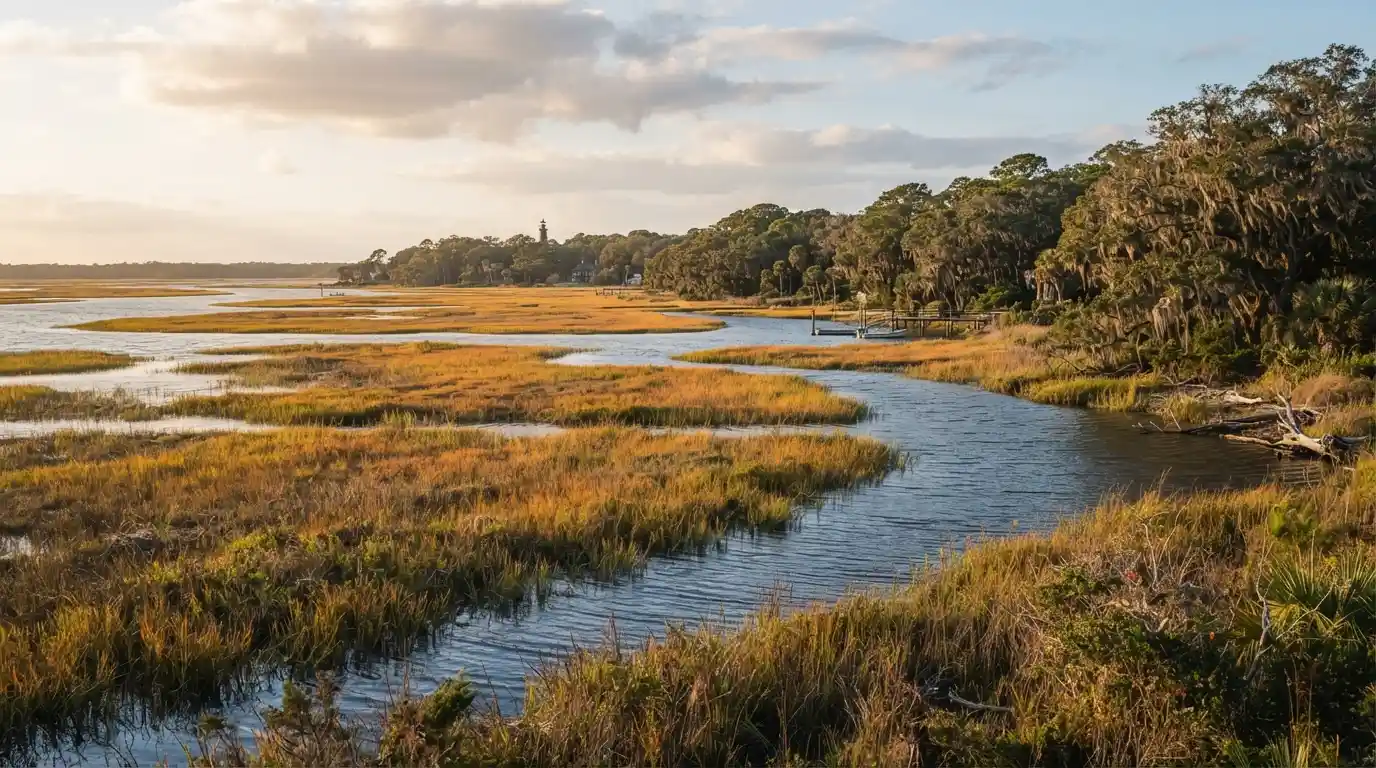
The region is especially appealing because it offers several different travel experiences within a relatively compact area. You can explore historic streets in the morning, visit a wildlife refuge in the afternoon, and watch the sunset over tidal marshes in the evening. Travelers planning a broader American trip can also combine Georgia’s coast with destinations featured in our guide to places to visit on the South Carolina coast or continue south toward Florida.
Why Visit the Coastal Plain of Georgia?
Georgia’s Coastal Plain stretches across a large portion of the southern and southeastern part of the state. Its coastal section is characterized by tidal creeks, salt marshes, maritime forests, rivers, islands, beaches, and historic communities.
Unlike destinations that focus on one major attraction, this region provides a combination of experiences. History lovers can explore colonial and antebellum landmarks, beachgoers can spend time on barrier islands, nature enthusiasts can look for birds and wildlife, and road-trippers can explore smaller coastal communities at their own pace.
The Coastal Plain is also a useful destination for travelers who enjoy building flexible itineraries. If you are interested in seasonal travel, you can compare this region with other seasonal destinations in our guide to the best places to visit in Georgia in the fall.
1. Savannah
Savannah is one of the most popular places to begin exploring coastal Georgia. Known for its historic architecture, shaded squares, mature trees, waterfront scenery, and distinctive Southern atmosphere, the city offers a strong mix of culture and sightseeing.
Visitors can walk through the Historic District, explore historic squares, browse shops and galleries, enjoy restaurants, and spend time along the Savannah River. The city’s walkable streets also make it easy to experience several attractions without constantly relying on a car.
Savannah is particularly attractive for travelers interested in history and architecture. Historic homes, churches, public squares, and preserved streetscapes create an atmosphere that feels very different from modern American cities.
For travelers building a larger itinerary around the region, Savannah can serve as a convenient starting point before heading toward the Golden Isles, Brunswick, or other coastal communities.
2. Tybee Island
Located near Savannah, Tybee Island is an easy coastal escape for travelers who want beaches, ocean views, and a relaxed island atmosphere without traveling far from the city.
The island is popular for beach walks, swimming, photography, fishing, kayaking, and watching the sunrise or sunset. Its compact size makes it convenient for a day trip, although visitors who prefer a slower pace can stay longer.
Tybee Island is also a good choice for families because travelers can combine beach time with sightseeing and outdoor activities. A visit here works particularly well as an extension of a Savannah itinerary.
3. St. Simons Island
St. Simons Island is one of the most appealing destinations in Georgia’s Golden Isles. The island combines beaches, maritime forests, historic landmarks, scenic roads, and a laid-back coastal atmosphere.
Visitors can explore the island by car, bicycle, or on foot. The coastline provides opportunities for photography and relaxing walks, while the historic areas offer a look into the region’s long and complicated past.
St. Simons is a particularly good option for travelers who want more than a traditional beach vacation. The combination of nature, history, and coastal scenery makes it one of the strongest destinations for a Georgia coast itinerary.
4. Jekyll Island
Jekyll Island is another major destination in the Golden Isles and is known for its beaches, maritime environment, historic district, and peaceful setting.
The island is ideal for travelers who enjoy scenic drives and outdoor exploration. Its combination of beaches and wooded areas creates plenty of opportunities to experience coastal Georgia beyond the typical resort environment.
Jekyll Island’s historic district adds another dimension to the visit. Travelers interested in architecture and history can explore preserved buildings and learn about the island’s development as a retreat for wealthy families during an earlier period.
5. Brunswick
Brunswick is an important mainland gateway to Georgia’s Golden Isles. It offers access to nearby islands while also providing its own historic and cultural attractions.
The city is a practical base for travelers who want to explore St. Simons Island, Jekyll Island, and nearby coastal areas without changing accommodation every night.
Brunswick is also useful for road-trippers exploring the southeastern United States. Its location makes it possible to create a broader coastal route connecting Georgia with Florida and South Carolina.
6. Cumberland Island
Cumberland Island offers a very different experience from Georgia’s more developed beach destinations. The island is known for undeveloped coastal landscapes, maritime forests, wildlife, and long stretches of natural scenery.
Travelers who enjoy hiking, wildlife watching, photography, and quiet outdoor experiences will find Cumberland Island especially appealing. The island’s natural character makes it an excellent choice for visitors who want to step away from busy tourist areas.
Because access and transportation require more planning than a normal city attraction, it is worth organizing your visit in advance. The reward is an experience centered on nature rather than commercial development.
7. Okefenokee Swamp
Although located farther inland than the barrier islands, the Okefenokee Swamp is one of the most memorable natural attractions to include in a broader Coastal Plain of Georgia itinerary.
This enormous wetland landscape provides opportunities for boating, hiking, wildlife observation, and photography. Visitors may encounter alligators, birds, turtles, and other wildlife while exploring the swamp environment.
Okefenokee is particularly valuable for travelers who want to understand the ecological diversity of southern Georgia. It also provides a strong contrast to the beaches and salt marshes found along the Atlantic coast.
8. Fort Pulaski National Monument
Fort Pulaski National Monument, located near Savannah and Tybee Island, is an important historic destination for travelers interested in military history and Civil War-era architecture.
The massive brick fortification provides an opportunity to explore historic defensive structures while also enjoying the surrounding coastal landscape. The combination of history and nature makes it an easy addition to a Savannah-area itinerary.
Travelers interested in American history can make this stop part of a larger trip focused on historic Southern destinations.
9. Skidaway Island
Skidaway Island, near Savannah, provides an excellent opportunity to experience Georgia’s coastal ecosystems without traveling far from the city.
The area is known for maritime forests, salt marshes, boardwalks, trails, and opportunities for birdwatching. It is a good destination for travelers who want a peaceful outdoor experience while staying close to Savannah.
The island’s natural setting also makes it a strong choice for photographers and visitors interested in Georgia’s coastal wildlife.
10. Sapelo Island
Sapelo Island offers a more remote coastal experience. The island is known for its natural environment, marshes, beaches, forests, and distinctive cultural history.
Visitors interested in less-developed destinations can consider Sapelo Island when planning a deeper exploration of Georgia’s coast. Its remote character makes the trip feel considerably different from visiting larger tourist centers such as Savannah or Brunswick.
11. St. Marys
St. Marys sits near Georgia’s southeastern coast and is closely associated with access to Cumberland Island. The community provides a quieter alternative to larger coastal destinations.
Visitors can enjoy waterfront scenery, explore the local historic area, and use the town as a convenient base for outdoor adventures. St. Marys works especially well for travelers who prefer small-town coastal destinations.
12. Golden Isles
The Golden Isles are among the highlights of the Coastal Plain of Georgia. This coastal group includes destinations such as St. Simons Island, Sea Island, Little St. Simons Island, and Jekyll Island.
The area is well suited to travelers who want a combination of beaches, wildlife, historic attractions, golf, outdoor recreation, and relaxing coastal scenery.
Instead of trying to see every island in one rushed day, consider spending several days in the region and using one destination as your base. This allows more time for beaches, trails, historic areas, and local dining.
13. Georgia’s Coastal Marshes
One of the defining features of the region is its expansive network of coastal marshes. These landscapes are particularly impressive around sunrise and sunset when the changing light reflects across tidal waterways and grasses.
Marsh areas are also important habitats for birds and other wildlife. Visitors can experience them through scenic drives, walking trails, kayaking excursions, boat tours, and designated observation areas.
For photographers, the combination of open skies, winding waterways, and marsh vegetation creates some of the most distinctive scenery in the state.
14. Wildlife and Nature Experiences
The Coastal Plain of Georgia is an excellent destination for wildlife enthusiasts. Depending on the location and season, visitors may encounter dolphins, shorebirds, wading birds, turtles, alligators, deer, and numerous smaller species.
Wildlife experiences are available in both coastal and inland environments. Barrier islands provide marine and coastal habitats, while wetlands and forests create different opportunities farther inland.
Travelers who enjoy nature photography should bring binoculars, a camera with a suitable zoom lens, comfortable walking shoes, sunscreen, insect protection, and plenty of water.
15. Historic Coastal Communities
Beyond the major destinations, Georgia’s Coastal Plain contains smaller communities that are worth exploring during a road trip. Historic streets, local shops, churches, waterfront areas, and older residential neighborhoods can provide a more intimate view of the region.
Slow travel works particularly well here. Instead of rushing between attractions, allow time to stop in smaller communities, visit local restaurants, explore historic districts, and enjoy the scenery along the route.
Best Time to Visit the Coastal Plain of Georgia
The best time to visit depends on the type of experience you want. Spring and fall are attractive for travelers who prefer comfortable outdoor conditions and sightseeing without the strongest summer heat.
Summer is popular for beach trips and water-based activities, although temperatures and humidity can be high. Winter can offer a quieter atmosphere and is suitable for travelers more interested in sightseeing, history, photography, and peaceful coastal walks.
Georgia also has plenty of seasonal travel opportunities beyond the coast, including destinations featured in our guide to the South Carolina coast and other southeastern destinations.
How Many Days Do You Need?
A short weekend can cover Savannah and one nearby coastal destination, but a longer trip allows you to experience the region more completely.
- 2 days: Focus on Savannah and Tybee Island.
- 3–4 days: Add St. Simons Island, Jekyll Island, or Brunswick.
- 5–7 days: Explore the Golden Isles, Cumberland Island, coastal marshes, and additional historic communities.
- 7+ days: Build a larger road trip through coastal Georgia and connect it with South Carolina or northern Florida.
Tips for Exploring Coastal Georgia
Because the Coastal Plain covers a large area, a car is generally the most convenient way to explore multiple destinations. Distances between attractions can be greater than they appear on a map, especially when islands, ferry schedules, and rural roads are involved.
Plan outdoor activities around weather conditions and bring appropriate clothing for heat, humidity, sun, and insects. If your itinerary includes a barrier island or ferry-access destination, check transportation arrangements before leaving.
Travelers interested in photography should plan time around sunrise and sunset. Coastal marshes, beaches, historic buildings, and tree-lined streets can look dramatically different depending on the light.
Final Thoughts
The Coastal Plain of Georgia is one of the most diverse regions in the southeastern United States for travelers who enjoy combining history, beaches, wildlife, and scenic landscapes. Savannah provides the cultural and historic foundation, while Tybee Island, St. Simons Island, Jekyll Island, Cumberland Island, and the Golden Isles offer different versions of the Georgia coast.
For nature lovers, places such as the Okefenokee Swamp and Georgia’s coastal marshes provide unforgettable outdoor experiences. History enthusiasts can explore forts, historic districts, and long-established communities, while road-trippers can connect the region with destinations farther north and south.
Whether you are planning a short coastal getaway or a longer southeastern road trip, these places to visit in the Coastal Plain of Georgia provide plenty of opportunities to create an itinerary around your interests.