Southeast Texas has one of the most passionate sports cultures in the country, and SETX Sports sits at the center of it — covering the athletes, teams, training, and community spirit that make this region a standout for competitive and recreational athletics alike. From Friday-night football to youth leagues and adult recreation, sports here are a way of life.
This guide explores the Southeast Texas sports landscape: the most popular sports in the region, how athletes at different levels develop their skills, and what makes the SETX athletic community distinctive.
Why Southeast Texas Has a Strong Sports Culture
Southeast Texas offers a diverse sports environment where athletes can participate at different ages and skill levels. High school athletics are particularly important to local identity, while youth programs introduce children to organized competition early.
Football is a major part of the regional sports culture, but it is far from the only option. Basketball, baseball, softball, volleyball, soccer, track and field, golf, tennis, fishing, and other activities all attract dedicated athletes and recreational players.
The region also welcomes people who simply want to become more active. Recreational facilities and community leagues provide accessible ways to play sports without the commitment of highly competitive programs — an important on-ramp for beginners and returning athletes.
Popular Sports in the SETX Community
Football
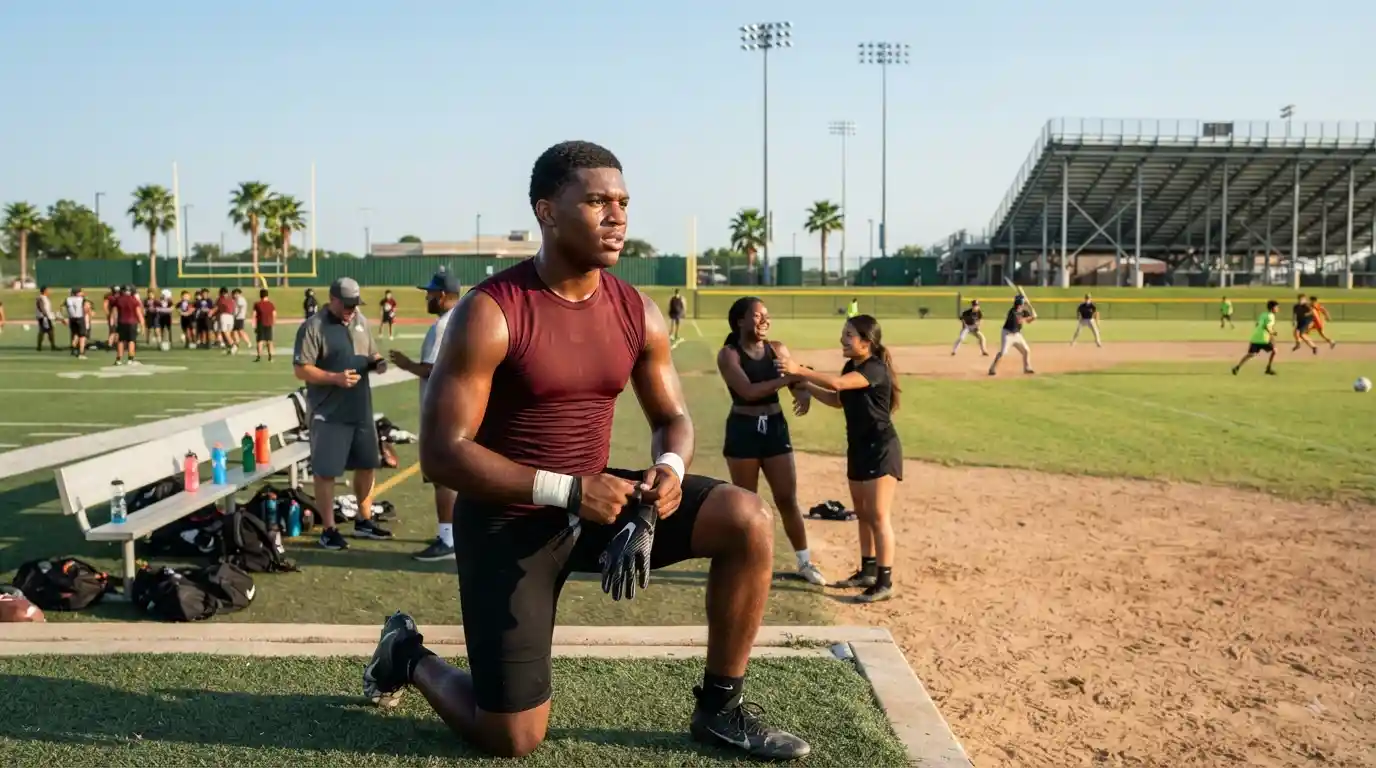
Football has a particularly strong following throughout Southeast Texas. High school games can draw substantial community support, creating an environment where athletes, families, students, alumni, and local fans all become part of the experience.
Players who want to improve should focus on fundamentals, strength, conditioning, speed, mobility, position-specific skills, and recovery. Good coaching helps athletes build those abilities progressively while keeping training loads appropriate for their age and level.
Baseball and Softball
Baseball and softball give athletes the chance to develop coordination, reaction speed, throwing mechanics, hitting skills, defensive awareness, and strategic thinking. Youth players benefit most from learning solid fundamental techniques before concentrating heavily on advanced competition.
Proper warmups, sound throwing mechanics, recovery, and rest are also important for long-term development and injury prevention. For a look at how dedicated baseball training shapes young athletes, see our Pete Craska baseball development guide.
Basketball
Basketball demands speed, agility, coordination, endurance, decision-making, and technical ability. Players improve through structured practice covering ball handling, shooting, passing, defensive movement, and game situations.
Competitive basketball also helps young athletes develop communication and teamwork, since players must constantly read and respond to changing situations on the court.
Volleyball
Volleyball emphasizes timing, movement, communication, coordination, and explosive action. Players sharpen their game by developing reliable serving, passing, setting, attacking, and defensive skills.
Consistent technique matters enormously in volleyball — small improvements in positioning and timing can have a significant effect during competitive play.
Soccer
Soccer combines cardiovascular endurance, agility, balance, technical footwork, spatial awareness, and tactical decision-making. Players should work on ball control, passing, shooting, defensive positioning, and movement away from the ball.
Because soccer involves sustained movement over long periods, conditioning and recovery deserve a dedicated place in any player’s development plan.
How Athletes Can Improve Their Performance
Improving athletic performance is not simply about practicing harder. A balanced approach combines technical practice, physical conditioning, nutrition, sleep, recovery, and mental preparation.
1. Build a Consistent Training Routine
Consistency usually produces better long-term results than occasional intense workouts. Athletes should establish a training schedule that matches their age, sport, experience, and competitive calendar.
Training should pair sport-specific practice with general physical development. Strength, mobility, balance, coordination, and cardiovascular conditioning all contribute to better performance — a principle that applies whether you train at a dedicated facility like our Glorious Health Club fitness guide describes, or on the field with your team.
2. Master the Fundamentals First
Advanced techniques built on shaky fundamentals break down under pressure. Young athletes in particular should lock in proper mechanics — throwing, catching, footwork, shooting form — before chasing complex tactics.
3. Prioritize Recovery and Injury Prevention
Rest days, proper warmups, cool-downs, and attention to nagging pain keep athletes on the field. Overtraining is one of the most common reasons promising athletes stall, so training load should rise gradually.
4. Fuel and Hydrate Properly
Performance nutrition does not need to be complicated: adequate calories, protein for muscle repair, carbohydrates for energy, and consistent hydration — especially in the Southeast Texas heat. Good everyday habits around food and water support everything else an athlete does.
Youth Sports in Southeast Texas
Youth leagues are where the SETX sports pipeline begins. Organized programs teach children teamwork, discipline, and resilience alongside athletic skills. Parents evaluating programs should look for qualified coaching, age-appropriate competition, emphasis on development over winning-at-all-costs, and clear safety policies.
Multi-sport participation in the early years is widely recommended: it builds broader athleticism and reduces burnout compared to early single-sport specialization.
Sports, Fitness, and Everyday Health
The benefits of the SETX sports culture extend beyond competition. Regular physical activity supports cardiovascular health, strength, mental well-being, and social connection at every age.
On the other hand, prolonged inactivity carries real risks — our article on sedentary lifestyle risks explains what happens when movement disappears from daily life. Whether through organized sports or general wellness habits like those in our Shiawassee Health and Wellness guide, staying active is one of the highest-return investments anyone can make.
Final Thoughts
SETX Sports reflects what makes Southeast Texas athletics special: deep community support, a wide range of sports, strong youth development, and room for everyone from elite competitors to weekend recreational players.
Whether you are an athlete looking to raise your game, a parent exploring youth leagues, or simply someone who wants to be more active, the region’s sports culture offers a clear path forward — start with the fundamentals, train consistently, recover properly, and enjoy the community that comes with the game.