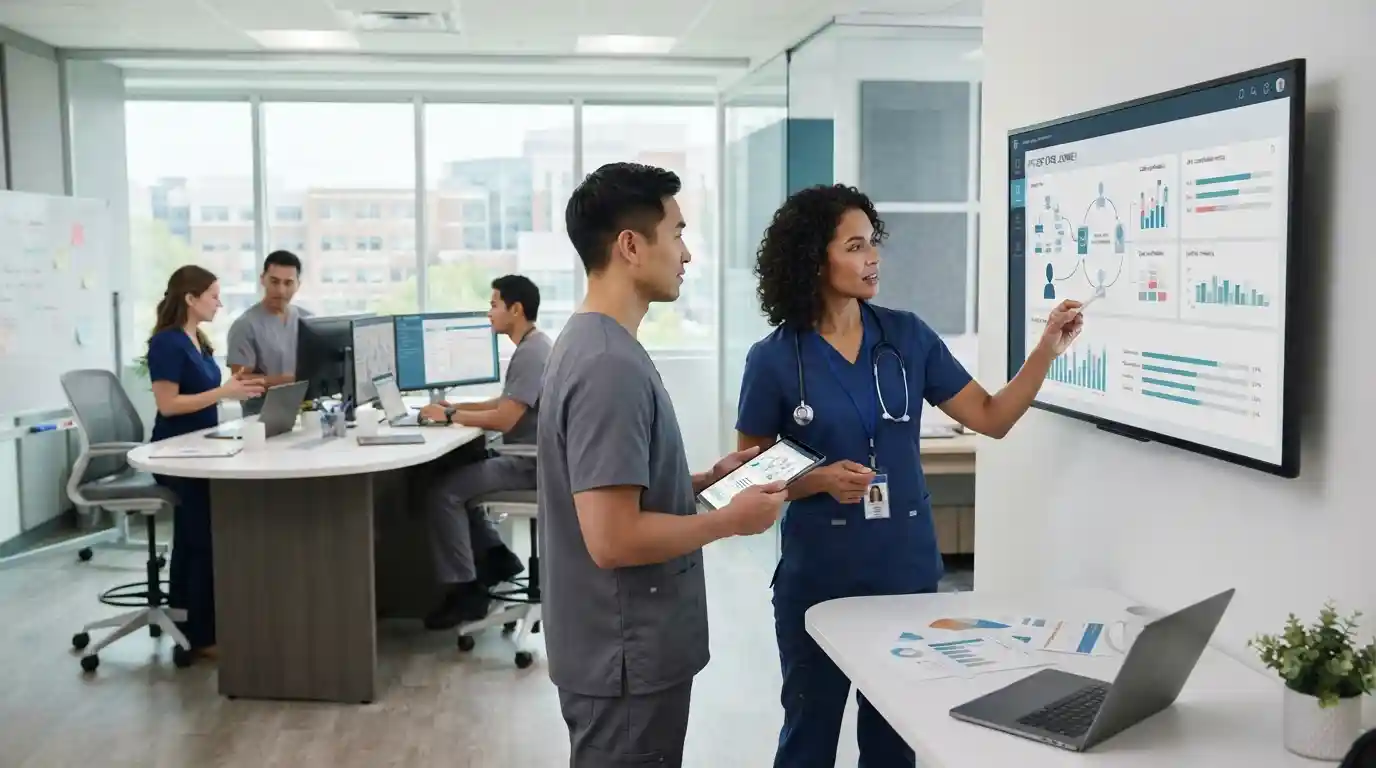
Rather than treating healthcare as a collection of disconnected processes, modern care-management technology aims to connect information and actions across the patient journey. This can help organizations coordinate services, identify risks earlier, improve communication, and make better use of clinical resources.
For readers exploring the broader healthcare landscape, related topics such as health and wellness centers, health clubs and wellness programs, and home care services show how healthcare support extends beyond traditional clinical settings.
What Is Elligent Health?
Elligent Health is a healthcare technology and care-management organization focused on helping health plans, providers, and other healthcare organizations coordinate care and use data more effectively. Its technology-oriented approach is designed around connected workflows, analytics, and information that can help care teams make more informed decisions.
The company’s current platform strategy includes capabilities for care management and utilization management, along with advanced analytics. These capabilities are particularly relevant to organizations managing complex populations, where clinical information, utilization patterns, quality measures, and other data points may need to be considered together.
This approach also connects with broader developments in healthcare technology. For example, organizations are increasingly exploring digital tools that support remote monitoring, data exchange, predictive analytics, and coordinated services rather than relying exclusively on traditional appointment-based interactions.
Why Connected Healthcare Matters
One of the biggest challenges in healthcare is fragmentation. A patient may interact with primary care providers, specialists, behavioral health professionals, pharmacies, hospitals, community organizations, and other services. When information does not move effectively between these parts of the healthcare system, care teams can have difficulty seeing the complete picture.
Connected care management can help address this challenge by bringing relevant information into workflows used by care teams. Instead of treating each interaction as an isolated event, organizations can use coordinated information to understand what has happened, what needs attention, and which services may be appropriate next.
This concept is especially important for people managing long-term conditions or multiple healthcare needs. Topics such as chronic lifestyle-related health risks and ongoing care requirements demonstrate why continuity and monitoring can matter over time.
Care Management and Patient Coordination
Care management is designed to help coordinate services around the needs of individual patients or members. Technology can support this process by organizing information, documenting activities, identifying gaps, and helping teams keep track of ongoing interventions.
For healthcare organizations, a coordinated workflow can make it easier to understand which patients require additional attention. It can also help care teams communicate more consistently when multiple professionals are involved in an individual’s care.
This broader model of coordination is relevant to areas such as home health services and home-based care, where effective communication between organizations, professionals, patients, and families can be particularly important.
How Healthcare Analytics Can Support Better Decisions
Healthcare generates large amounts of information, including clinical records, claims information, utilization data, assessments, care plans, and operational metrics. Simply collecting data is not enough. Organizations need ways to turn that information into useful insights.
Healthcare analytics can help teams identify patterns, examine utilization, monitor performance, and understand where intervention may be needed. When analytics are incorporated into everyday workflows, they can become more useful than isolated reports that are reviewed only periodically.
This is particularly valuable for organizations working with large patient populations. Analytics can help teams identify trends that may deserve further review while allowing clinical professionals to apply their own judgment to individual patient circumstances.
The importance of data-driven healthcare also connects with the wider technology sector, including technology-enabled operational systems and modern data and technology infrastructure.
Predictive Analytics and Proactive Care
Traditional healthcare often responds after a problem becomes visible. Predictive analytics aims to help organizations identify patterns that may indicate increasing risk so care teams can investigate and potentially intervene earlier.
Predictive models should not replace clinical judgment. Instead, they can provide another source of information that helps healthcare professionals prioritize attention and investigate patients or populations that may require additional support.
This proactive approach can be particularly relevant to chronic disease management, where changes in health status may develop gradually. Better identification of potential risk can support more timely conversations between patients and care teams.
Other healthcare technology discussions, including sports physicals and preventive health assessments, illustrate the wider role of monitoring and early identification in healthcare.
Interoperability and the Importance of Healthcare Data Exchange
Healthcare organizations often rely on multiple software platforms. If those systems cannot communicate effectively, information can become fragmented across departments and organizations.
Interoperability standards such as FHIR are increasingly important because they provide structured approaches for exchanging healthcare information between compatible systems. Better interoperability can help reduce manual information transfer and support more connected workflows.
For care-management platforms, interoperability can be particularly valuable because care teams may need information from different sources to understand a patient’s circumstances. Connecting relevant data can make it easier to coordinate services and track progress.
Whole-Person Care Beyond Clinical Information
Modern healthcare increasingly recognizes that health is influenced by more than diagnoses and medical treatments. Housing, food access, transportation, behavioral health, social support, and other circumstances can affect whether patients are able to follow care plans and access services.
A whole-person approach therefore considers clinical and nonclinical needs together. Technology can support this model by helping organizations organize information and coordinate referrals or services across different parts of the healthcare ecosystem.
This broader perspective also relates to behavioral health services, where coordination between behavioral and physical healthcare can be important for people with complex needs.
It also complements the work of organizations focused on health and wellness, prevention, and community-based support.
The Role of Technology in Patient Engagement
Patient engagement is another important component of modern healthcare. Patients increasingly expect convenient communication, accessible information, and services that fit into their daily lives.
Digital healthcare tools can make certain interactions easier by supporting remote communication, electronic information exchange, reminders, monitoring, and other technology-enabled services. However, technology works best when it complements rather than replaces meaningful communication between patients and healthcare professionals.
Healthcare organizations can also learn from other technology-driven industries where digital experiences have become part of everyday service delivery. The challenge is adapting those expectations to an environment where privacy, security, accuracy, and clinical responsibility are essential.
Supporting Healthcare Professionals
Healthcare technology is not only about improving the patient experience. It can also help professionals manage complex administrative and informational demands.
Care teams may spend significant amounts of time reviewing records, documenting activities, coordinating services, tracking authorizations, communicating with other organizations, and monitoring patient progress. Well-designed technology can reduce unnecessary manual steps and make important information easier to access.
This can allow professionals to spend more time on activities that require clinical expertise, communication, and human judgment. Technology should therefore be viewed as an enabling tool rather than a substitute for healthcare professionals.
Healthcare Technology and Specialized Care
Different healthcare populations have different needs. A technology platform supporting care management must therefore be flexible enough to work across various programs, conditions, and organizational structures.
Specialized healthcare fields can involve complex coordination requirements. For example, mammography technology and diagnostic services rely on coordination between patients, technical professionals, imaging systems, and clinical teams.
Likewise, healthcare organizations involved in PICC nursing and specialized clinical care may require coordinated workflows to support patients across different stages of treatment.
These examples demonstrate why healthcare technology needs to be adaptable rather than built around a single type of patient interaction.
Security, Privacy, and Responsible Healthcare Technology
Healthcare data is highly sensitive, making privacy and security fundamental considerations for any digital healthcare system. Organizations must carefully manage access, authentication, data exchange, storage, and regulatory requirements.
Technology adoption should therefore be accompanied by appropriate governance and security practices. A platform can only be useful when healthcare organizations can trust the way information is handled.
Security is also part of the broader technology conversation, particularly as organizations connect more systems and exchange increasing amounts of information. Healthcare providers and technology vendors must continuously evaluate their security processes as systems evolve.
How Elligent Health Fits Into the Future of Healthcare
The future of healthcare is likely to involve greater connectivity between clinical systems, care teams, analytics platforms, patients, and community-based services. Organizations will increasingly need technology that can help turn fragmented information into actionable workflows.
Elligent Health’s focus on care management, utilization management, analytics, and interoperability reflects this broader movement toward connected healthcare operations.
The evolution of healthcare technology will also involve continued development in artificial intelligence, predictive analytics, data standards, remote services, and digital patient engagement. The most useful applications will be those that solve practical healthcare problems while maintaining appropriate human oversight.
What Healthcare Organizations Should Consider
Organizations evaluating healthcare technology should look beyond individual features. Important considerations include interoperability, workflow flexibility, data security, analytics capabilities, usability, scalability, and the ability to support different patient populations.
Healthcare leaders should also examine how a platform fits into existing operations. A technically sophisticated solution may provide limited value if it creates unnecessary complexity for the people expected to use it.
Implementation should therefore be approached as an operational and clinical transformation rather than simply a software installation. Training, workflow design, governance, measurement, and ongoing optimization all contribute to successful adoption.
Related Healthcare Resources
Healthcare technology is only one part of the larger healthcare ecosystem. Readers interested in related topics can explore health center services, wellness and fitness, behavioral healthcare, and health and wellness service reviews.
For people interested in healthcare delivered outside traditional facilities, resources covering home care and home health services provide additional context about the wider care ecosystem.
Conclusion
Elligent Health represents a broader shift toward connected, data-informed, and coordinated healthcare. Care management, utilization management, analytics, interoperability, and whole-person approaches can help organizations build workflows that are better aligned with the complexity of modern healthcare.
The goal of healthcare technology should ultimately remain practical: help professionals access useful information, support better coordination, improve patient engagement, and make healthcare systems easier to navigate. As digital healthcare continues to evolve, solutions that combine technology with thoughtful clinical and operational processes will remain an important part of the changing healthcare landscape.
By connecting people, information, and workflows more effectively, healthcare organizations can continue working toward care that is more coordinated, responsive, and centered on the needs of the populations they serve.