Tipping at restaurants in the United States confuses almost everyone. You sit down for a meal, enjoy your food, and then the bill arrives with a blank line for a tip, a card machine suggesting 20 percent, 25 percent, or even 30 percent, and a quiet pressure to decide fast. If you tip too little, you worry about looking cheap. If you tip too much, you wonder whether you just overpaid. This restaurant tipping guide clears up the confusion with simple, practical rules you can use in 2026.
The basic idea is straightforward. In the United States, restaurant servers often earn a low hourly base wage, and tips make up a large part of their income. Tipping is not just a bonus for great service. It is a normal, expected part of the cost of eating out. That is why this guide focuses on realistic percentages, real situations, and easy habits, rather than rigid rules that never fit real life.
Restaurant Tipping Guide: Standard Percentages in 2026
For a standard sit-down restaurant meal in the USA, the usual tip range is 18 to 20 percent of the pre-tax bill for good service. Fifteen percent is acceptable for service that was just okay, while 20 to 25 percent is generous and appropriate for excellent service. These percentages apply to the food and drink total before tax, not the after-tax total.
Why does the range matter? Because tipping customs change slowly, but they do change. A decade ago, 15 percent was the common standard. Today, 18 to 20 percent is the normal range in most American cities, especially in larger cities where the cost of living is higher. In small towns and casual diners, 15 to 18 percent still feels perfectly normal. The key is to match your tip to the setting and the service, not to a single number you memorized years ago.
If you are visiting the United States for the first time, remember that tipping is expected in almost every sit-down restaurant. It is not optional in the way it is in many other countries. Skipping the tip entirely is considered rude unless the service was truly terrible, and even then, a small tip with a calm word to the manager is the more graceful approach.
How Much to Tip in Different Restaurant Settings
Not every restaurant works the same way. A fine dining restaurant, a casual burger joint, a food truck, and a coffee shop all have different expectations. Use the setting as your guide.
Sit-Down Restaurants With Table Service
When a server takes your order, brings your food, refills your drinks, and checks on you during the meal, tip 18 to 20 percent for good service. For a truly special evening, such as fine dining in New York City, a 20 to 25 percent tip is a kind way to recognize attentive, knowledgeable service. If the server went out of their way, handled a large order flawlessly, or made your celebration feel special, tipping at the top of the range is well deserved.
Casual Restaurants and Counter Service
At casual spots where you order at a counter but food is brought to your table, tipping 10 to 15 percent is common, and rounding up is always appreciated. At a place serving the best burgers in America, for example, a few dollars in the tip jar or a 10 percent tip on the card machine is a friendly gesture. The staff still works hard, but the service is lighter than full table service, so the tip can be lighter too.
Food Trucks and Street Food
Food trucks run on speed and volume, and tipping is appreciated but not strictly required. One to two dollars per order, or about 10 percent, is a good standard. When you chase down the best food trucks in America, a small tip tells the crew you value their work, and it often earns you a smile and a recommendation for what to try next time.
Bars and Drinks
At a bar, the standard tip is one to two dollars per drink, or 18 to 20 percent of the total tab if you run a tab. If the bartender made a complicated cocktail or gave you great recommendations, tip toward the higher end. Regulars know that generous tipping at a bar is remembered, and it often means faster, friendlier service on your next visit.
Buffets
At a buffet, servers still clear plates, refill drinks, and keep your table tidy, so a tip of 10 percent is standard, or a few dollars per person. If the buffet includes table service for drinks and extras, move closer to 15 percent. The work is lighter than full service, but it is still real work.
Takeout and Delivery
For takeout you pick up yourself, tipping 10 percent or a couple of dollars is a kind gesture, especially if the staff packed a large or complicated order carefully. For delivery, tip 15 to 20 percent, or at least three to five dollars, because the driver uses their own car, fuel, and time. Bad weather, long distances, and large orders all deserve a bigger delivery tip.
Tipping on Cards, Cash, and Splitting Bills
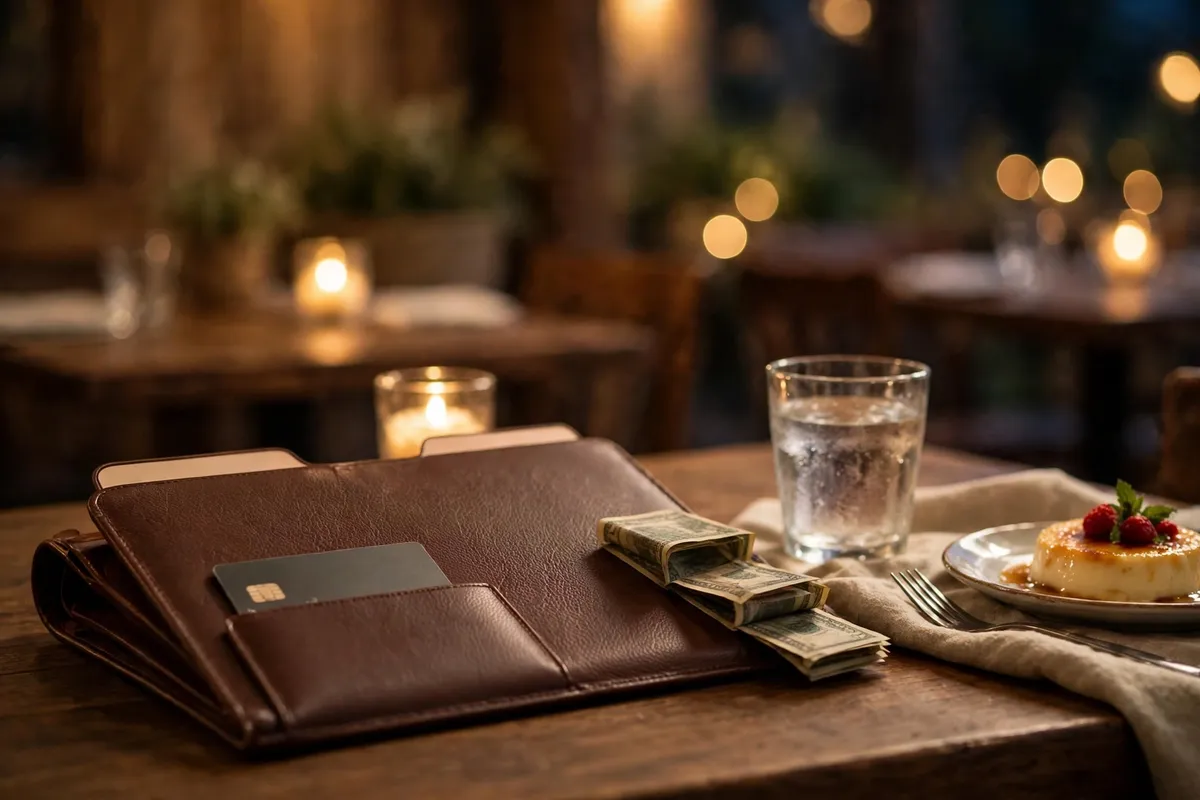
Most American restaurants now let you add a tip on the card machine or the printed receipt. Card tips are convenient and fully normal, and servers receive them just like cash tips, although sometimes with a short delay. Cash tips are still welcome and are often preferred by staff, because they are immediate. Either method is fine, so choose whichever is easier for you.
When a card machine suggests tip amounts, check the math before you tap. Suggested percentages are usually calculated on the after-tax total, which makes the tip slightly larger than a pre-tax calculation. That is fine if you are happy with the amount, but if the suggested options jump from 20 percent to 25 percent to 30 percent, you can almost always choose a custom amount and enter your own number. Never feel forced into the highest suggested tip.
Splitting a bill with friends is where tipping gets awkward. The simplest approach is for everyone to tip the same percentage on their share, or to agree on a total tip before the bill arrives. If one person pays the whole bill on a card, the others can send their share plus tip straight away, so no one is left covering the tip alone. A quick conversation before ordering saves an awkward moment after dessert.
Large parties deserve special attention. Many restaurants automatically add a service charge, often 18 to 20 percent, for groups of six or eight or more. Always check the bill for a service charge before adding a tip, because that charge is the tip in most cases. If the service was outstanding, you can add a little extra on top, but you should never double-tip by accident.
Common Restaurant Tipping Mistakes to Avoid
The most common mistake is tipping on the after-tax total without realizing it. It is a small difference, but it adds up over many meals. Another common mistake is forgetting to tip on the full value of a discounted meal. If you used a coupon or a happy hour deal, tip on what the meal would have cost at full price, because the server did the same amount of work.
Another mistake is punishing the server for problems they did not cause. If the kitchen was slow or a dish was wrong, that is usually not the server’s fault, especially if they handled it politely and fixed the problem. Tip fairly for the service you received, and raise food problems with the manager separately. Docking the tip for a kitchen error only hurts the wrong person.
Finally, do not assume that a tip jar at a coffee shop or bakery works like table service. Dropping in your spare change is generous, but no one expects a 20 percent tip for a croissant you carry to your own table. When you pick up treats from the best bakeries in San Francisco, a dollar or two in the jar is plenty, and a smile costs nothing.
Tipping Etiquette for Special Situations
Special situations have their own unwritten rules. At a breakfast spot serving the best breakfast sandwiches in Boston, a 15 to 20 percent tip is standard, just like lunch or dinner. Morning servers work early hours and handle high turnover, so a fair tip is appreciated before you even finish your coffee.
When you travel for food, tipping customs stay the same across the United States, even though local prices change. Whether you are tasting the best tacos in Chicago, sampling the best soul food in Atlanta, or enjoying the best oysters in Seattle, the same 18 to 20 percent rule for table service applies. What changes is the bill, not the percentage.
For a celebratory meal, such as a birthday dinner at a restaurant serving the best pizza in Chicago, consider tipping a little extra if the staff helped with a cake, decorations, or a special request. Small kindnesses from the staff deserve recognition, and a generous tip is the simplest way to say thank you.
If you are exploring a new city for brunch, the same rules hold. At the best brunch spots in Austin, weekend crowds are large and servers work fast, so a solid 20 percent tip for good service is fair. And if your travels take you to Italian food, the staff at Italian restaurants in New York City will appreciate the same standard, whether you order a simple pasta or a full multi-course meal.
One more situation worth knowing: if you are a regular at a restaurant, consistent fair tipping builds a relationship. Servers remember kind, reliable tippers, and regulars often enjoy warmer welcomes, better tables, and honest menu recommendations. Tipping well is not just about one meal. It is about how you are treated every time you return.
Frequently Asked Questions About Restaurant Tipping
Should I tip on takeout orders?
Tipping on takeout is appreciated but not required in the same way as table service. A few dollars or about 10 percent is a kind gesture, especially for large or carefully packed orders. If the staff went out of their way, tip a little more.
What if the service was bad?
If the service was poor, you can reduce the tip to 10 percent or, in a truly bad case, speak calmly with the manager instead of leaving nothing. Leaving no tip at all sends no clear message, while a conversation can actually fix the problem. Never take your frustration out on a server for kitchen mistakes or things beyond their control.
Do I need to tip if a service charge is already added?
No. If the bill already includes a service charge, that charge is the tip, and you do not need to add another one unless the service was exceptional. Always read the bill carefully before adding a tip, so you do not tip twice by accident.
Conclusion: Tip Fairly, Tip Calmly, Enjoy Your Meal
Restaurant tipping in the USA does not need to be stressful. For most sit-down meals, 18 to 20 percent for good service is the safe, fair standard. Adjust up for excellent service, down for poor service, and always check for a service charge before you add a tip. For casual spots, food trucks, takeout, and delivery, smaller tips are normal and appreciated.
The best habit is a simple one: decide your tip before the bill arrives, based on the service you actually received, and then stop worrying about it. A fair tip, given calmly and kindly, is one of the easiest ways to be a good guest in any American restaurant. Enjoy your meal, treat your server well, and let tipping be the smallest part of a great night out.