Ask a Bostonian where to find the best chowder and you will get an answer fast, and probably a strong opinion to go with it. Clam chowder is not just a menu item in this city; it is a point of civic pride, a cold-weather ritual, and the first thing many visitors want to eat when they step off the plane. This guide to the best clam chowder in Boston will help you skip the watered-down imitations and find the thick, briny, clam-packed bowls that earned the city its reputation.
From historic market halls to neighborhood seafood shacks, Boston serves chowder in many styles and at many prices. Here is how to tell the great bowls from the merely good ones.
New England vs. Manhattan: Know Your Chowder
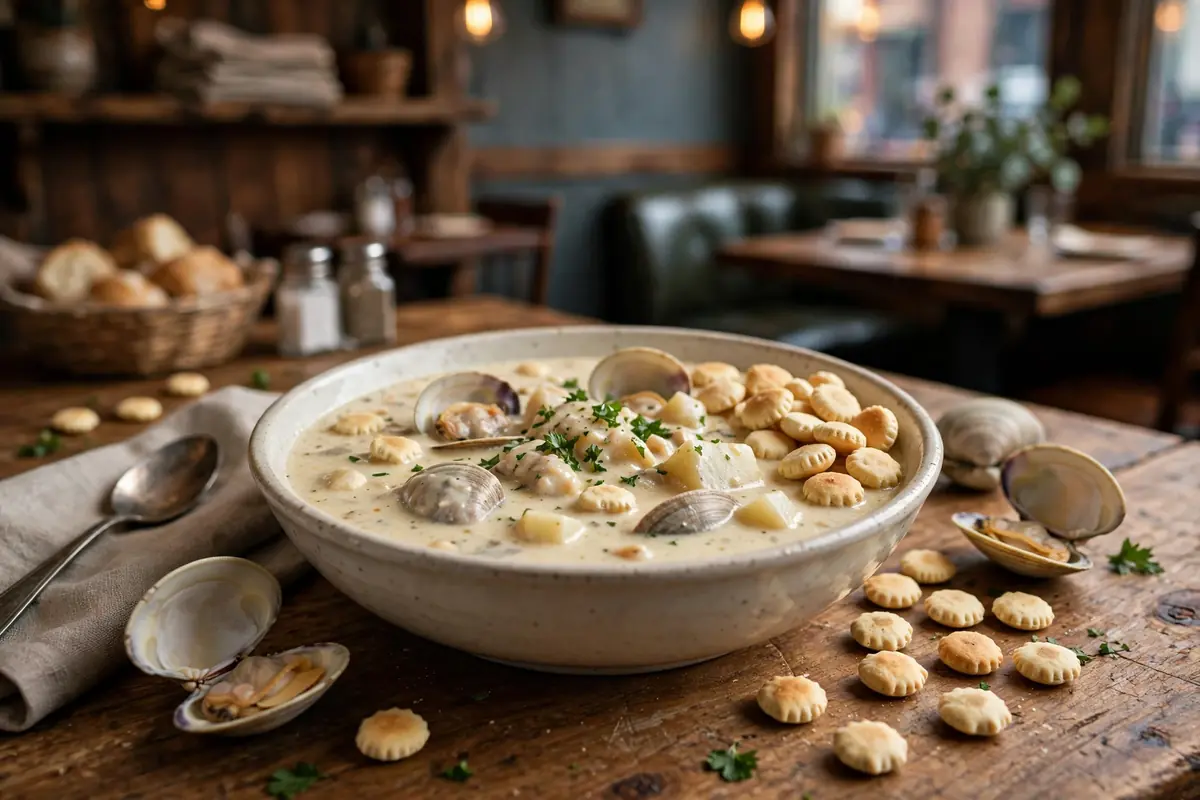
The first thing to understand is that Boston chowder means New England clam chowder. It is cream-based, thick, and rich, built on clams, potatoes, onions, and salt pork or bacon. The broth should coat a spoon, the potatoes should be tender but not mushy, and the clams should be plentiful and tender, not rubbery.
Manhattan clam chowder, by contrast, is tomato-based, thinner, and red. You will find it on some Boston menus, but it is not the local style, and ordering it in Boston is a bit like ordering a deep-dish pizza in New York. It is fine food, just not the hometown specialty. For the classic Boston experience, order New England style every time.
Within New England style, there are still variations. Some kitchens make a very thick, almost stew-like chowder, while others keep it a touch lighter so the clam flavor shines. Some add a pat of butter on top, some serve oyster crackers on the side, and a few offer a bread bowl option. None of these choices is wrong; they are just different expressions of the same beloved dish.
What Makes a Great Bowl of Boston Clam Chowder
A great bowl starts with the clams. Fresh, well-cleaned clams give the broth a clean brininess that canned products cannot match. The best kitchens use a mix of clam meat and clam broth, so the sea flavor runs all the way through the bowl rather than sitting on top.
Next comes texture. The potatoes should hold their shape, the onions should melt into the background, and the cream should be rich without feeling greasy. A chowder that is thickened with too much flour tastes pasty, while one that is too thin feels like soup wearing a costume. The ideal bowl is hearty enough to be a meal, especially when paired with a roll or a salad.
Finally, seasoning matters. Salt pork or bacon adds a smoky depth, black pepper adds warmth, and a little fresh thyme or parsley lifts the whole bowl. The best chowder makers season carefully, tasting as they go, because clams vary in saltiness from batch to batch.
Where to Eat: Boston Chowder Neighborhood by Neighborhood
Downtown and the Waterfront
Downtown Boston and the waterfront are the classic chowder zone. The area’s historic market halls and old seafood houses have been serving chowder for generations, and the harbor views make the experience even better. This is the best place to start if you have limited time, since several strong options sit within easy walking distance of each other.
North End
The North End, Boston’s Italian neighborhood, is better known for pasta and cannoli, but its seafood spots also serve excellent chowder. Eating here lets you pair a bowl of chowder with a walk through some of the oldest streets in America, which is a very Boston way to spend an afternoon.
South Boston and the Seaport
South Boston and the fast-growing Seaport district offer a more modern take, with sleek dining rooms and updated seafood menus. The chowder here is often just as traditional, but the setting is newer, and the menus tend to offer more variety for groups with different tastes.
Cambridge and the Neighborhoods
Do not overlook Cambridge and Boston’s residential neighborhoods. Family-run seafood spots away from the tourist core often serve chowder that is every bit as good as the famous names, usually at lower prices and with shorter lines. If you have a car or a transit pass, a neighborhood detour can be very rewarding.
How to Order Like a Boston Local
Order the cup first if you are sampling widely, and the bowl if you are settling in. Many visitors make the mistake of ordering a bowl at every stop, which fills them up fast. A cup lets you compare two or three places in one afternoon without regret.
Ask for oyster crackers, and use them. Crumble a few into the bowl for crunch, or eat them on the side between spoonfuls. If the chowder comes with a bread bowl option, save it for your favorite stop, since a bread bowl is a commitment.
Also consider the time of day. Chowder tastes best when it is freshly made, and many kitchens prepare it in the morning. A lunchtime bowl is often at its peak, while a late-evening bowl may have been sitting longer. That said, a good kitchen holds its chowder well, so do not overthink it.
What to Expect on Price, Portions, and Lines
A cup of chowder in Boston typically costs $7 to $12, and a bowl $12 to $18, with bread bowl versions a few dollars more. That makes chowder one of the best-value meals in a city known for pricey dining. A bowl plus a roll is a satisfying lunch, and a bowl plus a seafood entree is a full dinner.
Lines are a reality at the most famous spots, especially in summer and on weekends. The wait is usually worth it, but if you are short on time, the neighborhood spots described above offer a faster route to an equally good bowl. Eating at off-peak hours, like a late lunch, also helps.
For a wider seafood perspective, our guide to the seafood restaurants in Boston covers the full range of the city’s catch, while the breakfast sandwiches in Boston guide is perfect for the morning after a chowder crawl. Chowder lovers comparing coasts should also read the best seafood in New York and the best seafood in Los Angeles guides, plus the best oysters in Seattle guide for another cold-water classic.
Boston Chowder Tips for Every Kind of Eater
For first-timers: Order New England style, always. Save Manhattan style for another city, another day.
For families: Chowder is a great kid-friendly choice, since it is mild, creamy, and filling. Most seafood spots offer smaller cups that work well for children.
For gluten-free eaters: Ask whether the chowder is thickened with flour. Some kitchens offer a flour-free version, and oyster crackers can be skipped without losing the experience.
For dairy-free eaters: Traditional New England chowder is cream-based, so it is not dairy-free. Some modern kitchens offer a clear-broth Rhode Island style chowder, which is worth asking about.
For budget travelers: A cup of chowder and a roll is one of the cheapest satisfying lunches in downtown Boston. Pair it with free sightseeing, like a walk along the harbor, for a low-cost afternoon.
Pairing Chowder With the Rest of Boston’s Table
Chowder is the gateway to Boston’s wider seafood culture. After your chowder crawl, try the crab cakes in Baltimore guide for a Mid-Atlantic comparison, or the lobster rolls in Portland guide to see how Maine handles its own famous catch. For a sweet finish, the best bagels in New York guide and the bakeries in San Francisco guide cover the bakery side of an American food trip, while the best cheesecake in New York guide handles dessert in the biggest way possible.
Frequently Asked Questions About Clam Chowder in Boston
Another beloved Boston tradition is the friendly rivalry between chowder makers, which sometimes plays out in local chowder festivals and cook-offs. If your visit lines up with one of these events, go. Tasting many bowls side by side is the fastest way to learn what you like, and the atmosphere is pure Boston: proud, loud, and delicious. Even outside festival season, simply walking the harbor after your bowl is part of the ritual, since the sea air and the harbor views make the chowder taste even better.
What is the difference between New England and Manhattan clam chowder?
New England chowder is cream-based and thick, while Manhattan chowder is tomato-based and thinner. Boston is famous for the New England style.
How much does clam chowder cost in Boston?
Expect $7 to $12 for a cup and $12 to $18 for a bowl, with bread bowl versions costing a few dollars more.
Is Boston clam chowder good for kids?
Yes. It is mild, creamy, and filling, and most seafood restaurants offer cup sizes that suit younger eaters.
When is the best time to eat chowder in Boston?
Chowder is a year-round dish, but it tastes best on a cold day, and lunchtime bowls are often at their freshest.
Final Thoughts: A Bowl Worth the Trip
The best clam chowder in Boston is more than a meal. It is a taste of the harbor, a piece of the city’s history, and a bowl of comfort that has warmed generations of New Englanders. Whether you eat it in a historic market hall or a quiet neighborhood shop, order it New England style, take your time, and savor every spoonful.
Bring crackers, bring an appetite, and bring a willingness to argue about your favorite afterward. In Boston, that argument is part of the fun.