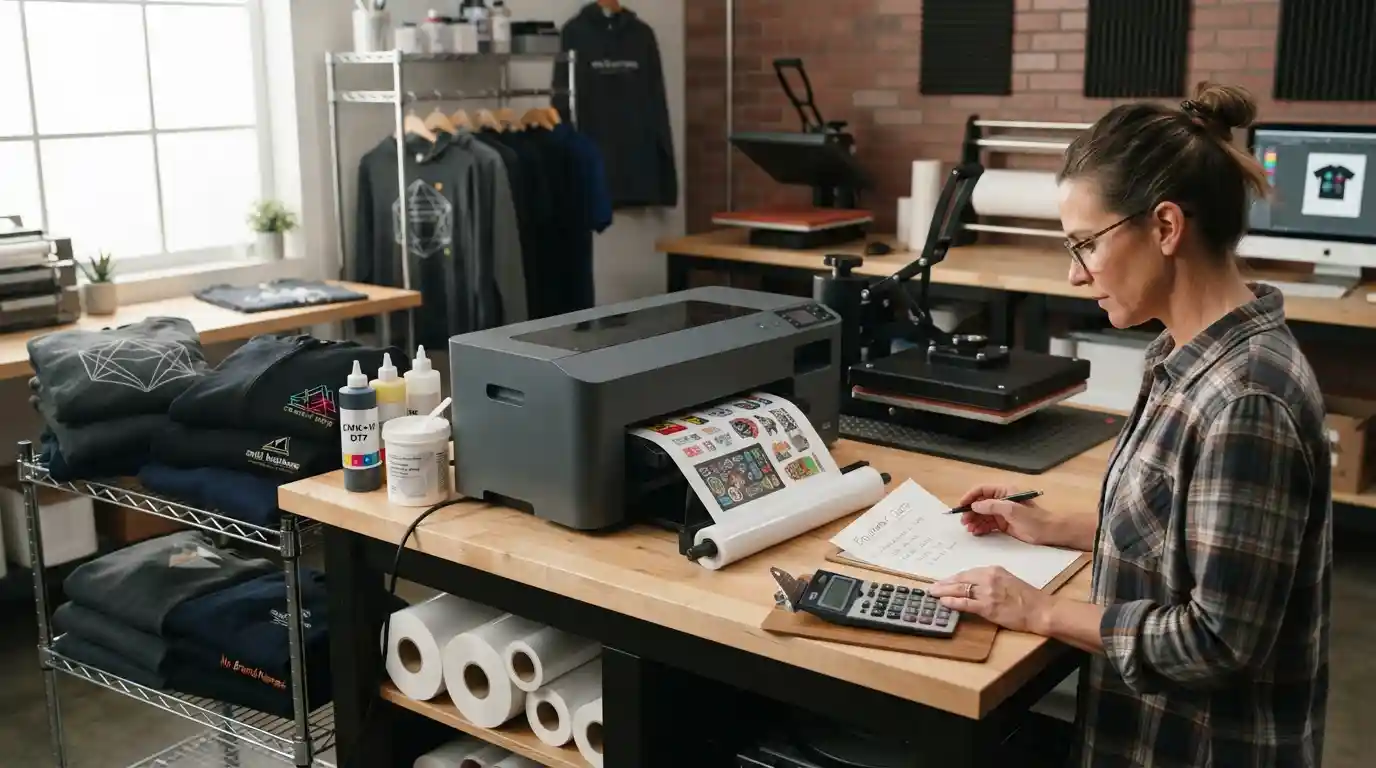
DTF printer financing gives business owners another way to acquire printing equipment while spreading the cost over scheduled payments. Instead of using a large amount of cash at once, you can structure equipment purchases around your expected production needs and cash flow.
This guide explains how DTF printer financing works, the main funding options to consider, what lenders may evaluate, the costs beyond the printer, and how to determine whether financing fits your printing business.
What Is DTF Printer Financing?
DTF printer financing is a funding arrangement used to purchase a direct-to-film printer or a complete DTF printing setup. Depending on the provider, financing may cover the printer, curing or powder equipment, heat press, software, and related production equipment.
Rather than paying the entire equipment price immediately, the business makes scheduled payments according to the financing agreement. The structure can vary considerably. Some arrangements are equipment loans, while others are leases, installment plans, business lines of credit, or other forms of commercial financing.
The important point is that the monthly payment is only one part of the decision. Business owners should also examine the total repayment amount, fees, ownership terms, payment frequency, early-payment conditions, and what happens if the equipment becomes obsolete or needs replacement.
Why Finance a DTF Printer?
A DTF printer can become an important production asset for apparel companies, promotional-product businesses, Etsy sellers, clothing brands, print shops, and custom merchandise providers. Financing may allow a business to preserve more cash for everyday operations while acquiring equipment sooner.
For example, available working capital may still be needed for blank garments, advertising, packaging, shipping, website costs, software, maintenance, and payroll. This is why equipment financing can be considered as part of a broader financing strategy rather than simply a way to buy a printer.
Businesses also need to consider whether their equipment investment supports a realistic growth plan. A printer should be selected according to expected order volume rather than simply choosing the largest machine available.
Common DTF Printer Financing Options
1. Equipment Financing
Equipment financing is specifically designed to help businesses acquire machinery and other business assets. The equipment may serve as security for the financing, depending on the agreement.
This approach can make sense when the printer is a clearly defined business asset and the company wants a structured repayment schedule. Before signing, review the interest rate or financing cost, fees, term length, down payment requirements, and ownership provisions.
2. Equipment Leasing
With a lease, the business generally makes recurring payments to use the equipment for a specified period. Depending on the lease structure, ownership may remain with the leasing company or there may be a purchase option at the end.
Leasing can be useful when a business wants access to equipment without making a large upfront purchase. However, the lowest monthly payment does not necessarily mean the lowest overall cost.
3. Business Line of Credit
A business line of credit can provide flexible access to funds when equipment and operating expenses occur at different times. A business may use available credit for a printer, supplies, repairs, or other approved expenses.
The flexibility can be useful, but business owners should understand the applicable fees, interest structure, repayment requirements, and available credit limit.
Businesses comparing different funding structures can also explore broader finance-related information before making an equipment decision.
4. Installment Payment Plans
Some equipment sellers offer payment plans that divide the purchase price into multiple scheduled payments. These arrangements can be easier to understand than more complex commercial financing, but the terms still need to be reviewed carefully.
Check whether the advertised payment includes interest, processing fees, taxes, shipping, or other charges. Also determine whether ownership transfers immediately or only after the final payment.
5. Business Credit Cards
A business credit card may be another funding method for smaller equipment purchases or supporting expenses. It can provide convenience and flexibility, but carrying a large balance for a long period can become expensive.
Credit cards may be more appropriate for smaller purchases or short repayment periods than for a major production system. Always compare the financing cost with the expected return from the equipment.
What Does a DTF Printing Setup Actually Include?
One of the biggest mistakes new operators make is calculating financing around the printer alone. A functioning DTF operation usually requires several components.
- DTF printer
- CMYK and white DTF inks
- PET transfer film
- Hot-melt adhesive powder
- Powder application and curing equipment
- Heat press
- RIP software or compatible printing software
- Computer and workspace
- Cleaning and maintenance supplies
- Blank garments and other products
- Packaging and shipping materials
The actual equipment list depends on the production model. A small home-based operation may need a very different setup from a commercial print shop handling large recurring orders.
If the business also sells products online, it is useful to consider the broader ecommerce business model alongside the equipment investment.
How Much Should You Finance?
There is no universal financing amount that works for every DTF business. The appropriate amount depends on equipment requirements, available cash, existing revenue, expected order volume, operating expenses, and repayment capacity.
A practical approach is to separate the investment into three categories:
- Production equipment: printer, curing equipment, powder system, and heat press.
- Initial operating inventory: ink, film, powder, garments, packaging, and other supplies.
- Working capital: money reserved for rent, marketing, software, utilities, shipping, maintenance, and unexpected expenses.
Financing too little can leave the business without enough cash to operate. Financing too much can create unnecessary repayment pressure. The goal is to match the equipment investment with a realistic operating plan.
How Lenders May Evaluate Your Application
Financing providers can use different approval criteria, but business owners may be asked to provide information about revenue, time in business, credit history, bank activity, tax records, existing obligations, and the equipment being purchased.
New businesses may have fewer financial records available, while established businesses can potentially demonstrate repayment capacity through historical revenue and cash flow.
Keeping financial information organized can make the application process easier. Businesses that already use structured financial planning may also benefit from reviewing financial trends and planning concepts before committing to new debt.
What Credit Score Do You Need?
There is no single credit-score requirement for every DTF printer financing program. Requirements vary by lender, financing product, business age, revenue, equipment value, and overall risk assessment.
A stronger credit profile may provide access to more financing choices, but credit score is not necessarily the only factor considered. Business revenue, cash flow, time in operation, collateral, and repayment history can also matter.
If credit is limited, it can be useful to compare multiple financing structures instead of assuming that one option is available to every applicant.
Calculate the Business Case Before Financing
Before taking on a monthly payment, estimate how the printer will contribute to the business.
Start by estimating the number of garments or transfers you realistically expect to produce each month. Then calculate the average selling price and subtract the variable costs associated with production.
Variable costs may include:
- Film
- Ink
- Adhesive powder
- Blank garments
- Packaging
- Payment processing
- Shipping
- Production labor
You should also account for fixed expenses such as equipment payments, software, rent, utilities, advertising, maintenance, and other business costs.
A printer can increase production capacity, but capacity is not the same as revenue. The business still needs customers and sufficient order volume to make the equipment economically useful.
Don’t Ignore Marketing Costs
Buying a DTF printer does not automatically create demand. A new printing business may need a customer-acquisition strategy covering search visibility, social media, paid advertising, local marketing, partnerships, and ecommerce promotion.
This makes marketing part of the equipment investment decision. Businesses interested in online growth can review digital marketing strategies and digital marketing trends when developing their customer-acquisition plan.
For businesses operating in competitive markets, understanding digital marketing ROI can also help determine how much working capital should remain available after purchasing equipment.
DTF Printer Financing for New Businesses
New businesses should be particularly careful when financing production equipment. Without a reliable sales history, projected revenue can be difficult to predict.
A smaller initial setup can sometimes allow an entrepreneur to validate demand before taking on a larger equipment obligation. Once order volume becomes more predictable, the business can evaluate whether upgrading to higher-capacity equipment is justified.
Entrepreneurs should also consider whether they need to finance the entire setup or only the most expensive component. Keeping some cash available for consumables and customer acquisition can be important during the early stages.
DTF Printer Financing for an Established Print Shop
Established print shops may approach financing differently because they can potentially use existing customer demand to support equipment expansion.
For example, a shop that regularly outsources DTF transfers may compare the recurring outsourcing expense with the cost of bringing production in-house. However, the comparison should include maintenance, labor, downtime, supplies, training, equipment depreciation, and financing costs.
A shop expanding into additional services may also review technology and digital-business strategies to support the broader expansion.
Questions to Ask Before Signing a Financing Agreement
Before accepting DTF printer financing, ask the provider for clear answers to the following questions:
- What is the total amount financed?
- What is the total repayment amount?
- Is there an upfront payment?
- How often are payments due?
- How long is the financing term?
- Are there origination or administrative fees?
- Who owns the equipment during the financing period?
- When does ownership transfer?
- Is there a final balloon or buyout payment?
- Are there early-payment conditions or penalties?
- What happens if the equipment needs major repairs?
- Does the agreement include maintenance or technical support?
- What happens if the business closes?
Getting these answers in writing can make it easier to compare offers on an apples-to-apples basis.
Financing vs. Buying a DTF Printer With Cash
Paying cash avoids financing charges and gives the business immediate ownership, but it can also reduce the amount of working capital available for operations.
Financing preserves more cash at the beginning but introduces recurring financial obligations and potentially increases the total cost of the equipment.
The decision therefore depends on the business’s liquidity, expected demand, financing terms, and risk tolerance rather than simply choosing the option with the lowest initial cost.
Businesses considering other major purchases can also examine how financing structures affect cash flow before making a commitment.
How to Reduce the Risk of Equipment Financing
Several practical steps can make an equipment-financing decision more disciplined.
Start With Real Demand
Use existing customer orders, inquiries, repeat customers, or validated sales channels to estimate demand instead of relying entirely on optimistic projections.
Compare the Complete Cost
Look beyond the monthly payment. Include interest or financing charges, fees, supplies, maintenance, shipping, software, and other required expenses.
Keep a Cash Reserve
A printer business can experience unexpected costs, including failed prints, maintenance requirements, supply shortages, equipment downtime, and slow sales periods. Keeping operating cash available can reduce pressure.
Match Capacity to Orders
Do not automatically finance the largest available machine. A smaller system may be more appropriate for a business that is still validating its market.
Build a Marketing Plan
Equipment needs customers. A combination of digital marketing ROI planning, organic search, social media, partnerships, and repeat-customer strategies can help create demand for the additional production capacity.
Can DTF Printer Financing Help a Small Business Grow?
It can, provided the financing structure fits the business’s actual financial position and production requirements. Financing can reduce the amount of cash needed at the point of purchase, allowing a business to spread equipment costs across a defined period.
However, financing should not be treated as a substitute for demand validation. A printer that spends most of its time idle can still create a monthly financial obligation.
The strongest equipment decisions connect three elements: realistic customer demand, appropriate production capacity, and manageable repayment costs.
Final Thoughts on DTF Printer Financing
DTF printer financing can provide a practical path for businesses that want to acquire printing equipment without paying the entire cost upfront. Equipment loans, leases, installment plans, business credit, and other funding structures can each have different advantages and costs.
The right approach starts with the complete business picture. Calculate the total setup cost, estimate realistic production volume, understand operating expenses, preserve enough working capital, and compare the full cost of every financing offer.
For entrepreneurs building an online apparel or printing business, financing decisions should also fit into the wider digital strategy. Reviewing consumer-product growth strategies, ecommerce marketing ROI, and digital marketing for business enterprises can help connect equipment investment with customer acquisition and long-term growth.
Ultimately, the goal is not simply to obtain a DTF printer. The goal is to build a sustainable printing operation in which equipment, financing, production, marketing, and customer demand work together.