For musicians, producers, sound designers, students, podcasters, and everyday listeners, understanding this changing environment is increasingly important. Audio is no longer limited to traditional recording studios. A laptop, quality headphones, an audio interface, a microphone, and the right software can provide the foundation for an increasingly capable creative setup.
This guide explores how GrossSound connects with modern music technology, what technologies are shaping audio production, how creators can benefit from them, and what the future of sound may look like.
What Is GrossSound in the Music Technology Landscape?
GrossSound is positioned around music and audio knowledge, with content covering areas such as music production, music theory, software, and technology. That makes it useful to view GrossSound not simply as a piece of hardware or a single audio-processing system, but as part of a wider ecosystem built around modern sound creation and learning.
The growth of digital music technology has created an environment where creators can experiment with recording, mixing, mastering, composition, sound design, and production without relying entirely on traditional studio infrastructure.
This shift is one reason music technology has become such an important part of the modern creative economy. Technology gives artists more control over their workflows while also creating new opportunities for people who want to learn audio production.
For readers interested in broader technological innovation, the development of modern audio tools can be viewed alongside other technology-focused developments such as Stardot Technologies and emerging business technology solutions.
How Music Technology Is Changing Audio Production
Traditional recording required access to specialized rooms, expensive equipment, and experienced technical teams. Digital technology has dramatically reduced many of those barriers.
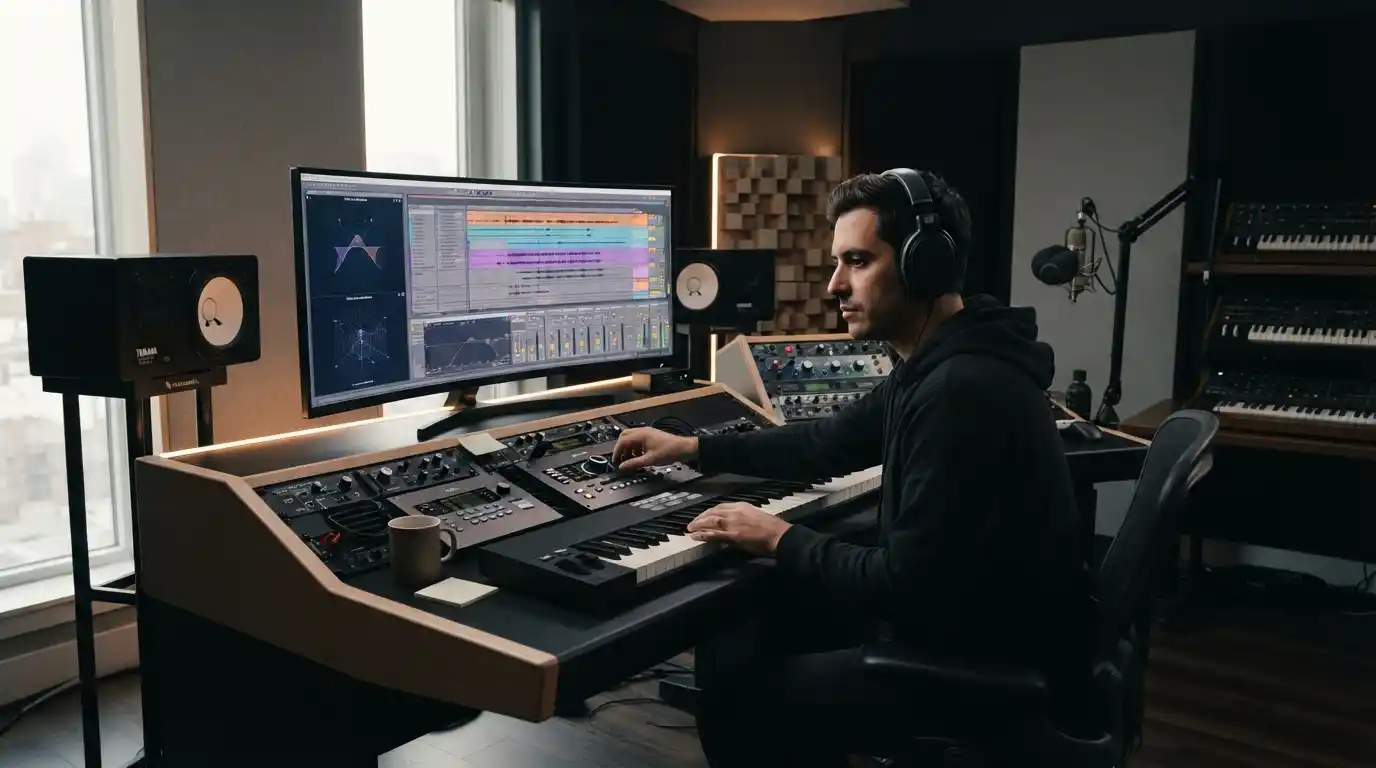
Today, producers can record vocals, edit performances, program instruments, manipulate samples, create effects, and mix complete projects from a computer-based workstation. This flexibility has changed both professional and independent music production.
Modern production workflows commonly involve:
- Digital audio workstations for recording and editing
- Virtual instruments and software synthesizers
- Audio interfaces for connecting microphones and instruments
- Studio headphones and monitor speakers
- Digital effects and signal-processing plugins
- Sampling and sound-design tools
- Automation for precise production control
- Digital mastering and distribution workflows
These tools allow creators to work faster while experimenting with sounds that would have been difficult or expensive to produce in earlier generations of recording technology.
The Role of Digital Audio Workstations
Digital audio workstations, commonly known as DAWs, are at the center of many modern music production environments. A DAW allows users to record audio, arrange tracks, edit performances, apply effects, automate parameters, and prepare finished mixes.
For beginners, the large number of available tools can initially feel overwhelming. However, the basic workflow is relatively straightforward: record or import audio, arrange the material, edit mistakes, shape individual sounds, balance the mix, and prepare the finished project.
The important point is that modern music technology is not necessarily about owning the most expensive equipment. Understanding how different tools work together is often more valuable than simply collecting software and hardware.
Creators interested in the wider technology sector can also explore topics such as technology-driven business operations, where digital systems similarly change how professional workflows are organized.
Sound Design and Creative Experimentation
One of the most exciting areas of music technology is sound design. Instead of simply recording existing instruments, creators can construct entirely new sounds by combining synthesis, sampling, effects processing, filtering, distortion, modulation, and automation.
This makes sound design useful far beyond traditional music. Film, television, gaming, advertising, podcasts, digital experiences, and interactive media all depend on carefully designed audio.
A simple recording can become something completely different after processing. A short vocal sample might be transformed into an atmospheric texture. A percussion sound can become a rhythmic effect. Environmental recordings can be layered into cinematic backgrounds.
Technology therefore expands the creative vocabulary available to musicians and sound professionals.
Artificial Intelligence and the Future of Audio
Artificial intelligence is becoming increasingly visible across creative technology. In audio production, AI-assisted systems can help with tasks such as audio cleanup, separation, transcription, arrangement assistance, mastering suggestions, and workflow automation.
AI does not necessarily replace the creative role of a musician or producer. Instead, it can function as another tool within the production process. The final creative decisions still depend heavily on musical judgment, artistic direction, taste, and context.
The development of AI also raises important questions about copyright, ownership, originality, artist consent, and the responsible use of generated material. As these systems become more capable, the music industry will need practical standards for determining how technology should be used.
The wider technology landscape provides useful context for this discussion. Readers interested in technology innovation can also explore modern technology solutions and technology-driven business transformation.
Why Audio Quality Still Matters
Advanced software cannot completely compensate for poor recording practices. The quality of the original source remains important.
A good recording begins with appropriate microphone placement, a suitable acoustic environment, correct input levels, and careful monitoring. Once the signal has been captured properly, software tools can be used to refine and enhance it.
Audio quality is also influenced by the listening environment. A professional studio, untreated bedroom, car, headphones, smartphone speaker, and concert venue can all produce very different listening experiences.
This is why modern audio production often involves checking a mix across multiple playback systems. A recording that sounds excellent on studio monitors should still translate effectively to everyday consumer devices.
Music Technology for Independent Artists
Independent artists have benefited enormously from the growth of affordable music technology. A creator no longer needs to wait for access to a major recording facility before experimenting with original material.
With a suitable home setup, independent musicians can:
- Write and arrange songs
- Record vocals and instruments
- Create electronic sounds
- Edit and mix recordings
- Produce demos and finished tracks
- Create content for social platforms
- Prepare audio for digital distribution
- Collaborate remotely with other creators
This accessibility has contributed to a much broader creative community. Musicians from different locations can work together without necessarily being in the same physical studio.
The same digital transformation can be seen in other creative industries. For example, technology and flexible business models in entertainment demonstrate how digital systems continue to reshape creative work.
Music Technology and Education
Music technology is also changing how people learn. Students can practice composition, recording, editing, sound design, and music theory using interactive software rather than relying exclusively on traditional classroom methods.
Educational environments can introduce learners to professional concepts through practical projects. Instead of only discussing recording theory, students can create a recording, analyze it, make changes, and compare the results.
This practical approach can make technical concepts easier to understand because learners can immediately hear the effects of their decisions.
Technology can also support collaboration. Students can exchange project files, record remotely, experiment with different arrangements, and receive feedback through digital platforms.
For anyone considering a professional future in this field, understanding both creative and technical skills is becoming increasingly valuable.
The Connection Between Music, Entertainment, and Technology
Music does not exist in isolation from the wider entertainment industry. Audio technology is closely connected with film, television, gaming, live events, online video, advertising, and digital media.
Modern entertainment experiences increasingly depend on carefully designed audio. A dramatic scene can feel completely different when the sound design changes. A video game can become more immersive through spatial effects and responsive audio. A live performance can benefit from sophisticated mixing and monitoring systems.
Organizations working across entertainment therefore need both creative expertise and reliable technology infrastructure.
Examples from the wider entertainment sector include entertainment experience development, digital entertainment resources, and technology-supported entertainment venues.
Spatial Audio and Immersive Listening
Spatial audio is another important development in modern sound technology. Traditional stereo systems generally position sound across a left-right field, while spatial approaches can create a stronger sense of three-dimensional placement.
This can be particularly useful for movies, games, virtual experiences, live events, and music designed specifically for immersive playback.
The goal is not simply to make audio louder. Instead, spatial production attempts to create a more convincing relationship between the listener and individual sounds.
As compatible headphones, speakers, and playback systems become more common, creators are likely to continue experimenting with immersive audio formats.
The Importance of Audio Software
Software has become one of the most influential parts of modern music technology. A single computer can host recording tools, virtual instruments, synthesizers, samplers, mixing processors, mastering tools, and sound libraries.
This creates enormous creative flexibility. However, having more options can also make the production process complicated.
Successful producers often develop streamlined workflows instead of constantly searching for new tools. They learn the software they already have, understand its strengths, and use a smaller selection of dependable tools consistently.
The same principle applies across technology. Innovation is useful when it solves a real problem rather than simply adding complexity.
For readers interested in broader technology developments, related topics such as technology and innovation debates and navigation technology show how specialized digital tools can transform different industries.
How Music Technology Supports Professional Workflows
Professional audio production involves much more than creating a good sound. Projects often require file management, collaboration, version control, editing, mixing, mastering, delivery, and long-term storage.
Technology helps organize these stages into repeatable workflows.
A professional production process may involve:
- Planning the creative direction.
- Preparing instruments, microphones, and software.
- Recording the source material.
- Editing and organizing tracks.
- Creating the initial mix.
- Checking the mix on different playback systems.
- Mastering or finalizing the audio.
- Preparing appropriate delivery formats.
- Archiving project files for future use.
Reliable organization can be just as important as creative talent, particularly when multiple people are involved in a production.
Music Technology and Digital Media
Music is increasingly consumed through digital platforms, social networks, streaming services, video platforms, podcasts, games, and other online experiences. This means audio creators need to understand not only production but also how their work travels through digital media.
Promotion has also become more connected to digital marketing. Artists and audio businesses can use websites, social media, video content, email campaigns, and search visibility to build audiences.
Readers interested in this wider relationship can explore digital marketing strategies, the global impact of digital marketing, and digital marketing and technology-focused business growth.
What the Future of Music Technology Could Look Like
The next stage of music technology will likely combine several existing trends rather than depend on one revolutionary device.
Artificial intelligence, immersive audio, cloud collaboration, increasingly powerful computers, advanced software instruments, mobile production, and more accessible recording hardware are all contributing to a rapidly changing environment.
Creators may increasingly be able to move between devices without losing their projects. Remote collaboration may become easier. Intelligent software could automate repetitive technical tasks while allowing artists to focus more heavily on creative decisions.
At the same time, the fundamentals of good music will remain important. Melody, rhythm, harmony, arrangement, performance, emotion, and storytelling cannot simply be replaced by technology.
How to Get Started With Modern Music Technology
People who are new to music technology do not need to purchase an expensive studio immediately. A practical learning path is usually more useful.
Start with a computer capable of running your chosen audio software. Learn one DAW rather than constantly switching between platforms. Add a good pair of headphones or studio monitors, and consider an audio interface and microphone if recording is part of your goal.
Then focus on fundamental skills:
- Recording clean audio
- Understanding gain and signal flow
- Editing and arranging tracks
- Using equalization
- Understanding compression
- Working with reverb and delay
- Balancing a mix
- Learning basic music theory
- Developing critical listening skills
Once these fundamentals become familiar, more advanced technologies become easier to understand.
Why GrossSound Matters to the Modern Audio Conversation
GrossSound is relevant to this conversation because modern audio technology is not limited to equipment. It also includes education, production knowledge, software, sound design, music theory, and the practical skills needed to use technology effectively.
That broader perspective is valuable for beginners and experienced creators alike. Technology changes quickly, but the ability to understand sound and use tools creatively remains a lasting advantage.
The future of audio will likely belong to creators who combine technical knowledge with artistic judgment. Instead of treating technology as a replacement for creativity, the strongest workflows use technology to expand what creativity can accomplish.
Final Thoughts
GrossSound music technology represents a useful way to explore the larger transformation taking place across modern audio production. Digital tools have made recording, composition, editing, sound design, and distribution more accessible, while emerging technologies are opening new possibilities for immersive and intelligent audio experiences.
For musicians, producers, students, and audio enthusiasts, the most important step is not chasing every new tool. It is learning how technology works, developing strong production fundamentals, and using the right tools to support a clear creative objective.
As music technology continues to evolve, the relationship between sound and technology will become even more sophisticated. The tools may change, but the goal remains familiar: creating audio that communicates an idea, creates an emotion, and gives listeners an experience worth remembering.