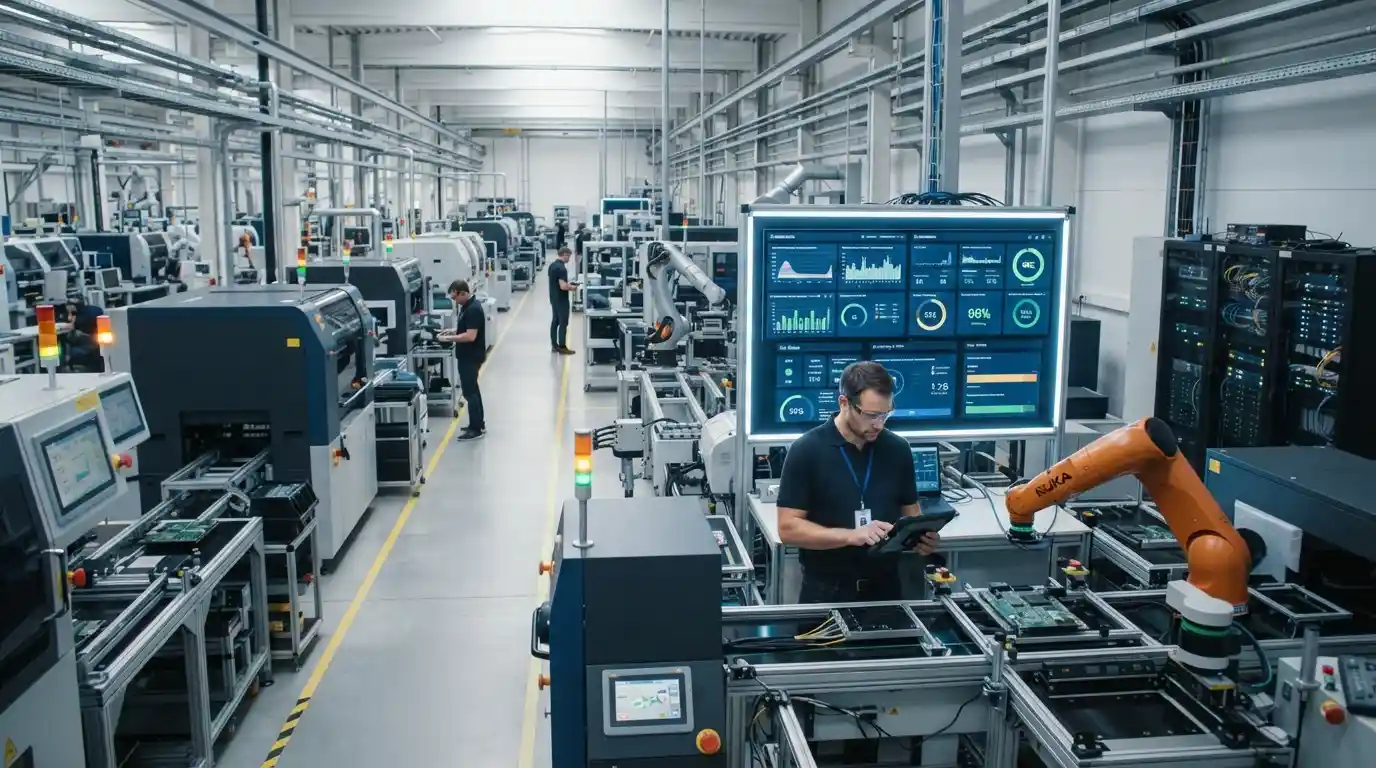
Developed by Inexcon Technologies, Ekho was associated with manufacturing execution solutions designed for process industries. Its capabilities extended across areas such as quality management, production management, equipment efficiency, product genealogy, and material management. The broader story of Ekho also demonstrates how technology solutions for modern businesses can connect operational requirements with strategic business goals.
What Was Ekho ITI Inexcon Technologies?
Ekho was a family of software applications associated with Inexcon Technologies, commonly referred to as ITI. The technology was positioned around manufacturing execution and industrial data management rather than functioning as a simple business application.
Manufacturing environments generate enormous amounts of information. Production quantities, equipment performance, material movements, quality measurements, production events, and product histories all need to be captured and interpreted. When these activities operate in isolated systems, managers may have difficulty understanding what is happening across the production environment.
Ekho addressed this type of challenge by providing applications designed around manufacturing operations. Its approach placed production information into a structured software environment so organizations could better monitor processes and make operational decisions.
Why Manufacturing Businesses Needed Solutions Like Ekho
Modern manufacturing is not simply about producing more products. Companies must maintain consistent quality while controlling costs, reducing downtime, improving resource utilization, and responding quickly to changing production requirements.
This creates a need for technology that can connect multiple operational areas. Manufacturing software can help organizations move away from disconnected information and toward a more coordinated operating environment.
The same principle can be seen in modern digital technology strategies, where businesses increasingly connect data, processes, communication, and decision-making through integrated platforms.
Core Capabilities Associated With Ekho
The strength of the Ekho concept was its focus on several important manufacturing functions. Instead of treating production as one isolated activity, the software family addressed different parts of the manufacturing information lifecycle.
1. Quality Management
Quality management is fundamental to industrial production. Manufacturers need to know whether products and processes are meeting established requirements and where problems are occurring.
Ekho’s quality-oriented capabilities were designed to help organizations track manufacturing quality information and create greater visibility into production performance. Better quality information can help teams identify recurring issues, investigate deviations, and make more informed operational decisions.
2. Production Management
Production management requires visibility into what is being produced, how production is progressing, and whether manufacturing activities are operating according to expectations.
A manufacturing execution environment can connect production activity with the information managers need to evaluate performance. This creates a bridge between shop-floor activity and business-level decision-making.
3. Overall Equipment Effectiveness
Equipment performance is another important part of manufacturing efficiency. Machines that operate below their potential can increase costs and reduce production capacity.
Ekho included capabilities associated with efficiency management and overall equipment effectiveness. Monitoring equipment-related performance can help manufacturers understand availability, performance, and production losses while identifying opportunities for improvement.
This type of operational optimization has parallels with broader technology initiatives such as platform uptime and operational reliability, where organizations focus on keeping critical systems available and productive.
4. Product Genealogy
Product genealogy is particularly valuable in manufacturing environments where organizations need to understand the history of materials, production activities, and finished products.
By maintaining better production records, businesses can improve traceability and investigate issues more effectively. Product genealogy can also support quality investigations by helping teams understand how a particular product or batch moved through the production process.
5. Material Management
Manufacturing performance depends heavily on the availability and movement of materials. Production interruptions can occur when the right materials are not available at the right time or when material information is difficult to track.
Material management capabilities help bring greater structure to this part of the manufacturing process. When material information is connected with production information, organizations can develop a more complete picture of their operations.
Ekho and Enterprise System Integration
One of the notable aspects of the Ekho story was its relationship with enterprise systems. Manufacturing software does not operate in isolation when a company relies on broader enterprise resource planning infrastructure.
Inexcon Technologies worked on integrating Ekho with SAP environments. This type of integration demonstrates an important principle of enterprise technology: specialized operational software can become significantly more useful when it can exchange information with broader business systems.
Integration reduces the need to treat manufacturing data as a separate information island. Instead, production information can participate in wider business processes involving planning, quality, materials, and enterprise management.
Modern businesses continue to follow this direction through integrated technology platforms and connected operational systems.
How Manufacturing Execution Technology Supports Business Efficiency
Manufacturing execution systems are valuable because they sit close to actual production activity. Enterprise systems may provide high-level planning and financial information, while operational systems can provide more detailed information about what is happening on the production floor.
This creates an important information layer between business planning and physical manufacturing.
For example, management may want to know why production output is lower than expected. Operational information can help identify whether the problem is related to equipment availability, production performance, material availability, or quality issues.
Instead of relying entirely on delayed reports, teams can work with more structured operational information.
The Importance of Real-Time Industrial Data
Industrial environments can change rapidly. A production line can experience downtime, quality deviations, material shortages, or unexpected changes in output. The longer decision-makers wait for information, the more difficult it can become to respond effectively.
Real-time or near-real-time data connectivity can therefore improve operational awareness. The objective is not simply to collect more data but to make useful information available to the people responsible for production and business decisions.
This idea remains relevant across modern technology sectors. For example, GPS and marine technology similarly depends on accurate data and reliable information flows to support operational decisions.
Ekho’s Role in Process Industries
Inexcon Technologies was associated with manufacturing execution solutions for process industries. These environments can have particularly demanding requirements because production often involves continuous or highly structured processes.
In such settings, information about production, quality, materials, and equipment must work together. A disconnected approach can make it harder to identify the source of production problems or evaluate operational performance.
A specialized manufacturing execution platform can therefore provide an important layer of visibility between production processes and enterprise management.
Why Scalability Matters in Manufacturing Technology
Manufacturing businesses rarely remain static. Production volumes can change, new products can be introduced, facilities can expand, and organizations can adopt new equipment or processes.
Technology therefore needs to support changing requirements without creating unnecessary complexity.
Scalable software architecture can make it easier for organizations to extend their technology environment as operational requirements evolve. This principle is also visible in modern industrial technology and energy solutions, where systems must support demanding operational environments.
Integration as a Foundation for Digital Transformation
Digital transformation is often misunderstood as simply purchasing new software. In reality, successful transformation depends on how well different technologies work together.
Manufacturing companies may use ERP systems, production systems, quality applications, maintenance platforms, databases, analytics tools, and communication systems. If these platforms cannot exchange information effectively, employees may still spend considerable time moving data manually between systems.
Integration can reduce this friction and create a more connected digital environment.
The same concept applies to ecommerce. Businesses increasingly rely on connected technology throughout the customer journey, which is why understanding ecommerce technology and digital operations has become increasingly important.
Data Visibility and Better Decision-Making
One of the most important benefits of manufacturing information systems is improved visibility.
When operational information is organized effectively, managers can evaluate trends instead of relying only on isolated events. They can examine production performance, identify recurring problems, evaluate equipment efficiency, and understand how materials and products move through manufacturing processes.
Better visibility does not automatically guarantee better decisions. However, it gives decision-makers a stronger information foundation from which to work.
Why Manufacturing Innovation Continues to Matter
The manufacturing sector continues to evolve through automation, connected systems, analytics, artificial intelligence, industrial IoT, and advanced software platforms. Businesses that cannot adapt to changing technology may find it increasingly difficult to compete on efficiency and responsiveness.
The Ekho story is useful because it illustrates an earlier generation of industrial software focused on connecting manufacturing operations with structured information management.
Today’s technology landscape is considerably broader, but the fundamental challenge remains familiar: businesses need reliable information to understand operations and improve performance.
Lessons From the Ekho ITI Approach
Several broader lessons can be drawn from the Ekho and Inexcon Technologies story.
- Operational data matters: Manufacturing decisions depend on accurate production information.
- Integration creates value: Specialized software becomes more useful when it connects with enterprise systems.
- Quality and efficiency are connected: Improving production performance should not come at the expense of product quality.
- Traceability is important: Product genealogy can provide valuable information when investigating production and quality issues.
- Scalability supports growth: Manufacturing technology needs to adapt as operational requirements change.
- Technology should support people: The purpose of industrial software is to provide useful information that helps teams make better operational decisions.
How the Manufacturing Technology Landscape Has Evolved
Since the era in which Ekho was developed, industrial technology has continued to evolve rapidly. Cloud computing, connected sensors, industrial analytics, automation, artificial intelligence, and advanced visualization have expanded what manufacturing systems can accomplish.
Companies now have access to technologies capable of collecting information from machines, analyzing large datasets, identifying patterns, and delivering insights through centralized dashboards.
At the same time, the basic objectives remain remarkably consistent: improve efficiency, maintain quality, reduce waste, increase visibility, and make better decisions.
Businesses interested in broader technology developments can also explore topics such as navigation technology, music technology, and other examples of how specialized software and digital systems are reshaping different industries.
Ekho ITI Inexcon Technologies and the Future of Business Innovation
The history of Ekho ITI Inexcon Technologies provides an interesting example of how specialized technology can address complex industrial challenges. Rather than treating manufacturing data as a secondary resource, manufacturing execution software places operational information at the center of production management.
Its focus on quality, production, equipment efficiency, product genealogy, material management, and system integration reflects many of the priorities that remain important to manufacturers today.
The technology available to businesses has changed considerably, but the underlying objective has not: organizations need systems that help them understand what is happening, respond to problems, and continuously improve their operations.
Conclusion
Ekho ITI Inexcon Technologies represents an important chapter in the development of manufacturing execution and industrial data management technology. By bringing together production, quality, efficiency, traceability, and material information, the Ekho approach demonstrated how specialized software could help manufacturing organizations gain greater operational visibility.
Its emphasis on integration and structured industrial information also reflects a broader lesson for modern businesses. Technology delivers its greatest value when it connects people, processes, data, and systems around clear operational objectives.
As manufacturing continues moving toward connected factories, automation, analytics, and intelligent systems, the fundamental principles behind solutions such as Ekho remain relevant: reliable information, operational visibility, integration, and continuous improvement are essential ingredients of sustainable business innovation.