Summer typically brings warm temperatures, high humidity, and periods of heavy rain, so planning your itinerary around indoor and outdoor activities can make the experience much more comfortable. Early mornings and evenings are particularly useful for sightseeing, while museums, markets, cafés, and shopping areas can provide a welcome break during hotter parts of the day.
If you are building a broader international itinerary, you can also explore other seasonal travel ideas such as places to visit in Korea during winter, top places to visit in Osaka, Japan, or a wider list of places to visit in Japan.
Why Visit Seoul in Summer?
Summer gives Seoul a distinctly energetic atmosphere. Parks become popular gathering places, outdoor cafés stay busy into the evening, and the city’s neighborhoods offer countless ways to combine sightseeing with food, shopping, culture, and entertainment.
The season is especially suitable for travelers who enjoy a flexible itinerary. You can visit a palace in the morning, explore a traditional neighborhood around lunchtime, spend the hottest part of the afternoon indoors, and finish the day beside the Han River or in one of Seoul’s lively entertainment districts.
Travelers interested in seasonal destinations can also compare Seoul with other summer-oriented destinations, including summer places to visit in Idaho and Seoul’s own summer travel highlights.
1. Gyeongbokgung Palace
Gyeongbokgung Palace is one of the most recognizable historic attractions in Seoul and an excellent starting point for a summer sightseeing itinerary. The palace complex provides an opportunity to experience traditional Korean architecture while remaining close to several other major attractions.
Morning is often a practical time to explore the palace because temperatures can become uncomfortable later in the day. Visitors can walk through the expansive grounds, admire traditional buildings, and continue toward nearby cultural neighborhoods.
For travelers who enjoy history and architecture, the palace can also serve as a starting point for exploring the broader cultural character of Seoul rather than treating the attraction as an isolated stop.
2. Bukchon Hanok Village
Bukchon Hanok Village offers a very different experience from Seoul’s modern commercial districts. Its narrow streets and traditional Korean houses create a historic atmosphere in the middle of the city.
Summer visitors should consider arriving earlier in the day, when walking conditions are generally more comfortable. The surrounding area also makes it easy to combine sightseeing with cafés, cultural shops, and traditional experiences.
If you enjoy exploring destinations through historic neighborhoods, you may also appreciate the broader collection of places to visit in Normandy and Brittany, where historic communities and cultural landscapes form an important part of the travel experience.
3. Changdeokgung Palace and Secret Garden
Changdeokgung is another important historical destination and is particularly appealing to travelers who enjoy architecture combined with landscaped surroundings. Its gardens provide a quieter contrast to some of Seoul’s busier attractions.
The greenery can make the area especially appealing during summer, although visitors should still plan around heat and humidity. A morning visit followed by an indoor lunch or museum stop can create a comfortable sightseeing schedule.
4. N Seoul Tower and Namsan
N Seoul Tower is one of the city’s most recognizable viewpoints. Located on Namsan Mountain, it provides panoramic views across Seoul and becomes especially attractive later in the day.
Instead of visiting during the hottest afternoon hours, consider arriving toward sunset. The changing light can create an entirely different atmosphere as the city transitions from daytime activity to an illuminated evening skyline.
For travelers who enjoy scenic viewpoints, this type of experience can also complement itineraries focused on destinations with dramatic landscapes, such as the Black Forest or the White Mountains.
5. Han River Parks
The Han River is one of the best places to slow down after a busy day of sightseeing. Seoul’s riverside parks provide open spaces for walking, cycling, relaxing, and enjoying the city skyline.
Summer evenings are particularly suitable for the Han River because temperatures are usually more manageable than during the afternoon. A riverside picnic or casual walk can also provide a refreshing change from museums, shopping streets, and historic attractions.
If you prefer destinations centered around outdoor relaxation, you can also explore other travel ideas such as relaxing places to visit in Europe.
6. Myeongdong
Myeongdong is a popular choice for travelers interested in shopping, beauty products, street food, cafés, and urban nightlife. It is especially useful during summer because many of its attractions are concentrated within a relatively walkable area.
Visitors can explore shops during the day and return later for street food and evening activity. Because summer weather can change quickly, Myeongdong is also convenient when you want an itinerary that combines outdoor exploration with plenty of indoor options.
7. Insadong
Insadong is a strong choice for travelers who want traditional Korean culture alongside modern Seoul. The neighborhood is known for cultural shops, galleries, tea houses, crafts, and traditional-style experiences.
Its atmosphere makes it particularly suitable for a slower afternoon itinerary. Instead of rushing between attractions, visitors can spend several hours exploring small streets, browsing shops, enjoying traditional tea, and discovering local art.
8. Hongdae
Hongdae is one of Seoul’s most energetic neighborhoods and is especially appealing to younger travelers and visitors interested in contemporary culture. The area combines cafés, restaurants, independent shops, entertainment venues, street performances, and nightlife.
Summer evenings are a good time to explore Hongdae because the neighborhood becomes increasingly lively as the day progresses. It is an excellent place to experience a more contemporary side of Seoul after spending the morning around historic attractions.
9. Dongdaemun
Dongdaemun is another useful addition to a summer Seoul itinerary. The area combines fashion, shopping, architecture, food, and evening activity, making it easy to visit after other attractions close.
Visitors interested in fashion can spend time exploring retail areas before moving toward the district’s restaurants and nighttime attractions. Its extended evening activity also makes it convenient for travelers who prefer sightseeing later in the day.
10. COEX and Starfield Library
When summer heat or heavy rain makes outdoor sightseeing less appealing, COEX provides a convenient indoor alternative. The complex combines shopping, dining, entertainment, and cultural spaces.
Starfield Library is one of the most visually distinctive spaces in the complex and is worth including for travelers who enjoy architecture, photography, and modern urban environments.
Indoor attractions are particularly valuable when planning a Seoul itinerary because summer weather can be unpredictable. Having several indoor options means you can adjust your schedule without losing an entire day.
11. Lotte World
Lotte World is another option for travelers looking for entertainment rather than traditional sightseeing. Its combination of indoor and outdoor attractions makes it useful during Seoul’s hot or rainy summer days.
Families and travelers who enjoy rides, themed attractions, and entertainment can dedicate a substantial portion of the day to the complex. Its indoor components are especially useful when weather conditions become uncomfortable.
12. National Museum of Korea
The National Museum of Korea is an excellent choice for a summer afternoon when you want to escape the heat while still experiencing Korean history and culture.
A museum visit can also help provide context for other attractions on your itinerary. After visiting historic palaces and traditional neighborhoods, learning more about Korea’s cultural development can make those experiences more meaningful.
13. Seoul Forest
Seoul Forest offers a greener side of the city. The large urban park provides walking paths, open spaces, and opportunities to spend time outdoors without leaving Seoul’s metropolitan environment.
Early morning or evening is generally more comfortable for summer walks. It can also work well as a slower-paced stop between visits to busier shopping or entertainment districts.
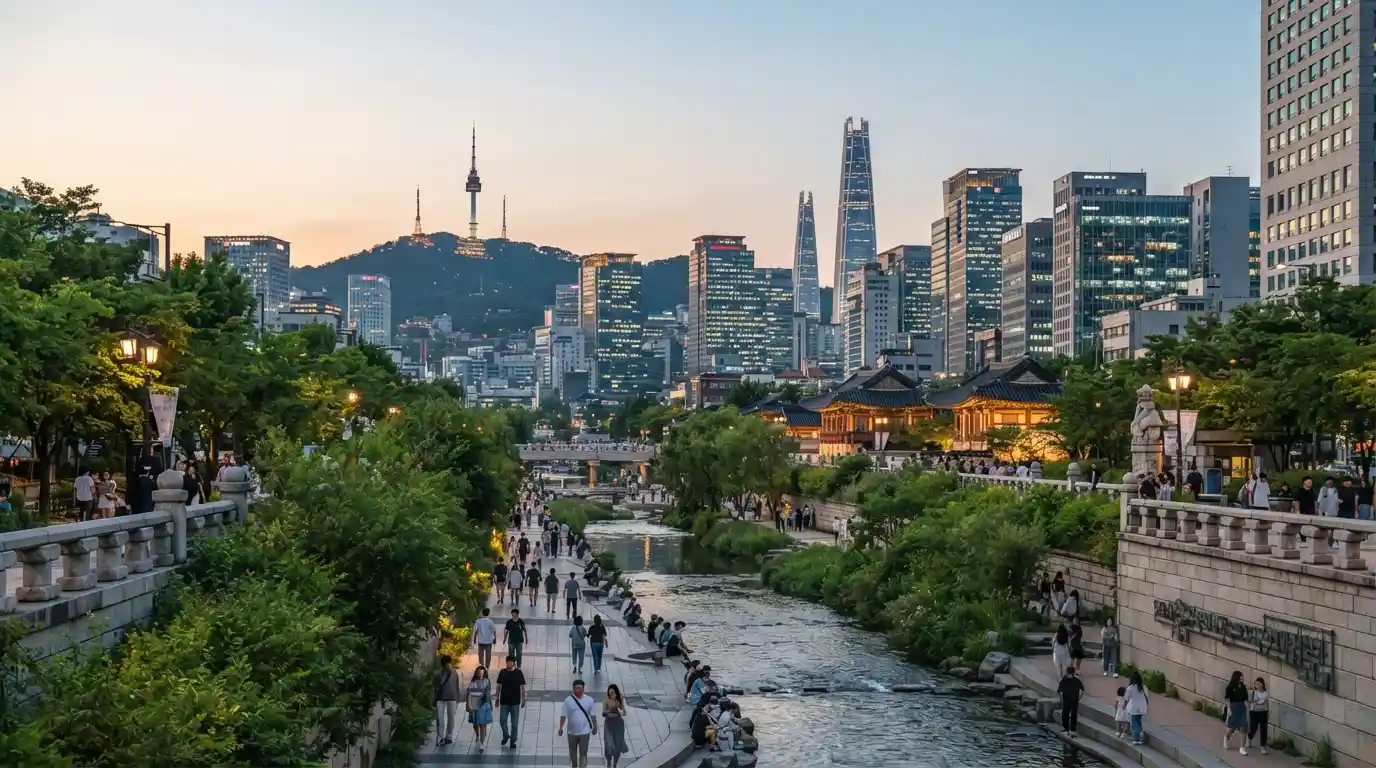
14. Cheonggyecheon Stream
Cheonggyecheon provides a refreshing urban walking experience through central Seoul. The stream corridor creates a contrast with the surrounding streets and high-rise buildings.
It is particularly pleasant as an evening stop when temperatures begin to fall. Travelers can combine a walk along the stream with nearby shopping, dining, and city sightseeing.
15. Gwangjang Market
Food-focused travelers should consider Gwangjang Market as part of their Seoul itinerary. Markets provide an opportunity to experience local food culture in a lively environment.
Rather than treating the market simply as a place to eat, take time to observe the atmosphere, browse different food stalls, and experience one of the more traditional sides of Seoul’s urban culture.
16. Bukhansan National Park
Travelers who prefer hiking and nature can consider Bukhansan National Park. The mountain landscape provides a dramatic contrast to Seoul’s dense urban environment.
Summer hiking requires more preparation than city sightseeing. Start early, carry sufficient water, wear suitable footwear, and consider weather conditions before beginning a longer trail. Avoiding the hottest part of the day is particularly important during warm weather.
For travelers who enjoy combining cities with mountain landscapes, other destination guides such as Swedish Lapland and Montana during winter offer examples of how outdoor scenery can shape a travel itinerary.
17. Seoul’s Traditional Tea Houses
Summer sightseeing does not need to be entirely outdoors. Traditional tea houses offer a quieter way to experience Korean culture while taking a break from the heat.
Areas around Insadong and other historic neighborhoods provide opportunities to combine tea with cultural exploration. A tea-house visit can be especially useful during the middle of the day when outdoor temperatures are at their highest.
18. Seoul’s Cafés and Modern Neighborhoods
Seoul’s café culture is another reason summer travelers can build a flexible itinerary. Modern neighborhoods contain cafés ranging from minimalist spaces to highly themed destinations.
Rather than scheduling every hour around outdoor attractions, leave room for spontaneous café stops. This makes the itinerary easier to adjust when rain or high humidity affects your plans.
How to Plan a Seoul Summer Itinerary
The best summer itinerary balances outdoor sightseeing with indoor breaks. Instead of placing several major outdoor attractions back-to-back, divide the day into different types of experiences.
Morning
Use the morning for palaces, traditional neighborhoods, parks, or hiking. This is usually the most comfortable period for longer outdoor walks.
Afternoon
Move indoors during the warmest part of the day. Museums, shopping centers, cafés, markets, and entertainment complexes can keep the itinerary productive without exposing you to the strongest heat.
Evening
Return outdoors after temperatures become more manageable. Han River parks, N Seoul Tower, Cheonggyecheon, Hongdae, and other evening destinations can provide a lively end to the day.
This flexible approach can also be useful when planning other seasonal trips. For example, travelers researching September and October destinations or winter travel destinations can similarly organize activities around seasonal weather conditions.
What to Pack for Seoul in Summer
- Lightweight, breathable clothing
- Comfortable walking shoes
- Sun protection such as a hat and sunscreen
- A reusable water bottle
- A compact umbrella or rain protection
- Portable phone charger
- Light layers for strongly air-conditioned indoor spaces
- Weather-resistant day bag
Because summer weather can include both heat and sudden rain, practical clothing is often more useful than packing exclusively for one type of condition.
Tips for Visiting Seoul During Summer
- Start early: Visit major outdoor attractions before the hottest part of the day.
- Plan indoor breaks: Museums, shopping centers, cafés, and cultural spaces can provide relief from heat and rain.
- Keep evenings flexible: Several Seoul neighborhoods become more active after sunset.
- Check the weather: Summer conditions can change quickly, so review the forecast before longer outdoor activities.
- Stay hydrated: Carry water during walking-heavy days.
- Use public transportation: Seoul’s extensive transportation network makes it practical to move between districts without relying on long walks.
- Wear comfortable footwear: Many of the city’s most interesting neighborhoods are best explored on foot.
Frequently Asked Questions
Is Seoul worth visiting in summer?
Yes. Summer offers plenty of opportunities to explore Seoul’s palaces, neighborhoods, parks, markets, museums, shopping districts, and evening attractions. The main consideration is planning around heat, humidity, and rain.
What are the best places to visit in Seoul during summer?
Popular options include Gyeongbokgung Palace, Bukchon Hanok Village, Changdeokgung Palace, N Seoul Tower, Han River parks, Myeongdong, Insadong, Hongdae, Dongdaemun, COEX, the National Museum of Korea, Seoul Forest, and Cheonggyecheon.
What can you do in Seoul when it rains?
Rainy days can be used for museums, shopping centers, cafés, traditional tea houses, indoor entertainment venues, markets, and cultural attractions. Having indoor alternatives in your itinerary makes summer travel much easier.
What should I do in Seoul at night during summer?
Evening options include the Han River, N Seoul Tower, Hongdae, Myeongdong, Dongdaemun, Cheonggyecheon, and Seoul’s many restaurants and cafés.
How many days are enough for Seoul?
A three- to five-day itinerary can provide enough time to experience several historic attractions, modern neighborhoods, shopping districts, cultural sites, parks, and evening destinations. Longer stays allow for slower exploration and day trips.
Final Thoughts
The best places to visit in Seoul during summer are not limited to one type of attraction. Seoul works particularly well when you combine historic sites such as Gyeongbokgung and Bukchon with modern districts such as Hongdae and Myeongdong, green spaces such as Seoul Forest and the Han River, and indoor destinations such as museums and shopping complexes.
The key is to build your itinerary around the season. Explore outdoors in the morning and evening, use indoor attractions during the hottest or wettest periods, and leave enough flexibility to respond to changing weather. With that approach, summer can be an engaging time to experience both the traditional character and modern energy of Seoul.
If you are continuing your international travel research, you can also explore Korea travel during winter, Osaka attractions, places near Haneda Airport in Tokyo, and places around Kuala Lumpur when planning a broader Asia itinerary.