Education does not have to feel limited to textbooks, lectures, worksheets, and exams. When learning is combined with creativity, interaction, collaboration, and meaningful celebration, it can become an experience that students remember long after the lesson ends.
Whether the setting is a classroom, community program, workshop, school event, or educational gathering, thoughtful planning can transform an ordinary learning activity into something memorable.
What Does “Educate and Celebrate” Mean?
Educate and celebrate is an approach that brings learning and positive recognition together. The educational component focuses on developing knowledge, skills, creativity, and understanding, while the celebration component recognizes progress, participation, effort, achievement, or shared experiences.
The goal is not to turn every lesson into a party. Instead, it is about creating opportunities for students to feel that learning has meaning and that their contributions matter.
This philosophy connects naturally with broader discussions about lifelong learning, where education is viewed as an ongoing process rather than something that ends with a particular grade or qualification.
Why Memorable Learning Experiences Matter
Students are more likely to engage with learning when they can connect concepts to activities, conversations, challenges, projects, and real-world situations. Memorable experiences can also give learners a stronger reason to participate actively.
For example, a science lesson might include a hands-on experiment, while a history lesson could involve a presentation, role-playing activity, exhibition, or collaborative project. These activities can make abstract information easier to understand.
An effective learning experience should also accommodate different interests and abilities. Resources discussing an educational diagnostician and student potential highlight the importance of recognizing individual learner needs rather than assuming every student responds to education in exactly the same way.
Ways to Educate and Celebrate in Learning Environments
1. Celebrate Student Progress
Celebration does not always need to focus on the highest grade. Educators can recognize improvement, persistence, creativity, teamwork, leadership, curiosity, and willingness to try something difficult.
Simple recognition can include certificates, classroom displays, student presentations, peer appreciation, achievement boards, or opportunities to showcase completed projects.
2. Turn Lessons Into Interactive Experiences
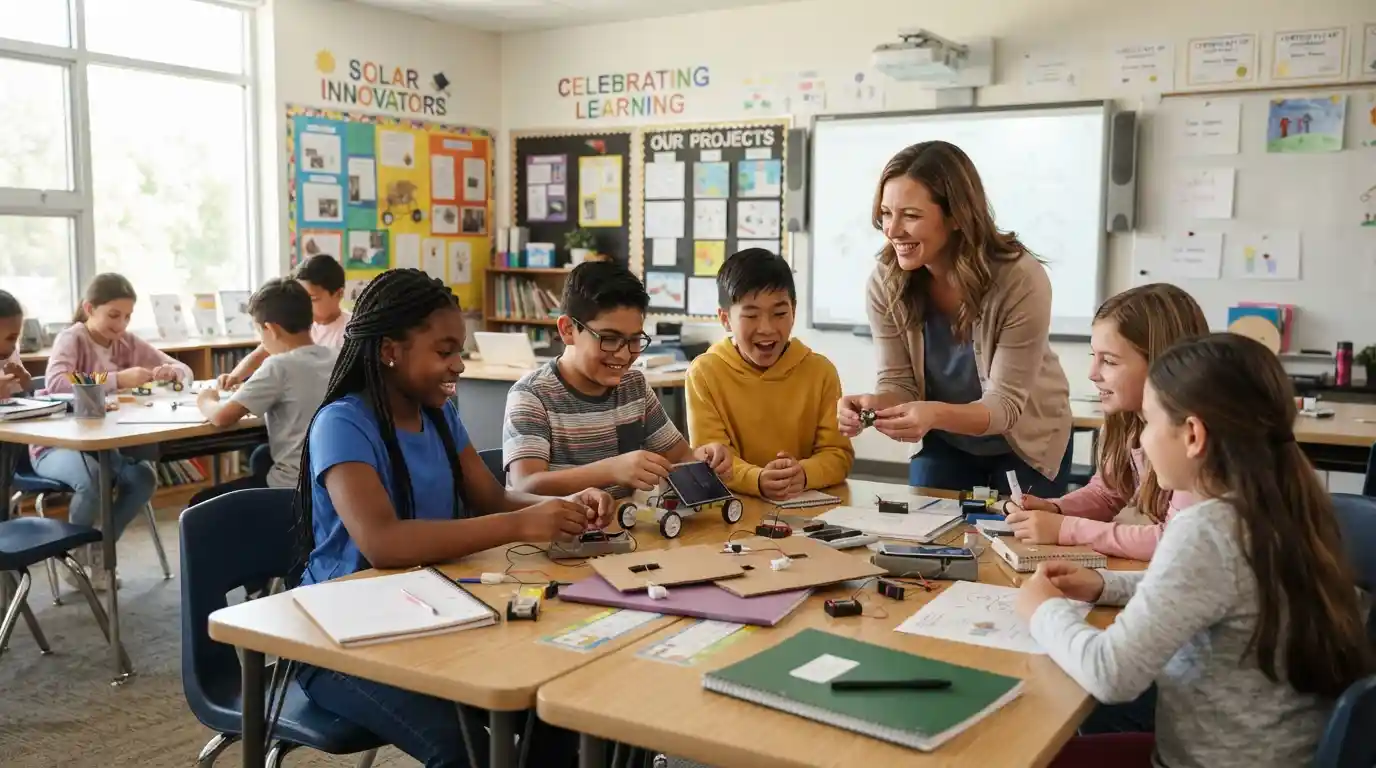
Interactive learning encourages students to participate directly in the educational process. Discussions, demonstrations, experiments, games, debates, group challenges, and creative assignments can all provide alternatives to passive instruction.
The idea of an education playground captures this concept particularly well: learning can include exploration, experimentation, movement, discovery, and curiosity.
3. Use Projects to Connect Learning With Real Life
Project-based activities can help students understand why a particular subject matters. Instead of only answering questions about a topic, students can research it, build something, present their findings, solve a problem, or collaborate with classmates.
Projects can also provide natural opportunities for celebration. A completed project can become an exhibition, presentation, demonstration, or class showcase.
4. Create Collaborative Challenges
Learning becomes more social when students work together toward a shared objective. Team challenges can develop communication, problem-solving, leadership, and cooperation while keeping students involved.
Teachers can design challenges around subjects such as science, mathematics, language, technology, history, art, or environmental studies. The emphasis should remain on learning rather than competition alone.
5. Incorporate Creative Activities
Creative learning can give students different ways to demonstrate understanding. Depending on the subject, learners might create artwork, write stories, produce presentations, build models, record videos, perform short scenes, or design visual explanations.
Creative approaches are particularly useful when educators want students to move beyond memorization and demonstrate genuine understanding.
Making Educational Events More Memorable
Educational events can provide an excellent opportunity to combine learning and celebration. A school or community organization might organize a learning fair, student showcase, cultural event, science exhibition, reading day, career event, or skills demonstration.
The most effective events have a clear educational purpose. Entertainment can support the experience, but it should not completely replace the learning objective.
Planning can include interactive stations, demonstrations, student-led activities, displays, workshops, discussion areas, and opportunities for parents or community members to participate.
When appropriate, educators can also look at broader entertainment experiences for inspiration while adapting ideas to an educational setting.
Technology Can Enhance Learning Experiences
Digital tools can add another layer to educational activities. Interactive presentations, educational platforms, digital collaboration, simulations, multimedia resources, and creative software can make lessons more dynamic.
Technology should have a clear purpose, however. The objective should be to improve understanding, participation, accessibility, or collaboration rather than introducing technology simply because it is available.
Educators interested in technology-supported learning can also explore proven learning strategies and consider how different methods can support student engagement.
Building an Inclusive Celebration
A successful educational celebration should give every learner a meaningful opportunity to participate. Students have different strengths, personalities, interests, and comfort levels, so one type of recognition will not work for everyone.
Some students may enjoy public presentations, while others may prefer creating something behind the scenes. Providing multiple participation options can make celebrations more inclusive.
This principle also connects with broader discussions surrounding North American education and the importance of creating learning opportunities that serve diverse student populations.
How Educators Can Plan a Learning Celebration
A successful event does not have to be complicated. Start with the educational objective and determine what students should know, understand, or be able to demonstrate when the activity is complete.
- Define the learning goal. Decide what students should learn from the activity.
- Choose an engaging format. Select a project, challenge, exhibition, workshop, presentation, or interactive lesson.
- Assign meaningful roles. Give students responsibilities that match their strengths and interests.
- Build in collaboration. Allow students to communicate and solve problems together.
- Create a recognition element. Celebrate effort, progress, creativity, participation, or achievement.
- Reflect afterward. Ask students what they learned, what they enjoyed, and what they would improve.
Planning can become even more effective when educators understand how individual learning needs influence participation and achievement.
Education Should Encourage Curiosity
One of the most valuable outcomes of a memorable educational experience is curiosity. Students who become interested in a subject may continue exploring it independently.
That is why learning activities should not always provide every answer immediately. Asking students to investigate, compare, question, test, and explain can encourage deeper thinking.
Educational experiences can also connect with specialist topics. For example, an article about an educational diagnostician can lead readers toward questions about learner assessment and individualized support.
Combining Learning With Fun Without Losing the Educational Goal
Fun can be a powerful part of learning, but it should have a purpose. Games, challenges, creative projects, and celebrations are most useful when they reinforce the concepts students are expected to understand.
Educators can use a simple test: if the activity disappeared, would students lose an important opportunity to understand or practice something? If the answer is yes, the activity is probably supporting the educational objective.
This balance is important because memorable learning should be enjoyable without becoming disconnected from meaningful education.
From Classroom Learning to Lifelong Development
The strongest educational experiences can have an impact beyond a single lesson. They can help students develop confidence, communication skills, creativity, independence, and an interest in continued learning.
The concept of lifelong development is particularly relevant here. Education is not simply about completing assignments; it can help people develop habits of curiosity and discovery that continue throughout their lives.
Readers interested in the wider role of education can explore the discussion of the patron saint of education and lifelong learning as another perspective on the enduring value of education.
Creating Experiences Students Remember
Memorable education does not require an expensive venue, elaborate equipment, or a large event. Often, the most effective experiences begin with a simple idea: give students something meaningful to explore and a reason to participate.
A classroom project can become a showcase. A lesson can become a challenge. A discussion can become a collaborative investigation. A completed assignment can become an opportunity for students to explain their work to others.
These small changes can transform learning from something students simply complete into something they actively experience.
Final Thoughts
To educate and celebrate is to recognize that learning can be both purposeful and memorable. When educators combine strong learning objectives with creativity, collaboration, recognition, and meaningful activities, students can develop a stronger connection with the subjects they study.
The most successful approach keeps education at the center while using celebration to reinforce progress and participation. Whether through projects, interactive lessons, technology, exhibitions, or student-led activities, educators have many ways to make learning more engaging.
Ultimately, unforgettable learning experiences are not created by entertainment alone. They are created when students discover something meaningful, participate in the process, and leave with a reason to keep learning.