The hunt for the best ramen in Los Angeles takes you through one of America’s most dynamic noodle scenes. LA’s ramen culture draws on the city’s large Japanese community, its adventurous dining public, and a competitive landscape that keeps standards high. From milky tonkotsu to fiery tantanmen to delicate shoyu, from Little Tokyo institutions to Eastside innovators, this guide maps the bowls worth seeking in the City of Angels.
Ramen arrived in LA with the Japanese community and grew alongside the city’s broader food awakening. The first serious shops proved Angelenos would embrace authentic Japanese noodles, and the scene has expanded ever since. Today, LA offers regional Japanese styles, creative California interpretations, and outstanding plant-based options, all served with the city’s characteristic casual confidence.
Tonkotsu: Rich, Milky, Essential
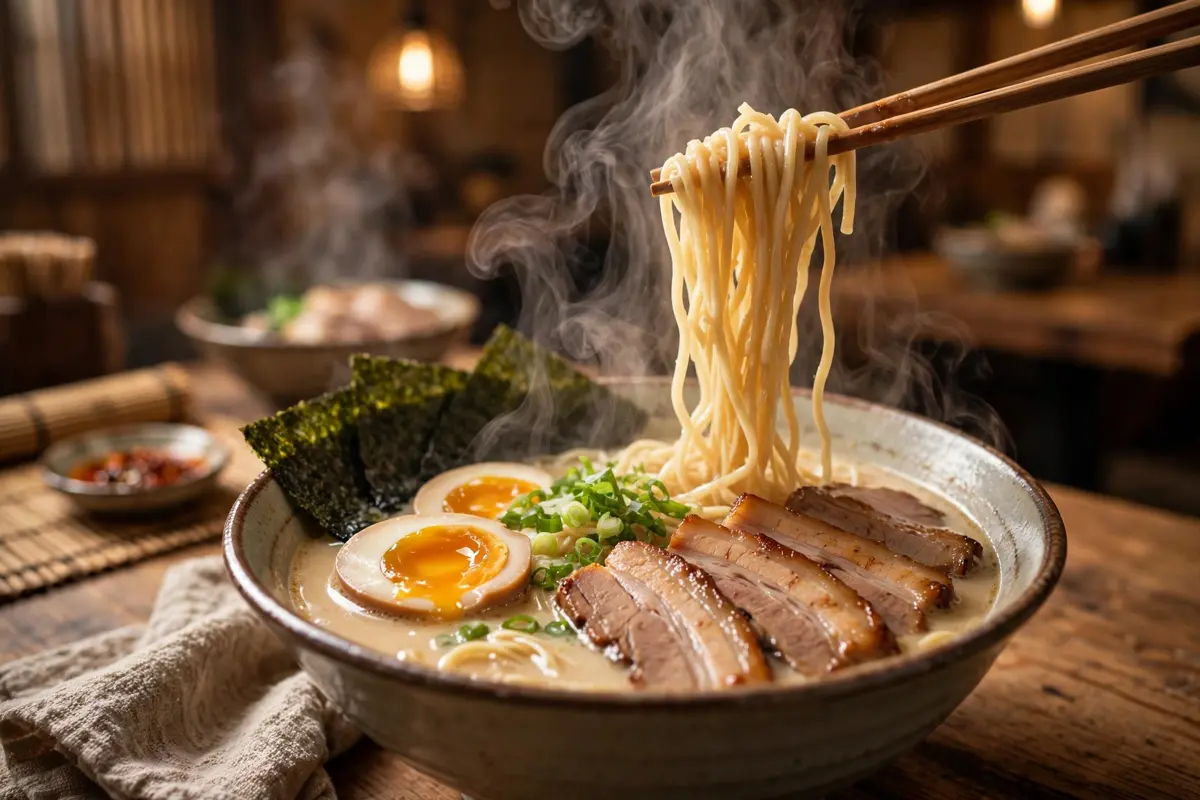
Tonkotsu remains the benchmark style, and LA’s best versions compete nationally. Pork bones boiled for 12 to 18 hours create broth that is creamy, porky, and deeply satisfying. The best shops offer customization: noodle firmness, broth richness, garlic and spice levels. Regulars develop precise orders that the staff remembers.
What to look for: broth that coats the lips without greasiness, noodles with real bite, chashu that is tender but not mushy, and ajitama with jammy yolks. The classic toppings each play a role, and a well-built bowl balances richness with contrast from pickled ginger, scallions, and nori. For the New York comparison, our guide to the best ramen in New York covers the East Coast scene.
The 18-Hour Broth
Great tonkotsu cannot be rushed. The extended boil emulsifies collagen and fat into a broth with body and depth that shortcuts cannot replicate. The best ramen shops start their broth before dawn for lunch service. This commitment is invisible in the bowl but unmistakable in the eating; you taste the time. When a shop’s tonkotsu tastes thin or one-dimensional, it usually means the broth did not get the hours it needed.
Shoyu, Miso, and Lighter Styles
LA’s lighter ramen styles reward connoisseurs. Shoyu ramen showcases clear, aromatic chicken or pork broths seasoned with soy, demanding pristine ingredients and precise technique. The best versions taste simultaneously delicate and profound. Miso ramen brings hearty, fermented depth, with corn, butter, and bean sprouts nodding to Hokkaido origins.
Shio ramen, seasoned with salt, is the lightest and most precise, often featuring seafood and kombu dashi. These styles shine in the hands of chefs with deep Japanese training, and LA has several. If tonkotsu is ramen’s crowd-pleaser, these lighter bowls are its connoisseur’s choice. Our guide to the Japanese food in Los Angeles complete guide explores the broader cuisine.
Tantanmen and Spicy Ramen
LA loves heat, and its spicy ramen scene delivers. Tantanmen with sesame, chili oil, and minced pork offers nutty, spicy complexity. Mala-influenced broths bring Sichuan peppercorn tingle. Some shops offer escalating heat levels for the brave. The best spicy bowls balance fire with flavor; heat should enhance, not obliterate.
The city’s diversity means spicy ramen draws on multiple traditions: Japanese tantanmen, Chinese mala, Korean gochujang influences. This cross-pollination produces bowls that exist nowhere else. Heat seekers should ask about off-menu spice levels; many shops accommodate those who want more fire. For more spicy food, our guide to the Thai food in Austin complete guide explores another heat-loving cuisine.
Tsukemen: Dipping Noodles
Tsukemen offers a different noodle experience: thick, chewy noodles dipped into concentrated broth. The interaction is fun, the texture contrast compelling. LA’s best tsukemen shops make their noodles fresh daily, and the chew is the point. Finish by adding dashi to the remaining broth for a drinkable soup. It is ramen as activity, and it is delicious.
Vegan Ramen in LA
Los Angeles excels at plant-based ramen. The best vegan broths build depth from mushrooms, kombu, roasted vegetables, and fermented seasonings, achieving savoriness that satisfies even pork-broth devotees. Creamy sesame tantanmen and rich mushroom shoyu are standouts. These are not compromises but destinations.
What makes LA’s vegan ramen special is the city’s produce and its creative chefs. Seasonal vegetables, quality tofu, and innovative toppings elevate these bowls beyond imitation. Our guide to the best vegan options in USA has more plant-based recommendations nationwide.
Ramen Neighborhoods in LA
Little Tokyo is the historic center, with institutions that built LA’s ramen reputation. The Westside offers polished options, while the Eastside brings creativity and edge. The South Bay’s Japanese community supports excellent neighborhood shops. Sawtelle’s Japantown corridor has outstanding noodles alongside its other Japanese offerings.
Each area has its champions, and exploring them all is a delicious project. The best strategy: identify your preferred style, then try the top specialists across neighborhoods. You will develop favorites quickly. Complete your LA noodle education with our guides to the best sushi in Los Angeles and best pasta in New York for cross-coastal comparison.
Beating the Ramen Lines
Popular shops draw waits, especially on cool evenings. Go at lunch on weekdays, arrive at opening, or visit during warmer months. Some shops use ticket machines that speed ordering. Always have a backup shop nearby; LA’s depth means an excellent alternative is usually close. And remember that ramen is fast food at heart; even with a wait, you will be eating within the hour. Late-night cravings are covered in our guide to the best late night food in USA.
Ramen Broth Science: Why Time Matters
Great ramen broth is applied food science. Tonkotsu’s milky opacity comes from emulsified fat and gelatin, created by boiling pork bones vigorously for hours. The rolling boil breaks down collagen into gelatin and disperses fat into tiny droplets. Gentle simmering produces clear broth; hard boiling produces creamy. Temperature control is everything.
Tare, the seasoning base, is equally scientific. Soy sauce tare balances salt, umami, and aroma. Miso tare layers fermented complexity. Shio tare highlights ingredient purity. The best ramen shops guard their tare recipes fiercely; they define the bowl’s character as much as the broth. Understanding this duality, broth plus tare, unlocks ramen appreciation.
Noodle Chemistry
Ramen noodles owe their spring to kansui, alkaline mineral water that gives the characteristic chew and yellow hue. Protein content affects bite; higher protein means firmer noodles. Fresh noodles beat dried for texture, though quality dried noodles have their place. The best shops match noodle style to broth weight: thin for rich, thick for dipping.
Ramen and Gyoza: The Perfect Pair
Gyoza, pan-fried dumplings with crisp bottoms and juicy fillings, are ramen’s ideal companion. The contrast of textures, the interplay of flavors, the shared dipping sauces. Order a side of gyoza with your ramen for the complete experience. The best ramen shops make gyoza in-house with the same care as noodles.
What makes great gyoza: thin but sturdy wrappers, juicy pork-and-cabbage filling, perfectly crisped bottoms from the fry-steam-fry technique. Dip in vinegar-soy with chili oil. Our guide to the best dumplings in USA explores dumpling traditions nationwide.
Late-Night Ramen Culture
Ramen after midnight is a cherished tradition. The rich broth restores, the warmth comforts, the ritual soothes. LA’s late-night ramen spots serve night owls, industry workers, and dedicated noodle fans. The experience differs from daytime; the crowd is looser, the atmosphere more intimate.
What to order late-night: tonkotsu for maximum restoration, or spicy tantanmen for invigoration. The best late-night shops maintain full quality despite the hour; broth does not sleep. Our guide to the best late night food in USA covers after-hours eating across the country.
Ramen Burgers and Mashups
LA’s creativity produced the ramen burger: noodles formed into buns around a patty. It is novelty more than necessity, but fun novelty. More successful mashups include birria ramen, combining Jalisco stew with Japanese noodles, and curry ramen drawing on multiple traditions. The best fusions respect both sources; the worst are gimmicks.
What makes mashups work is genuine flavor logic, not just novelty. Birria’s rich broth suits ramen noodles naturally. Curry’s spices complement noodle soups historically. When fusion has roots, it succeeds. When it is random, it fails. LA’s best chefs understand the difference. Our guide to the best dumplings in USA explores other cross-cultural noodle traditions.
Ramen for Every Season
LA’s climate means ramen is year-round food, not just winter comfort. Summer calls for lighter shoyu, cold tsukemen, refreshing shio. Winter invites rich tonkotsu and hearty miso. The best ramen fans adjust by season, following the Japanese calendar. This seasonal awareness deepens appreciation and keeps the experience fresh.
Ramen Eggs at Home: Ajitama Technique
Mastering ajitama elevates home ramen enormously. Six and a half minutes in boiling water produces the ideal jammy yolk. An ice bath stops cooking precisely. Peeling under running water prevents tearing. Marinating in soy, mirin, and water for four hours minimum, overnight ideally, seasons throughout. These eggs keep for days refrigerated, ready to crown any bowl. The technique is simple; the precision matters.
What separates good from great ajitama is timing accuracy. Thirty seconds over produces chalky yolks; thirty under leaves whites unset. Use a timer religiously. Room-temperature eggs cook more evenly than cold ones. These details transform home ramen from good to restaurant-quality.
Conclusion
The best ramen in Los Angeles offers a bowl for every mood, from indulgent tonkotsu to delicate shio to fiery tantanmen. Learn the styles, find your shops, and embrace the slurp. In a city that embraces every cuisine fully, ramen has found one of its great American homes.
Whether you are a local or just visiting, exploring the food scene is one of the best ways to experience the culture and character of any American city. Take your time, try something new, and enjoy every bite of your culinary adventure.