The best gyros in Chicago are not a lunch option; they are a way of life. In a city where Greek immigrants built one of the great food cultures in America, the gyro — shaved lamb and beef off a vertical spit, wrapped in warm pita with tomato, onion, and a cool swipe of tzatziki — is practically civic infrastructure. Chicagoans do not debate whether gyros belong in the pantheon; they debate which spot does them best.
This guide covers the essential gyro experiences across the city: the Greektown institutions that have been spinning spits for half a century, the late-night counters that feed the after-midnight crowds, and the neighborhood shops where regulars have standing orders. We will tell you what to look for in a great gyro, how to order like a local, and where the city’s Greek food culture intersects with everything else Chicago does brilliantly.
Greektown: Where Chicago’s Gyro Story Begins
Chicago’s Greektown, centered on Halsted Street just west of the Loop, is where the gyro became an American icon. Greek immigrants began arriving in large numbers in the early 20th century, and by the 1960s and 70s, the neighborhood’s restaurants were introducing the gyro to a city that had never tasted anything like it. The vertical rotisserie, the pressed cone of seasoned meat, the theatrical shaving — it was dinner and a show.
The classic Greektown gyro experience has barely changed. You walk in, you order at the counter, and within minutes you are holding a foil-wrapped pita stuffed with meat shaved seconds ago. The best spots here have been doing it so long that the rhythm is muscle memory. If you want to understand how this neighborhood shaped the city’s palate, our guide to Italian beef in Chicago covers the other great sandwich rivalry that defines the city.
The Institutions That Defined the Style
A handful of Greektown restaurants have been serving gyros since the dish was still a novelty to most Chicagoans. These institutions share certain traits: spits that never stop turning during service, pita warmed to order on the grill, and tzatziki made fresh daily with real cucumber and dill. The dining rooms are often unpretentious — fluorescent lights, formica tables, the smell of oregano in the air — because the food is the entire point.
Order the classic gyro pita first, then come back for the platter with Greek fries and a side of avgolemono soup if they have it. Many of these spots also serve excellent versions of other Greek-American classics, from saganaki flamed tableside to moussaka that tastes like someone’s grandmother is in the kitchen. The same dedication to doing simple things well runs through Chicago’s best Chicago brunch spots too.
Best Gyros in Chicago Beyond Greektown
The Late-Night Counters
Some of Chicago’s best gyros are served after midnight. The city’s late-night gyro counters — in Wrigleyville, Lincoln Park, and along the late-night corridors of the North Side — feed everyone from bar crowds to hospital shift workers to cab drivers. These are high-volume operations where the spit turns constantly and the meat is always fresh because it has to be.
The late-night gyro has its own etiquette. Know your order before you reach the counter, have payment ready, and do not overthink it: the classic pita with everything is the move. These counters are also where you will find some of the city’s most creative variations, from gyro wraps stuffed with fries to breakfast gyros that appear on late-morning menus. For more on the city’s after-hours food culture, see our guide to the best hot dogs in Chicago — the other essential late-night food group.
Neighborhood Shops and Suburban Legends
Beyond the famous corridors, Chicago’s neighborhoods hide gyro shops with cult followings. In Albany Park, Rogers Park, and the suburbs along the northwest corridor, family-run counters serve gyros to loyal regulars who have been coming for decades. These shops often reflect the specific Greek regional traditions of their owners, with subtle differences in seasoning, sauce, and pita.
What makes the neighborhood shops special is consistency and community. The owners know their regulars, the recipes have not changed in years, and the quality control comes from pride rather than corporate oversight. Many of these shops also make outstanding versions of related dishes. Our roundup of falafel in New York City shows how the same Middle Eastern grill traditions play out on the East Coast.
What Makes a Great Gyro: The Anatomy
The Meat, the Spit, and the Shave
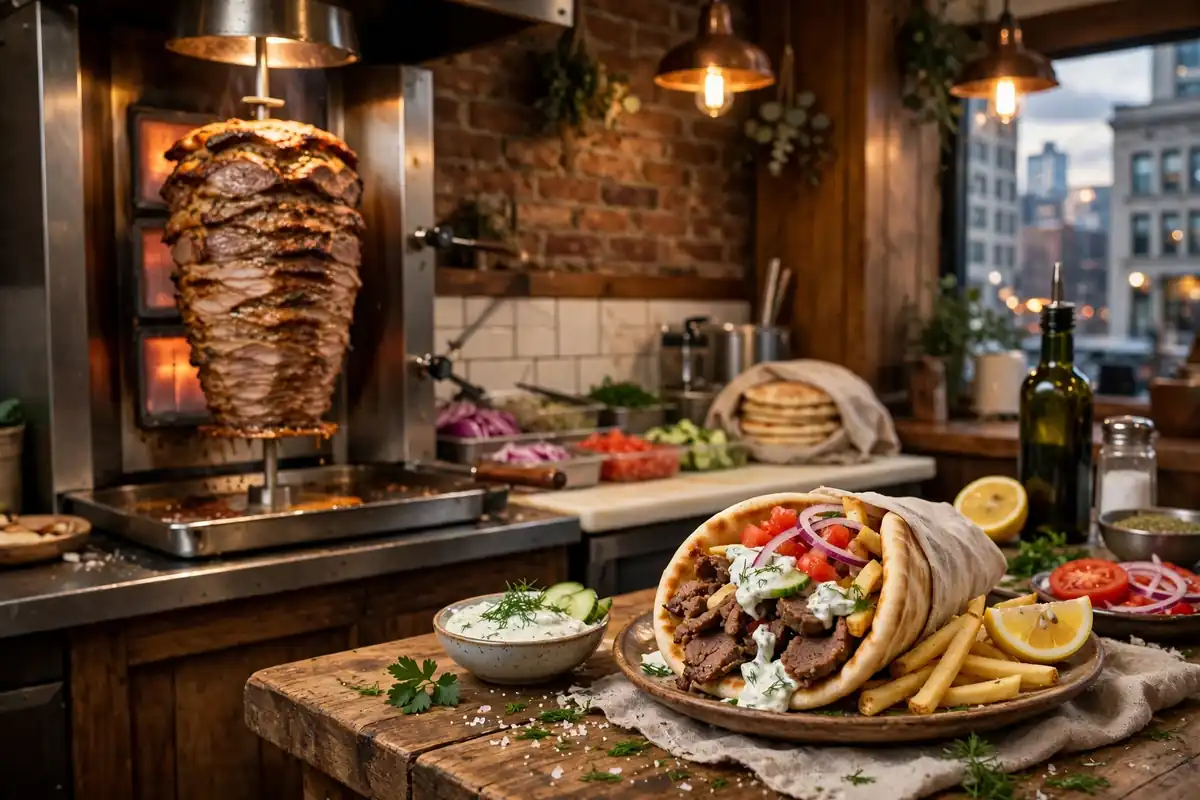
A great gyro starts with the cone: traditionally a mixture of lamb and beef, seasoned with oregano, garlic, and other spices, pressed into a cone shape and mounted on a vertical rotisserie. As it turns, the outer layer crisps while the inside stays juicy, and the cook shaves off thin slices to order. The best gyro meat has crispy edges and tender centers, with seasoning that tastes of the grill rather than a spice packet.
Watch the spit before you order. It should be turning constantly, the meat should look freshly shaved rather than sitting in a pile, and the cook should be cutting to order. A spit that sits idle with pre-shaved meat in a warming tray is a red flag. The same freshness principle applies across great street food, from America’s best food trucks to the taco stands of the West Coast.
Pita, Tzatziki, and Assembly
The pita matters as much as the meat. Great gyro pita is thick, soft, and warmed on the grill until it is pliable and slightly charred. It should be sturdy enough to hold everything without falling apart but tender enough to bite through cleanly. Thin, cold, or stale pita ruins an otherwise good gyro.
Tzatziki — the yogurt, cucumber, garlic, and dill sauce — should be cool, tangy, and fresh. The best versions are made daily and taste bright rather than heavy. Assembly is the final test: meat, tomato, onion, and sauce in proportions that let each component shine. A great gyro is balanced; every bite should have a little of everything. For a different take on grilled meat in bread, our guide to Chicago’s Italian beef covers the dipped-and-loaded alternative.
How to Order Like a Chicago Gyro Regular
Pita, Platter, or Salad
The pita is the default and the purest expression of the gyro. The platter — meat over rice or fries with salad, pita on the side — is the hungry person’s choice and the best way to taste the meat unencumbered. The salad, with gyro meat over greens, is for those pretending to be healthy; no judgment, but know what you are giving up.
Sauce strategy matters. Tzatziki is traditional, but many Chicago spots also offer hot sauce or a spicy feta spread. The move is tzatziki plus a drizzle of hot sauce: cool and creamy with a slow-building kick. And always get the fries if they are cut fresh — gyro shops with great meat almost always have great fries. The same combo logic applies at the city’s best burgers in Chicago, where the side is half the experience.
Sides Worth Ordering
Do not sleep on the sides. Greek fries — dusted with oregano, salt, and sometimes feta — are the essential companion. Avgolemono, the lemon-egg soup, is the comfort-food sleeper hit of Greek-American menus. And a proper Greek salad, with real feta and Kalamata olives, is the fresh counterpoint a rich gyro needs.
For dessert, the move is baklava or galaktoboureko if they have it, though many gyro counters keep it simple. If you are planning a full Greek food day, our guide to Greek food in Astoria, Queens shows how New York’s Greek community does it — a worthy pilgrimage for the obsessed.
Chicago Gyro Culture: Festivals, Rivalries, and Rituals
Taste of Greece and Summer Festivals
Chicago’s Greek community throws some of the best food festivals in the country. Summer church festivals across the city and suburbs serve gyros, souvlaki, and pastries to crowds that line up for hours. These events are where you will taste home-style versions of dishes that restaurants streamline, made by volunteers using family recipes.
The festivals are also a reminder that the gyro is part of a living culture, not just a menu item. The music, the dancing, the multi-generational families working the grills — it all adds up to something no restaurant can fully replicate. For more on how food festivals shape American cities, see our coverage of America’s best food trucks and the events that made them famous.
The Great Gyro Debates
Ask a Chicagoan where to find the best gyro and you will get an answer delivered with the confidence of a sports take. The debates are fierce and oddly specific: which spot’s tzatziki is too garlicky, whose pita is too thick, which late-night counter falls off after 2 a.m. These arguments are the sign of a healthy food culture.
My advice: try the famous spots, then find your own. The best gyro in Chicago is the one you crave at midnight, the one whose counter staff knows your order, the one you defend in arguments with friends. Chicago’s food culture rewards loyalty, whether the subject is gyros, Chicago pizza, or the eternal Italian beef debate.
Conclusion
The best gyros in Chicago are a testament to what happens when immigrant foodways take root in American soil and refuse to compromise. From Greektown’s spinning spits to the late-night counters that never close, the gyro is Chicago at its most delicious: unpretentious, generous, and built to satisfy. Order the classic pita, respect the spit, and do not skip the tzatziki. Opa.