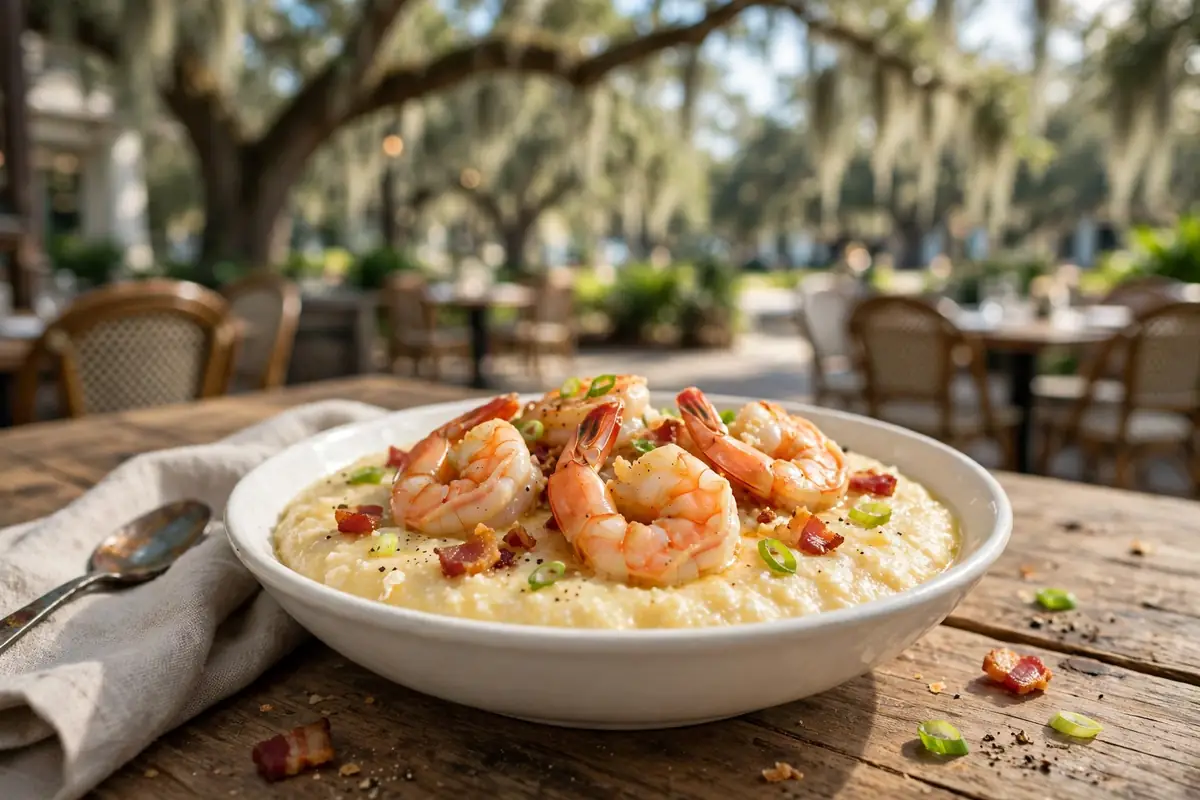
Few dishes capture a place like shrimp and grits captures Charleston. Born as a humble fisherman’s breakfast in the Lowcountry, it has grown into the signature dish of one of America’s great food cities — plump local shrimp nestled into creamy stone-ground grits, finished with bacon, butter, and scallions. The best shrimp and grits in Charleston are worth planning a trip around, and this guide tells you exactly where to find them.
What makes Charleston’s version special is not just technique but ingredients. The shrimp come from nearby waters, the grits are stone-ground from heirloom corn by Lowcountry mills, and the cooking draws on generations of Gullah Geechee tradition. Whether you eat yours at a white-tablecloth institution or a casual brunch spot, you are tasting the Lowcountry on a plate.
From Fisherman’s Breakfast to Fine Dining
Shrimp and grits started as practical food. Lowcountry fishermen and laborers needed a cheap, filling breakfast, and shrimp from the morning catch paired naturally with grits, the corn porridge that has anchored Southern tables for centuries. For most of its history, it was home cooking, not restaurant food — the kind of dish grandmothers made without recipes.
That changed in the 1980s, when Charleston chefs began putting shrimp and grits on fine-dining menus, elevating it with rich stocks, country ham, and careful technique. The dish became the city’s culinary ambassador, the plate that introduced America to Lowcountry cooking. Today it appears on menus from casual cafes to the city’s most celebrated dining rooms, and the debate over the best version is as passionate as any food argument in the South — rivaling even the fervor around Nashville hot chicken.
The Charleston Institutions
The Downtown Legends
Charleston’s most famous shrimp and grits come from its downtown institutions, restaurants that have defined Lowcountry fine dining for decades. The classic preparation here is rich and refined: stone-ground grits cooked slowly with butter and cream, shrimp sautéed with bacon, mushrooms, and scallions in a savory pan sauce. Every component is made from scratch, and the difference shows.
These are special-occasion restaurants, the kind where you book ahead and dress up, but the shrimp and grits keeps them grounded in local tradition. Order it as your main course and you will understand why the dish became famous: the grits are impossibly creamy, the shrimp snappy and sweet, and the sauce ties everything together. For another coastal city where seafood defines the table, see our guide to Boston seafood restaurants.
Historic Dining Rooms and Hotel Restaurants
Charleston’s historic hotels house some of the city’s most atmospheric places to eat shrimp and grits. Dining in a centuries-old building, under chandeliers and ceiling fans, with a bowl of shrimp and grits in front of you, is one of the great Charleston experiences. These restaurants tend toward the traditional, honoring the dish’s roots while executing it flawlessly.
The hotel restaurants are also ideal for visitors, offering consistent quality and convenient locations in the historic district. Many serve shrimp and grits at both brunch and dinner, giving you two chances to try it. If you are building a Southern food itinerary, pair your Charleston meals with the comfort classics in our guide to New Orleans po’boys — the Lowcountry and the Crescent City share more culinary DNA than you might expect.
Best Shrimp and Grits in Charleston: Neighborhood Favorites
Casual Spots and Brunch Champions
Not all great shrimp and grits require a reservation and a jacket. Charleston’s casual restaurants and brunch spots serve versions that rival the fine-dining rooms, often at half the price. These are the places where locals actually eat: sunny dining rooms, friendly service, and bowls of shrimp and grits that arrive fast and disappear faster.
The brunch versions deserve special attention. Shrimp and grits with a fried egg on top, served alongside strong coffee on a Charleston porch, might be the perfect Southern breakfast. The casual spots also tend to be more generous with the bacon and hot sauce, which is exactly right. For more on how brunch became America’s favorite weekend ritual, see our roundup of New York brunch spots and Austin brunch traditions.
James Island, Mount Pleasant, and Beyond
The best shrimp and grits in Charleston are not all downtown. Cross the bridges to James Island, Mount Pleasant, and West Ashley, and you will find neighborhood restaurants serving outstanding versions to loyal local crowds. These spots often have the freshest shrimp, sourced directly from nearby docks, and a relaxed atmosphere that downtown cannot match.
Exploring beyond the tourist core is the key to eating well in Charleston. The outlying neighborhoods reward curiosity with better values and fewer crowds, the same dynamic that makes America’s best food trucks such a great way to discover a city’s real food scene. Rent a car or brave the bridges, and eat where the locals eat.
What Makes Great Shrimp and Grits
The Grits: Stone-Ground and Slow-Cooked
Grits are the foundation, and great grits make great shrimp and grits. The best Charleston restaurants use stone-ground grits from Lowcountry mills, made from heirloom corn varieties like Jimmy Red. Stone-ground grits cook slowly, absorbing butter, cream, and stock into a porridge that is creamy but still has texture. Instant grits, by contrast, are a crime against the dish.
When judging grits, look for creaminess without glueyness, corn flavor that comes through the richness, and a texture that holds the shrimp without drowning them. The grits should be seasoned confidently — under-salted grits are the most common flaw in mediocre versions. This attention to a humble base ingredient is what separates good Southern cooking from great, a principle that applies equally to the Baltimore crab cakes and Portland lobster rolls of other coastal cities.
The Shrimp: Fresh, Plump, and Simply Cooked
Charleston’s shrimp are the dish’s other star. Local white shrimp, sweet and snappy when fresh, need little more than a hot pan, butter, and seasoning. The best versions let the shrimp shine: quickly sautéed, barely cooked through, with a sauce built from the pan drippings, bacon, and a splash of stock or cream.
Freshness is non-negotiable. Great shrimp and grits taste of the sea; tired shrimp taste of nothing. This is why the best versions are found near the source, in a city where shrimp boats still work the harbor. Order with confidence at busy restaurants with high turnover, and be wary of shrimp and grits at places where seafood is an afterthought. The same freshness rule governs great fried chicken, as we discuss in our guide to Buffalo wings.
Ordering Tips and Variations
Classic vs. Creative: What to Choose
Most Charleston menus offer a classic shrimp and grits and at least one creative variation. The classic — shrimp, bacon, mushrooms, scallions, creamy grits — is the benchmark, and you should try it first. The variations might add andouille sausage, fried green tomatoes, pimento cheese grits, or a poached egg. These can be excellent, but judge the restaurant by its classic before exploring.
A few practical tips: ask about the grits — stone-ground is what you want. Do not be afraid of the bacon; the smoky richness is traditional, not a modern addition. And save room: shrimp and grits is deceptively filling, the kind of dish that seems light until you try to stand up. For another Southern city where one dish inspires endless variations, our guide to New Orleans beignets covers a dessert with the same beloved status.
When to Eat It: Brunch, Dinner, or Both
Shrimp and grits works at any meal, and Charleston serves it at all of them. Brunch is the classic context — the dish’s breakfast origins make it a natural morning plate. Dinner versions tend to be richer and more elaborate, with the full fine-dining treatment. Ambitious visitors eat it twice in one day, and honestly, that is a defensible vacation strategy.
If you only get one bowl, make it brunch on a sunny Charleston morning, eaten slowly on a porch or patio. There is no better introduction to Lowcountry cooking. And if you fall in love with Southern comfort food generally, our guide to Texas BBQ covers the smoky side of the Southern table.
Making Shrimp and Grits at Home
You do not need a Charleston kitchen to make excellent shrimp and grits. Start with the best grits you can find — stone-ground, from a Southern mill if possible — and cook them low and slow, stirring often, with plenty of butter and a splash of cream. The grits should take at least forty-five minutes; there are no shortcuts worth taking. Season boldly with salt and black pepper, and finish with shredded sharp cheddar if you like a richer bowl.
For the shrimp, buy the freshest you can find, peel and devein them, and pat them dry so they sear rather than steam. Cook bacon first, then sauté the shrimp in the rendered fat with garlic and scallions, deglazing the pan with a splash of stock. Spoon the shrimp and pan sauce over the grits, top with crumbled bacon and sliced scallions, and serve immediately. It will not be exactly like Charleston, but it will be close enough to understand why the dish inspires such devotion — the same way a home-cooked version of New York barbecue still captures the spirit of the original.
Conclusion
The best shrimp and grits in Charleston prove that the greatest dishes often have the humblest beginnings. From a fisherman’s breakfast to the signature plate of a great food city, shrimp and grits carries the Lowcountry’s history in every bite: the Gullah Geechee roots, the local waters, the stone-ground corn, and the generations of cooks who refused to rush it. Eat it downtown or across the bridge, at brunch or at dinner — just make sure you eat it in Charleston, where it belongs.