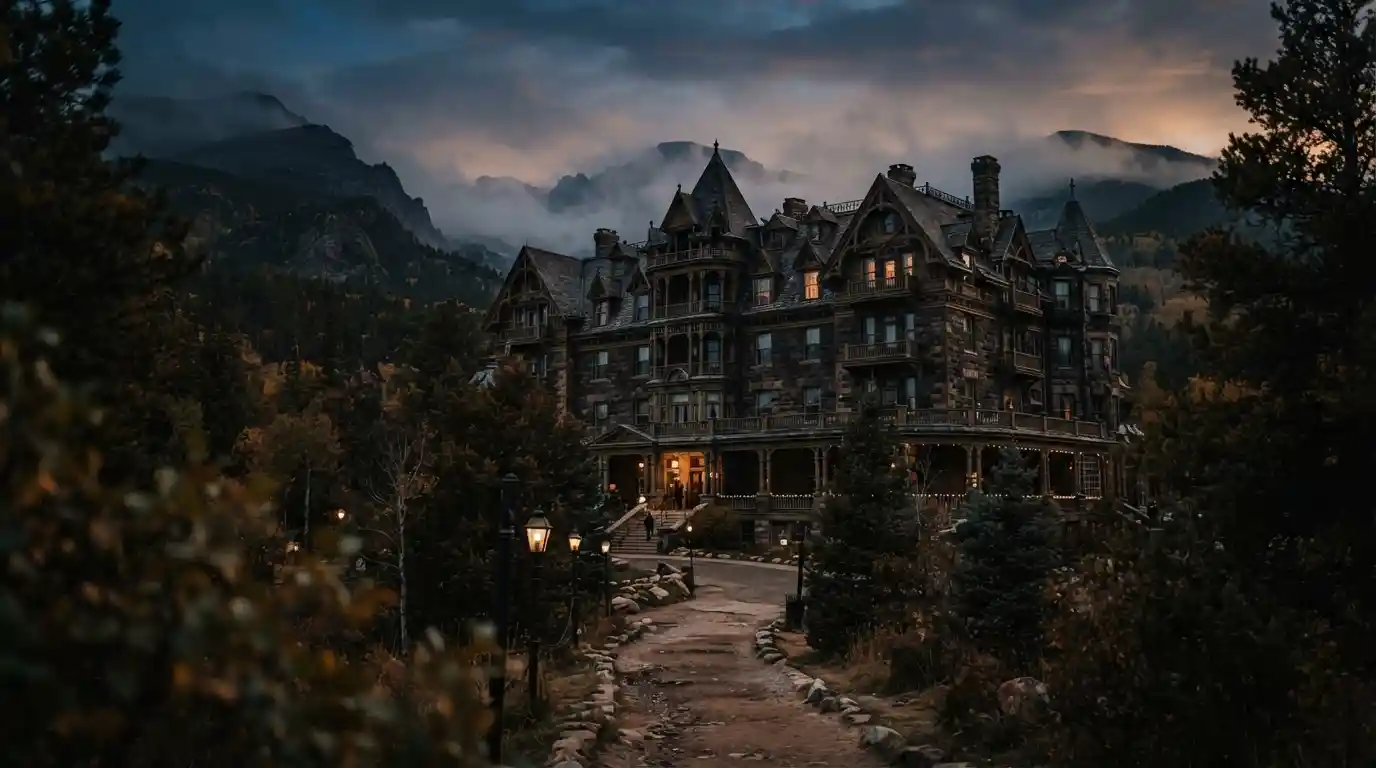
Colorado is famous for its Rocky Mountain scenery, historic mining towns, scenic highways, and outdoor adventures. But beyond its beautiful landscapes, the state has another side that attracts travelers interested in mysterious stories, old buildings, abandoned communities, and places with reportedly haunted histories.
If you enjoy unusual travel experiences, Colorado’s haunted destinations can add an intriguing dimension to a mountain road trip. Here are 15 places worth knowing about when planning your itinerary.
1. Stanley Hotel, Estes Park
The Stanley Hotel in Estes Park is one of Colorado’s most famous historic hotels and one of the state’s best-known destinations for travelers interested in ghost stories. Opened in the early 20th century, the grand hotel sits near Rocky Mountain National Park and is surrounded by spectacular mountain scenery.
The property became particularly famous because of its association with Stephen King’s inspiration for The Shining. Guests and visitors have also shared stories about unusual sounds, unexplained activity, and strange experiences inside the historic building.
Even if you are not interested in paranormal stories, the hotel’s architecture, history, and location make it an interesting stop during a visit to Estes Park.
2. Hotel Colorado, Glenwood Springs
Hotel Colorado in Glenwood Springs is another historic property surrounded by stories of unusual activity. Built in the late 1800s, the hotel has hosted generations of travelers and remains an important part of the city’s historic character.
Its long history has contributed to numerous local ghost stories. Some visitors have reported strange sounds and unexplained experiences, while others simply enjoy the atmosphere of staying inside a building that dates back more than a century.
Glenwood Springs itself is a worthwhile destination for travelers interested in combining history with mountain scenery and outdoor recreation.
3. Brown Palace Hotel, Denver
The Brown Palace Hotel is one of Denver’s most recognizable historic hotels. Since opening in the late 19th century, it has welcomed politicians, celebrities, business leaders, and travelers.
Its elegant architecture and long history have also inspired stories about unexplained events. Reports of mysterious sounds, unusual sightings, and rooms with unusual reputations have become part of the hotel’s folklore.
For visitors exploring Denver, the Brown Palace provides an opportunity to experience historic Colorado architecture while learning about some of the city’s more mysterious stories.
4. Molly Brown House Museum, Denver
The Molly Brown House Museum offers another fascinating stop for travelers interested in Colorado history. The house was once home to Margaret “Molly” Brown, who became internationally known after surviving the sinking of the Titanic.
The beautifully preserved Victorian residence provides insight into Denver life during the late 19th and early 20th centuries. Over the years, stories of unusual activity have added a mysterious dimension to the property.
Visitors interested in historic homes can combine this stop with other attractions around downtown Denver and explore the city’s architectural heritage.
5. Cheesman Park and the Historic Cemetery Area
Cheesman Park is one of Denver’s most recognizable green spaces, but its history is considerably older and more complicated than its peaceful modern appearance suggests.
The area was originally associated with a cemetery, and portions of its history have contributed to stories about unexplained activity and unusual experiences. The combination of old burial grounds, mature trees, historic neighborhoods, and quiet pathways creates an atmospheric setting.
For travelers exploring Denver after dark, however, it is important to respect local regulations and treat historic sites and residential areas appropriately.
6. Central City
Central City is a historic mountain community that grew rapidly during Colorado’s gold-mining era. Its old buildings, narrow streets, historic businesses, and surrounding mountains create an atmosphere that feels very different from modern urban Colorado.
The town has accumulated numerous stories involving former residents, miners, hotels, theaters, and businesses. Walking through its historic district can feel like stepping into another era.
Central City is especially interesting for visitors who enjoy combining ghost stories with Colorado’s mining history.
7. St. Elmo Ghost Town
St. Elmo is one of Colorado’s best-preserved ghost towns and a popular destination for travelers interested in abandoned and historic mountain communities.
The town developed during Colorado’s mining boom but eventually declined as mining activity decreased. Today, historic buildings remain surrounded by dramatic mountain scenery.
St. Elmo’s remote setting and preserved structures have helped create many legends about its past. The location is particularly atmospheric when the surrounding mountains are quiet and the weather begins to change.
Travelers visiting St. Elmo should check road and seasonal conditions before heading into the mountains, as access can vary depending on weather.
8. The Stanley Hotel’s Haunted Reputation and Colorado Tourism
The Stanley Hotel deserves additional attention because its reputation demonstrates how history, popular culture, and tourism can become closely connected.
Its connection to The Shining helped transform the property from a historic mountain hotel into a destination recognized by horror and literary fans around the world. Today, visitors can experience the hotel’s architecture and learn about its history while deciding for themselves how much they believe the supernatural stories.
For travelers planning a broader Colorado itinerary, Estes Park also provides convenient access to some of the state’s most famous mountain scenery.
9. The Brown Palace and Denver’s Historic Downtown
Denver contains numerous historic buildings, and the Brown Palace is among the most recognizable. Its distinctive architecture makes it worth visiting even for travelers who are not specifically searching for haunted locations.
Historic downtown Denver can also be explored on foot, giving visitors the opportunity to combine architectural sightseeing with stories from the city’s past. The city’s transformation from a frontier settlement into a modern metropolitan area makes its historic buildings particularly interesting.
10. Victor, Colorado
Victor is a former mining town near Cripple Creek with a remarkably preserved historic character. The community developed during the gold-mining era and still contains numerous structures that reflect its mining heritage.
Its quiet streets, old buildings, and surrounding mountain landscape provide an ideal setting for travelers fascinated by Colorado’s past. Local stories and legends have also contributed to Victor’s reputation as one of the state’s more atmospheric historic towns.
Victor is especially appealing for travelers who want something different from Colorado’s major tourist destinations.
11. Cripple Creek
Cripple Creek became one of Colorado’s most important gold-mining communities and remains closely connected to the state’s mining history.
Today, visitors can explore historic buildings, museums, old mining-related attractions, and streets that preserve the character of the area’s past. Stories about former miners and unusual experiences have also become part of the town’s tourism culture.
Because Cripple Creek combines history, mountain scenery, and folklore, it is one of the more interesting destinations for a Colorado road trip.
12. The Denver Theatre District
Historic theaters often develop ghost stories because they combine old architecture, dramatic performances, backstage spaces, and generations of visitors. Denver’s historic theater district is no exception.
Some local stories involve unexplained sounds or sightings associated with old performance venues. Whether or not you believe these stories, exploring Denver’s historic theaters can provide a fascinating look at the city’s cultural history.
For travelers who enjoy architecture, performing arts, and unusual history, the theater district is an easy addition to a Denver itinerary.
13. Mount Pisgah Cemetery, Cripple Creek
Mount Pisgah Cemetery is closely connected to the history of Cripple Creek and the people who lived in the region during its mining boom.
The cemetery contains graves associated with miners, business owners, families, and other residents from the area’s past. Its location and historic atmosphere have also contributed to stories about paranormal encounters.
Visitors should remember that cemeteries are places of remembrance. Quiet behavior and respect for graves and other visitors are essential when exploring historic burial grounds.
14. Georgetown
Georgetown is a beautifully preserved historic mountain town located west of Denver. Its Victorian architecture, mountain setting, and connection to Colorado’s mining era make it a popular destination for history-focused travelers.
The town has accumulated its share of ghost stories over the years, particularly around historic buildings and former hotels. Exploring Georgetown offers a chance to experience these legends while learning about the people and industries that shaped Colorado’s mountain communities.
The town can also be incorporated into a larger mountain road trip that includes other historic destinations in the region.
15. Independence Ghost Town
Independence Ghost Town near Aspen provides another glimpse into Colorado’s mining past. The settlement developed around silver mining and eventually became abandoned as the area’s mining economy declined.
The remaining structures and surrounding wilderness create an atmosphere that feels dramatically different from modern Aspen. The location is particularly compelling for travelers who enjoy abandoned places, mountain history, and scenic drives.
Because the area is located at high elevation, visitors should plan carefully for changing mountain weather and seasonal road conditions.
Why Are Colorado’s Haunted Places So Popular?
Colorado’s haunted destinations are popular because they combine several types of travel experiences in one trip. Visitors can explore historic architecture, learn about mining communities, enjoy mountain scenery, and hear local legends.
Many of these places are not simply attractions built around ghost stories. Their significance comes from their real history. Hotels, mining towns, cemeteries, theaters, and old settlements provide a physical connection to earlier generations.
This makes Colorado particularly appealing to travelers who enjoy history-based tourism rather than conventional attractions alone.
Tips for Visiting Haunted Places in Colorado
Before planning a haunted Colorado road trip, keep a few practical considerations in mind.
- Check seasonal access: Mountain roads can close because of snow, storms, or other conditions.
- Respect private property: Not every reportedly haunted location is open to the public.
- Follow local rules: Historic buildings, cemeteries, and protected areas may have specific visitor requirements.
- Visit during daylight: Daytime visits make it easier to appreciate historic architecture and surrounding scenery.
- Research the history: Understanding the real events behind a legend can make the experience more interesting.
- Prepare for elevation: Several destinations are located in Colorado’s high country.
- Drive carefully: Mountain roads can be narrow, winding, and affected by rapidly changing weather.
Plan Your Colorado Haunted Road Trip
A haunted Colorado trip can be designed around several regions rather than attempting to visit every destination in one journey. Denver provides easy access to historic hotels, museums, theaters, and urban legends. The central mountains offer historic communities such as Georgetown and Central City, while southern Colorado contains fascinating mining towns including Victor and Cripple Creek.
Travelers interested in ghost towns can also build an itinerary around historic mountain settlements such as St. Elmo and Independence. These destinations provide a different experience from traditional tourist attractions because the landscape and surviving structures are part of the story.
If you are planning a broader Colorado vacation, consider exploring related destinations and travel ideas such as best places to visit in Colorado, best things to do in Colorado, and best places to visit in Denver.
You can also expand your itinerary with Colorado mountain towns, Colorado road trips, and other scenic travel experiences throughout the state.
Final Thoughts
The best haunted places to visit in Colorado offer more than ghost stories. They provide opportunities to explore historic hotels, abandoned mining communities, cemeteries, theaters, Victorian architecture, and some of the state’s most dramatic mountain landscapes.
Whether you are fascinated by paranormal legends or simply enjoy unusual historical destinations, places such as the Stanley Hotel, St. Elmo, Central City, Cripple Creek, Victor, Georgetown, and Independence can add something memorable to a Colorado itinerary.
The most interesting part of these destinations is often the history behind the legends. Take time to explore the buildings, learn about the communities that once flourished there, and enjoy the surrounding Rocky Mountain scenery. You may leave without encountering anything supernatural—but you will still experience a memorable side of Colorado that many conventional travel itineraries overlook.