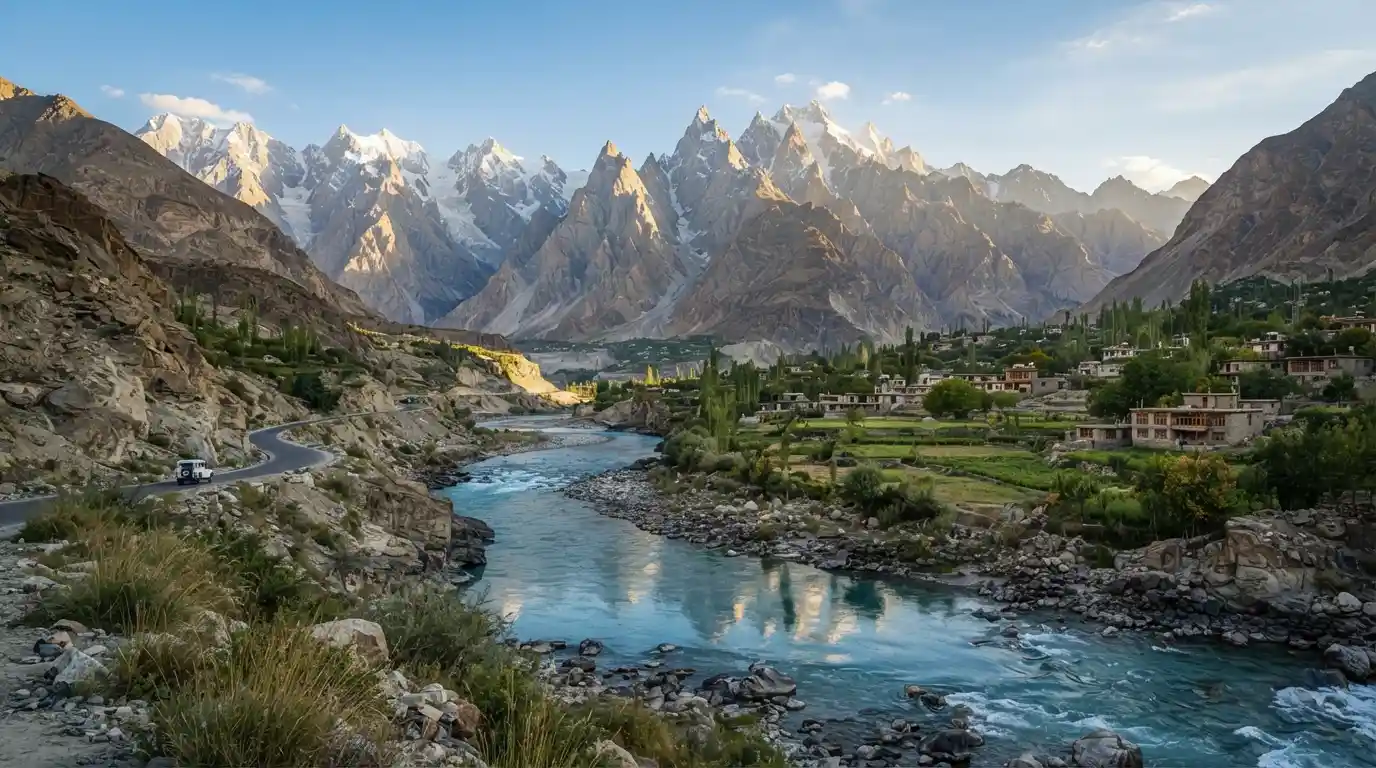
Hunza Valley is one of the most captivating mountain destinations in northern Pakistan, known for dramatic peaks, peaceful villages, turquoise lakes, historic forts, and spectacular landscapes. Whether you are planning a short sightseeing trip, a photography-focused journey, a family vacation, or a longer mountain adventure, Hunza offers a remarkable variety of places to explore.
Why Visit Hunza Valley?
Hunza appeals to travelers who want more than conventional sightseeing. The region offers mountain views, cultural experiences, historic architecture, peaceful villages, hiking opportunities, and some of the most memorable road-trip scenery in northern Pakistan.
The landscape also changes dramatically from one part of the valley to another. Travelers can move from cultivated settlements and historic forts to enormous rocky peaks, alpine lakes, suspension bridges, and high mountain passes within the same journey.
If you enjoy discovering destinations with distinctive scenery and local character, Hunza can be an excellent addition to a wider travel itinerary. For additional destination inspiration, explore our guide to unique places to visit and our collection of world’s best places to visit.
Best Places to Visit in Hunza Valley
1. Karimabad
Karimabad is one of the best starting points for exploring Hunza. The town combines mountain scenery, traditional streets, local markets, restaurants, guesthouses, and access to several major attractions.
Its elevated position provides impressive views toward the surrounding mountains, while the town itself offers a convenient base for exploring historic landmarks and nearby villages.
Spend time walking through the streets, trying local food, visiting cultural sites, and enjoying the changing colors of the mountains around sunrise and sunset.
2. Baltit Fort
Baltit Fort is one of Hunza’s most recognizable historic landmarks. Located above Karimabad, the centuries-old structure offers both architectural interest and expansive views over the valley.
The fort is particularly rewarding for travelers interested in history because its setting connects the built heritage of Hunza with the dramatic mountain landscape surrounding it.
Allow enough time to explore the structure rather than treating it as a quick photo stop. The elevated viewpoints around the fort are also valuable for landscape photography.
3. Altit Fort
Altit Fort is another important historical attraction in Hunza. Situated in the historic village of Altit, the fort reflects the region’s long architectural and cultural heritage.
The surrounding settlement adds to the experience, allowing visitors to see more than the landmark itself. Exploring the village and observing traditional buildings can provide a deeper understanding of the area’s cultural character.
4. Attabad Lake
Attabad Lake is among the most visually striking places in Hunza Valley. Its intensely colored water is surrounded by steep mountains, creating a dramatic landscape that is especially impressive from viewpoints along the Karakoram Highway.
Depending on local conditions and available services, visitors may enjoy activities such as boating and spending time around the lakeshore. The lake is also one of the most popular photography locations in the region.
Travelers planning seasonal trips can also compare the experience with destinations featured in our guide to places to visit in winter and our guide to winter travel destinations.
5. Passu Cones
The Passu Cones are among the most recognizable mountain formations in northern Pakistan. Their sharp, dramatic peaks dominate the landscape around Passu and create one of the most memorable views along the Karakoram Highway.
The area is particularly attractive to photographers and road-trip travelers because the mountains can be viewed from multiple locations along the route.
When visiting, give yourself time to appreciate the landscape rather than rushing through the area. Weather and light can significantly change the appearance of the peaks.
6. Passu Village
Passu is more than a viewpoint. The village provides an opportunity to experience a quieter side of Hunza while remaining surrounded by enormous mountain scenery.
Its location makes it useful as a base for exploring nearby attractions and enjoying the scenery of Upper Hunza. Travelers interested in photography should consider spending at least one night in the broader Passu area when their itinerary allows.
7. Hussaini Suspension Bridge
The Hussaini Suspension Bridge is one of the more adventurous attractions in the Hunza region. Suspended above the river, the bridge has become a popular stop for travelers looking for an unusual experience and dramatic photographs.
The surrounding mountain scenery adds to the attraction. Visitors should follow local guidance and exercise appropriate caution when crossing or photographing the bridge.
8. Borith Lake
Borith Lake offers a quieter natural setting compared with some of Hunza’s more heavily visited attractions. The lake is located in the Upper Hunza area and is surrounded by rugged mountain terrain.
Its peaceful atmosphere makes it appealing to travelers who want to slow down, photograph the landscape, or experience a less urbanized environment.
9. Khunjerab Pass
For travelers interested in high-altitude landscapes, Khunjerab Pass is one of the most remarkable destinations accessible from Hunza. The mountain pass lies along the Karakoram Highway near the Pakistan-China border and offers an extraordinary high-mountain environment.
The journey itself is part of the experience, with changing landscapes along the route. Because the area is at very high elevation, visitors should plan carefully, consider weather conditions, and allow sufficient time for the journey.
10. Gulmit
Gulmit is a historic settlement in Upper Hunza surrounded by impressive mountain scenery. The village provides a cultural counterpoint to the area’s major natural attractions.
Visitors can explore traditional streets, local architecture, and nearby viewpoints while using Gulmit as part of a broader Upper Hunza itinerary.
11. Gojal Valley
Gojal Valley, also known as Upper Hunza, contains several destinations that deserve attention beyond the better-known attractions around Karimabad. Its landscape includes villages, mountain passes, lakes, and dramatic valleys.
Travelers with additional time can use Gojal as an opportunity to explore beyond the main tourist circuit and experience a broader range of Hunza’s landscapes.
12. Sost
Sost is an important settlement in Upper Hunza and a significant stop on the route toward Khunjerab Pass. Its location makes it useful for travelers continuing toward the Pakistan-China border region.
Although Sost is often associated with transportation and the highway journey, its position within the high mountain landscape makes the surrounding area worth experiencing as part of a longer itinerary.
Best Scenic Experiences in Hunza
One of Hunza’s biggest attractions is that the experience extends beyond individual landmarks. The road between destinations provides continuous opportunities to see glaciers, rivers, villages, cultivated terraces, and towering peaks.
For travelers who enjoy scenic journeys, Hunza can be combined with other destination-focused travel plans. Our guides covering winter destinations, Nepal in winter, and Switzerland in winter offer additional examples of mountain-focused travel experiences.
Best Time to Visit Hunza Valley
The best time to visit depends on what you want to experience. Spring can bring blossoming trees and fresh greenery, while summer generally provides easier access to many mountain destinations. Autumn is especially attractive for travelers interested in colorful foliage and photography.
Winter transforms the valley into a much colder mountain environment. Snow can create spectacular scenery, but road conditions, closures, and accessibility can vary. Anyone planning a winter trip should check local conditions before traveling.
Seasonal travel can be very different depending on the destination. For comparison, see our articles on winter destinations in Maharashtra, Korea in winter, and Switzerland during winter.
How Many Days Do You Need in Hunza?
A short trip can cover the major attractions around Karimabad, including Baltit Fort, Altit Fort, and nearby viewpoints. A longer itinerary is more suitable if you want to continue toward Passu, Gulmit, Sost, Attabad Lake, and Khunjerab Pass.
For a more relaxed experience, consider spending several days in the region instead of attempting to visit every attraction quickly. Extra time allows you to account for mountain-road conditions, weather changes, photography stops, and spontaneous exploration.
Tips for Planning a Hunza Valley Trip
- Plan around the season: Weather can dramatically affect mountain travel.
- Allow extra travel time: Mountain roads can make journeys slower than expected.
- Carry suitable clothing: Temperatures can change considerably between locations and times of day.
- Keep your itinerary flexible: Weather and road conditions may require adjustments.
- Respect local communities: Dress appropriately and ask permission before photographing people.
- Protect the environment: Take waste with you and avoid damaging natural or historic sites.
- Keep essentials available: Water, basic medicines, identification, and appropriate travel supplies are useful on longer mountain journeys.
Hunza for Families
Hunza can work well for families who enjoy scenic travel and cultural exploration. Families can combine relatively accessible attractions around Karimabad with selected viewpoints and lakeside stops.
The right itinerary depends on children’s ages, travel conditions, and how comfortable everyone is with long road journeys. A slower schedule is generally more practical than trying to cover the entire region in a short period.
For additional family travel inspiration, explore mountain destinations for families, places to visit with kids, and family travel destinations.
Hunza Photography Opportunities
Hunza is particularly rewarding for landscape photography. The combination of sharp peaks, deep valleys, historic buildings, rivers, lakes, and changing seasonal colors creates a wide range of compositions.
Early morning and late afternoon can provide softer light and stronger mountain definition. Travelers should also consider photographing ordinary village scenes rather than focusing exclusively on famous landmarks.
If scenic photography is a major part of your travel plans, you may also enjoy our guides to scenic parks and cultural sites and scenic and historic destinations.
Frequently Asked Questions About Hunza Valley
What is the most beautiful place in Hunza Valley?
There is no single answer because beauty is subjective. Attabad Lake, Passu, Karimabad, Altit, and the areas around Upper Hunza offer very different landscapes and experiences.
Is Hunza Valley good for a family trip?
Yes, Hunza can be suitable for families, particularly when the itinerary is paced comfortably and includes accessible attractions. Long mountain drives should be considered when planning the trip.
How long should I stay in Hunza?
A few days can cover several major attractions, while a longer stay provides more time for Upper Hunza, Passu, Attabad Lake, and the Khunjerab route.
What is Hunza famous for?
Hunza is widely known for its dramatic mountain scenery, historic forts, traditional villages, lakes, high-altitude landscapes, and its location along the Karakoram Highway.
Can I visit Hunza in winter?
Winter visits are possible, but conditions can be significantly colder and some routes or attractions may become difficult to access. Travelers should check current local weather and road conditions before departure.
Final Thoughts
The best places to visit in Hunza Valley combine natural scenery, cultural heritage, mountain adventure, and memorable road-trip experiences. Karimabad and its historic forts provide an excellent introduction, while Attabad Lake, Passu, Gulmit, Gojal, Sost, and the Khunjerab route allow travelers to explore farther into the spectacular landscapes of northern Pakistan.
Rather than rushing from one attraction to another, build an itinerary that leaves room for mountain views, local villages, changing weather, and unexpected stops. That slower approach can turn a sightseeing trip into a much more memorable Hunza experience.
For more destination ideas, continue exploring our collection of places to visit, top travel destinations, regional travel guides, and fun places to visit.