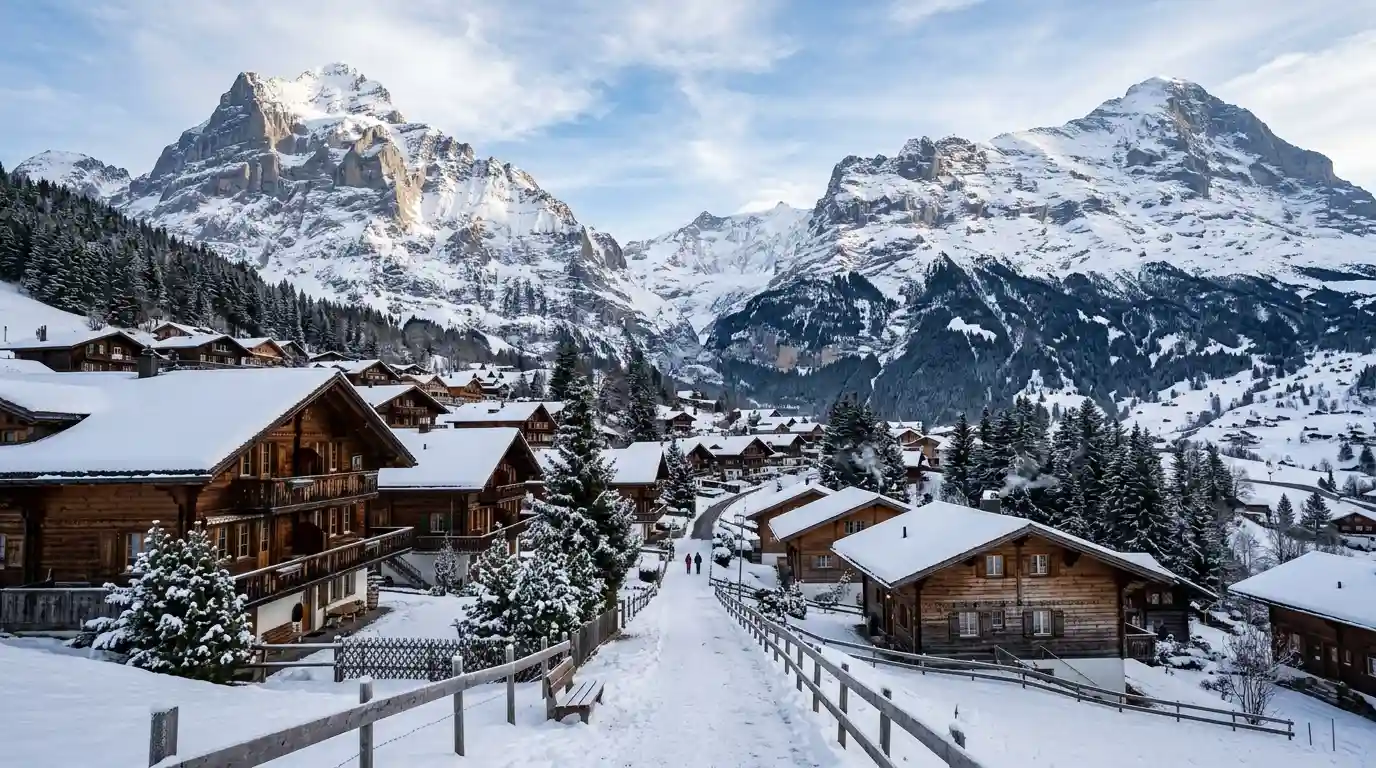
The best place to visit in Switzerland in winter depends on your interests, travel budget, and preferred activities. Zermatt is ideal for spectacular mountain views and skiing, Interlaken makes a convenient base for exploring the Jungfrau region, and Lucerne combines lakeside scenery with an attractive historic center. Meanwhile, St. Moritz appeals to luxury travelers, while Grindelwald offers a classic Alpine village atmosphere.
This guide explores ten memorable winter destinations, explains what makes each place special, and shares practical advice to help you plan a comfortable Swiss winter vacation.
1. Zermatt: Best for Iconic Alpine Scenery
Zermatt is one of Switzerland’s most recognizable mountain destinations. Situated beneath the famous Matterhorn, this car-free village offers dramatic winter scenery, well-developed ski facilities, and a welcoming atmosphere for visitors who appreciate the outdoors.
The Matterhorn dominates the landscape, creating impressive views from the village, surrounding trails, and mountain viewpoints. Visitors can ride mountain lifts, explore the resort’s pedestrian streets, enjoy Swiss restaurants, or spend a day skiing across extensive Alpine terrain.
Best winter activities in Zermatt
- Admire the Matterhorn from village viewpoints and designated mountain observation areas.
- Explore the Gornergrat railway route for elevated Alpine panoramas, weather permitting.
- Enjoy skiing and snowboarding on suitable marked slopes.
- Walk through the village, browse local shops, and try traditional Swiss dishes.
- Relax at a mountain restaurant with views of the surrounding peaks.
Zermatt is particularly suitable for couples, photographers, and active travelers. However, accommodation and mountain activities can be expensive, especially during popular holiday periods. Reserve lodging early and check mountain transport conditions before planning a day around a specific viewpoint.
2. Interlaken: Best Base for Exploring the Jungfrau Region
Interlaken sits between Lake Thun and Lake Brienz, surrounded by the towering peaks of the Bernese Oberland. Its central location makes it a practical base for travelers who want to visit several Alpine destinations without changing hotels every night.
Winter scenery is one of Interlaken’s biggest attractions. The town itself offers shopping, cafés, lakeside excursions, and mountain views, while nearby railways and mountain transport connect visitors with destinations such as Grindelwald, Lauterbrunnen, and Wengen.
What to do in Interlaken during winter
- Take a scenic excursion toward the Jungfrau region.
- Explore the town center and enjoy views of the surrounding mountains.
- Plan a day trip to Lauterbrunnen’s dramatic valley landscape.
- Visit nearby mountain villages when railway and weather conditions permit.
- Enjoy winter walks on maintained paths and try seasonal outdoor activities.
Interlaken is a strong choice for first-time visitors because it offers transport connections, a range of accommodation, and access to multiple attractions. If you are comparing destinations for a cold-weather holiday, our guide to the best places to visit during winter in Europe can help you consider other options as well.
3. Grindelwald: Best for a Traditional Alpine Village Experience
Grindelwald is a picturesque mountain village framed by dramatic peaks, including the famous Eiger. During winter, snow-covered rooftops, mountain railways, ski areas, and scenic walking routes create the classic Swiss Alpine atmosphere many travelers hope to experience.
The destination is especially appealing to people who want mountain scenery without limiting their trip to skiing. Depending on conditions, visitors can enjoy winter walking routes, sightseeing excursions, mountain restaurants, and panoramic viewpoints.
Top things to experience
- Explore the village and photograph its traditional Alpine setting.
- Visit the Grindelwald-First area for mountain views and seasonal activities.
- Consider a winter excursion toward Kleine Scheidegg.
- Try skiing or snowboarding if you have the appropriate experience and equipment.
- Spend an evening enjoying local food and the peaceful mountain atmosphere.
Grindelwald works well for families, couples, and travelers who want easy access to mountain experiences. Popular attractions may require advance reservations, and certain activities operate only when weather and snow conditions are suitable.
4. Lucerne: Best for Lakeside Views and Historic Charm
Lucerne offers a different kind of winter escape. Instead of focusing entirely on high-altitude adventure, this attractive city combines a historic old town, waterfront scenery, mountain excursions, and cultural attractions.
The Chapel Bridge, colorful historic buildings, and Lake Lucerne waterfront make the city enjoyable for sightseeing even when the weather is cold. Cafés, restaurants, and museums provide comfortable alternatives when snow or rain makes outdoor exploration less appealing.
Best things to do in Lucerne
- Walk across the Chapel Bridge and explore the old town.
- Enjoy views of Lake Lucerne from accessible waterfront areas.
- Take a mountain excursion to Mount Pilatus or Mount Rigi when services operate.
- Visit museums and historic landmarks on colder days.
- Use Lucerne as a base for a short winter city break.
Lucerne is a good option for visitors who prefer a mixture of scenery, history, restaurants, and comfortable urban facilities. It can also suit travelers who do not want every day of their vacation to revolve around snow sports.
5. St. Moritz: Best for Luxury and Winter Sports
St. Moritz is an internationally known Alpine resort in the Engadine Valley. Its combination of mountain scenery, upscale hotels, winter sports, and sophisticated dining makes it one of Switzerland’s best-known destinations for a premium winter vacation.
The surrounding region offers opportunities for skiing, snowboarding, cross-country skiing, and scenic excursions. Lake St. Moritz creates a beautiful setting, although frozen-lake activities and events depend on ice safety and official local arrangements.
Why visit St. Moritz in winter?
- Experience a well-established Alpine winter resort.
- Enjoy winter sports across nearby mountain areas.
- Explore boutique shops, cafés, and fine-dining restaurants.
- Take in the scenery of the Engadine Valley.
- Consider a scenic railway journey through the surrounding mountains.
St. Moritz is best for travelers who value premium accommodation, resort facilities, and an elegant atmosphere. It can be expensive, so compare hotel rates, lift passes, dining costs, and transportation before finalizing your budget.
6. Lauterbrunnen: Best for Dramatic Valleys and Peaceful Scenery
Lauterbrunnen is famous for its steep valley walls, traditional village setting, and waterfalls. In winter, the landscape can look especially striking when snow settles across the surrounding mountains and rooftops.
Visitors can enjoy scenic walks on suitable paths, explore the village, photograph the valley, and travel to nearby mountain communities when transport services are operating. Lauterbrunnen also provides access to the wider Jungfrau region.
Things to do in Lauterbrunnen
- Photograph the valley and its dramatic Alpine backdrop.
- Walk through the village and enjoy its quiet winter atmosphere.
- Explore nearby Wengen or Mürren when connections are available.
- Enjoy a relaxed meal at a local restaurant.
- Plan short excursions around weather, daylight, and trail conditions.
Lauterbrunnen is especially appealing to photographers, couples, and visitors seeking a quieter alternative to larger resort centers. Waterfalls may look different in winter, and access to individual viewpoints can be affected by snow, ice, or maintenance.
7. Wengen: Best for a Quiet, Snowy Mountain Retreat
Wengen is a car-free mountain village above the Lauterbrunnen Valley. Its elevated position, traditional chalets, and views toward the surrounding peaks make it an excellent choice for travelers seeking a peaceful winter setting.
The village offers a slower pace than many larger resorts. Visitors can enjoy mountain views, walk through the village, relax in cafés, or use local railway connections to explore nearby areas.
Winter highlights in Wengen
- Enjoy panoramic views of the Lauterbrunnen Valley.
- Explore the village on foot.
- Access nearby ski areas when lifts and transport are operating.
- Stay in a mountain hotel or chalet for a relaxing getaway.
- Experience the atmosphere of a traditional Swiss winter village.
Because Wengen is reached by mountain railway rather than ordinary road access, travelers should check train schedules and luggage arrangements. It is a particularly appealing option for visitors who want to spend more time enjoying the setting than moving between attractions.
8. Bern: Best for Culture, Architecture, and Winter City Breaks
Bern, Switzerland’s capital, is a rewarding destination for travelers who enjoy historic architecture and cultural sightseeing. Its old town features arcaded streets, sandstone buildings, fountains, and distinctive landmarks that remain interesting during colder months.
Unlike a mountain resort, Bern does not require visitors to plan their entire trip around snow conditions. You can explore historic streets, visit museums, enjoy cafés, and take short excursions while keeping indoor alternatives available for bad weather.
What to see in Bern
- Explore the UNESCO-listed old town.
- Walk beneath the historic arcades and browse local shops.
- Visit museums and cultural attractions.
- See the Zytglogge clock tower and nearby historic streets.
- Enjoy Swiss food in a traditional restaurant.
Bern is suitable for travelers who want history and culture alongside winter scenery. It can also work as a short stop between other Swiss destinations, particularly if you prefer a balanced itinerary rather than a full week in a ski resort.
9. Geneva: Best for Urban Comfort and Lake Views
Geneva is an attractive winter destination for visitors who prefer an international city atmosphere, waterfront walks, restaurants, museums, and convenient transport connections. Lake Geneva provides a scenic backdrop, while the surrounding region offers opportunities for day trips.
Winter temperatures can be cold, but the city offers plenty of indoor activities. Visitors can explore the old town, discover museums, shop in the central districts, and enjoy the local food scene.
Winter activities in Geneva
- Walk along accessible sections of the lakefront.
- Explore the historic old town.
- Visit museums and cultural attractions.
- Try Swiss chocolate and regional cuisine.
- Plan excursions outside the city when transport and weather allow.
Geneva can be a convenient starting or finishing point for a Switzerland trip, especially for international travelers. However, it offers a different experience from high-altitude destinations, so choose it for city sightseeing rather than guaranteed deep snow.
10. Davos: Best for Active Winter Holidays
Davos is a well-known mountain resort in eastern Switzerland. It attracts visitors interested in skiing, snowboarding, cross-country skiing, winter walks, and other seasonal outdoor experiences.
The surrounding region has multiple mountain areas and a range of accommodation options. Visitors can choose between active days on the slopes and quieter experiences such as scenic walks, local restaurants, and relaxing in their hotel.
Things to do in Davos
- Explore suitable ski and snowboard areas.
- Try cross-country skiing on designated trails.
- Enjoy winter walking routes when conditions are safe.
- Visit local shops, cafés, and restaurants.
- Plan mountain excursions around current lift operations and forecasts.
Davos is a strong option for travelers whose priorities include winter sports and resort facilities. Before booking, compare the activities available during your dates because snow conditions and lift operations can vary through the season.
Which Is the Best Place to Visit in Switzerland in Winter?
There is no single best destination for every traveler. The right choice depends on whether you want skiing, mountain scenery, a peaceful village, cultural sightseeing, or a luxury resort.
| Destination | Best For | Travel Style |
|---|---|---|
| Zermatt | Matterhorn views and skiing | Scenic mountain escape |
| Interlaken | Regional excursions | Flexible sightseeing base |
| Grindelwald | Classic Alpine scenery | Village and outdoor activities |
| Lucerne | Lake views and history | City break |
| St. Moritz | Luxury and winter sports | Premium resort stay |
| Lauterbrunnen | Valley scenery | Peaceful nature getaway |
| Wengen | Traditional mountain village | Relaxed Alpine retreat |
| Bern | Historic architecture | Cultural city break |
| Geneva | Lakefront and urban attractions | International city stay |
| Davos | Outdoor winter activities | Active resort holiday |
If you are still comparing destinations, explore our guides to choosing the best place to visit in Switzerland and places to visit in Switzerland during winter for more trip-planning ideas.
Best Time to Visit Switzerland in Winter
Winter conditions vary by altitude and region. December is appealing for festive markets, seasonal decorations, and holiday atmosphere. January often brings a quieter post-holiday period, while February is popular for ski trips and school-break vacations. March can offer longer daylight hours, although conditions vary considerably between mountain resorts and lower-elevation cities.
For many travelers, mid-December through February is the main winter travel period. However, the best dates depend on your priorities. Skiers should check the expected operating season for their chosen resort, while travelers interested in cities and scenic railway journeys may have greater flexibility.
If you are planning a wider European trip, our guide to the best places to visit in Europe in January can help you compare seasonal destinations. You can also explore relaxing places to visit in Europe if you prefer a slower-paced vacation.
How to Plan a Switzerland Winter Itinerary
For a first visit, a trip of seven to ten days provides time to experience several regions without rushing through every stop. The following sample itinerary balances cities, lakes, and mountain scenery.
Days 1–2: Lucerne
Explore the old town, walk along Lake Lucerne, and consider a mountain excursion if transport and weather conditions are favorable.
Days 3–5: Interlaken and the Jungfrau Region
Use Interlaken as a base for exploring Grindelwald, Lauterbrunnen, and Wengen. Select excursions according to the forecast and available transport.
Days 6–7: Zermatt
Travel to Zermatt for Matterhorn views, village sightseeing, and optional mountain activities. Allow flexibility for cloudy weather.
Days 8–9: Bern or Geneva
Finish with a city stay for museums, restaurants, shopping, and convenient transport connections. Choose the city that best matches your departure plans.
This itinerary is a starting point rather than a fixed schedule. Switzerland’s rail network makes multi-city travel practical, but journey times, mountain connections, and weather-related changes should be checked before booking each excursion.
Budget Tips for Visiting Switzerland in Winter
Switzerland can be expensive, particularly in major ski resorts and during school holidays. A few practical decisions can help you manage costs without sacrificing the experience.
- Book accommodation early: Popular mountain destinations can have limited availability during peak periods.
- Compare transport options: Calculate individual fares and available rail passes based on your actual route and travel dates.
- Choose a strategic base: Staying in a well-connected town may be more economical than booking a resort hotel for every night.
- Balance paid activities with free sightseeing: Historic streets, village walks, and accessible viewpoints can provide memorable experiences.
- Check attraction costs in advance: Mountain lifts, special railway excursions, equipment rental, and ski passes can add substantially to the total budget.
- Travel outside peak dates when possible: Accommodation prices and availability may be more favorable outside major holiday periods.
Travelers comparing international winter destinations may also enjoy our guides to Swedish Lapland, southern Sweden, and the Black Forest. These destinations offer different landscapes and seasonal experiences for people planning a broader European holiday.
What to Pack for a Swiss Winter Trip
Mountain weather can change quickly, so pack for cold temperatures, wind, wet conditions, and possible snow. Even if you plan to spend most of your time in cities, warm clothing is useful for early mornings and outdoor sightseeing.
- Insulated winter jacket and warm mid-layers.
- Thermal base layers, gloves, a hat, and a scarf.
- Water-resistant footwear with good grip.
- Warm socks and extra clothing for wet conditions.
- Sunglasses and sunscreen for bright snow conditions.
- A small daypack, reusable water bottle, and portable charger.
- Any necessary ski clothing or equipment, or a plan to rent it locally.
For winter walks, use maintained routes and appropriate footwear. Avoid venturing onto closed trails, frozen lakes, or avalanche-prone terrain without the necessary local guidance and safety precautions.
Getting Around Switzerland in Winter
Trains are a convenient way to travel between many Swiss cities and mountain towns. Rail journeys can also be part of the experience, offering views of valleys, forests, villages, and snow-covered peaks.
Mountain railways, cable cars, and local buses provide access to many popular areas, but schedules can change with weather and seasonal operations. Check the latest timetable before departure, leave room for connections, and avoid planning an entire day around a single mountain excursion.
Driving may be useful for some regional itineraries, but winter road conditions can require snow tires, suitable equipment, and careful planning. In car-free destinations such as Zermatt and Wengen, visitors must use designated public transport connections for the final part of the journey.
Frequently Asked Questions
What is the best place to visit in Switzerland in winter for first-time visitors?
Interlaken is a practical base for first-time visitors who want access to multiple mountain destinations. Lucerne is another strong choice for travelers who prefer a mixture of historic sightseeing, lakeside scenery, and mountain excursions.
Which Swiss destination is best for snow and mountain views?
Zermatt, Grindelwald, Wengen, and the wider Jungfrau region are excellent options for dramatic Alpine scenery. Actual snow conditions and visibility vary by date and elevation.
Can you visit Switzerland in winter without skiing?
Yes. You can explore historic towns, ride scenic trains, enjoy mountain viewpoints, visit museums, sample Swiss cuisine, and take suitable winter walks without skiing.
Is Switzerland expensive in winter?
Switzerland is generally a relatively expensive destination. Accommodation, restaurant meals, mountain transport, and ski activities can increase costs, so comparing prices and booking ahead can help.
How many days are enough for Switzerland in winter?
Five to seven days can cover a few major destinations, while seven to ten days allows a more relaxed itinerary with time for cities and mountain villages. Your ideal trip length depends on travel pace, budget, and planned activities.
Is December a good time to visit Switzerland?
December can be a wonderful time for festive decorations, Christmas markets in selected towns, and winter scenery. Snowfall is not guaranteed everywhere, particularly at lower elevations, so check local conditions for your dates.
Final Thoughts
The best place to visit in Switzerland in winter depends on the experience you want. Choose Zermatt for iconic mountain scenery, Interlaken for regional exploration, Grindelwald for a classic Alpine village, Lucerne for lakeside charm, or St. Moritz for a premium winter resort experience.
For a balanced first trip, combine a city such as Lucerne or Bern with a mountain base in the Jungfrau region and a few days in Zermatt if your budget allows. Plan around transport schedules, weather, and daylight, and leave some flexibility for changing mountain conditions. With thoughtful preparation, Switzerland can deliver a memorable winter vacation filled with spectacular scenery, cultural discoveries, and relaxing Alpine moments.