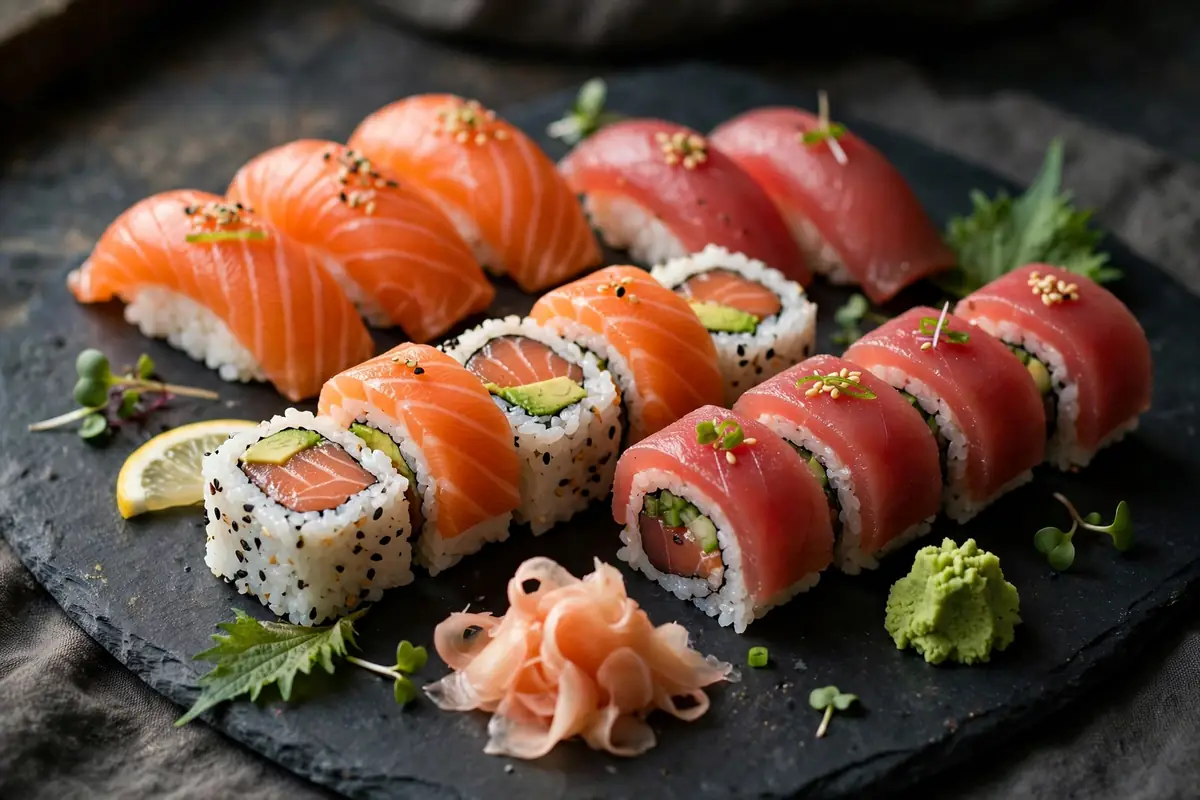
New York City is one of the great sushi cities of the world outside Japan, and the search for the best sushi in New York can take you from hushed omakase counters where dinner costs hundreds of dollars to casual hand-roll windows where lunch costs less than twenty. Few food cultures reward expertise like sushi does, and New York’s scene has matured into something remarkable: traditional Edomae craftsmanship, creative modern interpretations, and outstanding neighborhood spots at every price point. This guide explains the styles, the etiquette, and how to find sushi worth your money in a city full of options.
Sushi arrived in New York in the 1960s and 70s, and the city has been obsessed ever since. What sets New York apart is concentration and competition. The density of serious sushi restaurants in Manhattan alone rivals anywhere outside Tokyo, and that competition raises standards everywhere. Fish is flown in daily from Tokyo’s Toyosu Market and from top domestic sources, rice is seasoned with closely guarded vinegar blends, and a generation of chefs trained in Japan now lead counters across the five boroughs. The result is a scene where excellence is available at many levels, if you know where to look.
Omakase: The Pinnacle of NYC Sushi
Omakase, meaning “I leave it up to you,” is the ultimate sushi experience. You sit at a counter, usually for eight to twelve seats, and the chef serves a progression of nigiri and small dishes in the order he believes is best. The best omakase counters in New York are intimate theaters of craft: you watch the chef’s hands shape rice that is still warm, slice fish with decades of knife work behind every cut, and brush each piece with nikiri soy or yuzu before placing it in front of you.
What distinguishes great omakase is the rice. Connoisseurs judge a sushi chef primarily on shari, the seasoned rice, which should be warm, loosely packed so it falls apart in the mouth, and seasoned with a balance of vinegar, salt, and sugar that complements rather than dominates the fish. The neta, or topping, matters enormously too, but rice is the soul. At the finest counters, the rice alone justifies the price.
Omakase in New York spans a wide price range. The most exclusive counters charge several hundred dollars per person and book out weeks in advance. But the city also has excellent mid-range omakase, often at lunch, where you can experience serious craft for a fraction of the dinner price. Lunch omakase is one of the great value plays in New York dining. For other special-occasion dining, our guide to the best fine dining in USA covers celebratory meals nationwide.
Omakase Etiquette for Beginners
Eat each piece promptly when it is served; sushi is timed to be eaten at its peak. Nigiri is traditionally eaten with the fingers, fish-side down so the fish touches your tongue first, though chopsticks are fine too. A little soy is already brushed on at good counters, so resist the urge to drown pieces. Do not mix wasabi into your soy sauce at a serious counter; the chef has already placed fresh wasabi under the fish. And pace your sake or wine so you stay sharp through the progression. First-timers nervous about the formality can warm up at casual spots; our guide to the best brunch in New York covers more relaxed weekend dining.
Neighborhood Sushi: Great Fish Without the Ceremony
Beyond the famous counters, New York is full of neighborhood sushi restaurants serving excellent fish in relaxed settings. These are the places locals actually eat at weekly: solid omakase-adjacent a la carte menus, fresh daily specials, reasonable prices, and no booking warfare. The Upper West Side, Astoria, Park Slope, and Flushing all have beloved local sushi spots with loyal followings.
What to look for in a neighborhood joint: a compact menu that changes with the seasons, fish that looks glossy and smells like the ocean, rice served at room temperature or slightly warm, and a chef who clearly cares. Red flags include giant menus with hundreds of items, fish that looks dull or smells off, and rice that is cold, hard, or gummy. Trust your eyes and nose. When you find a great local spot, become a regular; sushi chefs reward loyalty with off-menu specials and the best cuts.
Hand Rolls, Chirashi, and Casual Formats
The hand roll, or temaki, has become a phenomenon in New York. Dedicated hand-roll counters serve cones of warm rice, crisp nori, and pristine fish meant to be eaten within seconds of assembly. The format is interactive, affordable, and deeply satisfying. A set of five hand rolls makes a perfect lunch, and the best spots source fish with the same seriousness as high-end omakase.
Chirashi bowls, scattered sashimi over seasoned rice, offer another outstanding value. A great chirashi gives you a tour of the day’s best fish in one bowl, often at lunch prices that undercut equivalent nigiri by half. Poke bowls, the Hawaiian import, have also found a devoted New York following, though purists distinguish them from Japanese tradition. For more bowl-format inspiration, our guide to the hawaiian poke bowl guide explores the trend’s origins.
Supermarket and Takeout Sushi
Even takeout sushi in New York can be excellent if you choose well. Japanese markets in Manhattan and Queens sell sushi made fresh throughout the day that rivals many restaurants. Look for packages made within hours, rice that is not refrigerated to hardness, and fish with vibrant color. It will never match a great counter, but good takeout sushi beats mediocre restaurant sushi every time.
What to Order: A Fish-by-Fish Primer
Start with the classics to judge a restaurant: maguro (tuna), sake (salmon), and hamachi (yellowtail). These are the benchmarks. Then explore: uni (sea urchin) should taste sweet and oceanic, never bitter; ikura (salmon roe) should pop with briny brightness; hotate (scallop) should be sweet and tender; and tamago (sweet egg) reveals the kitchen’s finesse.
Adventurous eaters should try kohada (gizzard shad), a traditional Edomae test of skill; aji (horse mackerel) with ginger and scallion; and engawa (fluke fin) with its rich, buttery texture. Seasonal specialties like shirako, ankimo (monkfish liver), and nodoguro (blackthroat seaperch) appear on the best menus and are worth ordering whenever available. Each fish has a season, and the finest counters follow the Japanese calendar closely.
Sushi by Neighborhood
Midtown East around Grand Central has the highest concentration of top-tier omakase in the city, a legacy of the business-dinner era. Downtown, the East Village and Tribeca host modern, creative sushi restaurants alongside traditional counters. Brooklyn’s sushi scene has matured dramatically, with Williamsburg and Cobble Hill offering serious options that rival Manhattan.
Queens deserves special mention: Flushing and Elmhurst have outstanding sushi at prices well below Manhattan, thanks to the borough’s deep Asian food culture and lower rents. For visitors, a Flushing sushi expedition pairs perfectly with the neighborhood’s other Asian food adventures. Compare the East Coast scene with our guide to the best sushi in Los Angeles, where the city’s Japanese heritage shapes a distinct style.
Budget Strategies for Sushi Lovers
Sushi does not have to break the bank. Lunch specials at good neighborhood spots often deliver remarkable quality for twenty to thirty dollars. Happy-hour rolls and hand-roll sets stretch dollars further. Grocery-store sushi from Japanese markets is a legitimate option. And learning which fish are affordable but delicious, like saba (mackerel) and ika (squid), lets you eat well without ordering the priciest cuts. Our guide to the best budget eats in USA has more money-saving food strategies.
How to Spot a Great Sushi Restaurant
Look at the rice first. It should be visible between pieces of nigiri, slightly warm, with distinct grains that hold together but separate easily. If the rice is cold, mushy, or falls apart into paste, nothing else matters. Next, look at the fish: vibrant color, clean cuts, glossy surfaces. Smell matters too; great fish smells like the sea, not like fish.
Watch the chef’s hands. Confident, efficient movements, rice shaped in seconds, fish sliced in single pulls of the knife. A great sushi chef makes it look effortless because it nearly is, after decades of practice. Finally, notice the details: fresh wasabi grated to order, pickled ginger that tastes house-made, tea served hot and refilled without asking. Excellence in sushi is excellence in details. Complete your NYC seafood education with our guide to the best seafood in New York.
Sushi at Home: NYC’s Japanese Markets
New York’s Japanese markets let you build impressive sushi spreads at home. The best markets sell sushi-grade fish, seasoned rice, nori, wasabi, and all the tools you need. Look for fish labeled sushi-grade or sashimi-grade, and ask the fishmonger what is freshest. Building chirashi bowls at home is the easiest entry point: seasoned rice topped with sliced fish, requiring no rolling or shaping skills.
For simple homemade sushi, start with temaki hand rolls. All you need is warm rice, nori sheets, sliced fish, and fillings like cucumber, avocado, and shiso. Set everything out and let guests assemble their own. It is interactive, fun, and far easier than it looks. Our guide to the best farmers markets in USA helps source quality ingredients, while our best dumplings in USA guide covers another Japanese-adjacent favorite. Pair your homemade feast with knowledge from our hawaiian poke bowl guide, and explore sake pairings through our best wine bars in USA guide’s sake selections.
Conclusion
The best sushi in New York rewards curiosity at every level, from the hushed omakase counter to the neighborhood spot to the perfect hand roll eaten standing up. Learn to judge rice, trust chefs who show restraint, and explore beyond the familiar rolls. In one of the world’s great sushi cities, your next unforgettable piece of nigiri is always closer than you think.