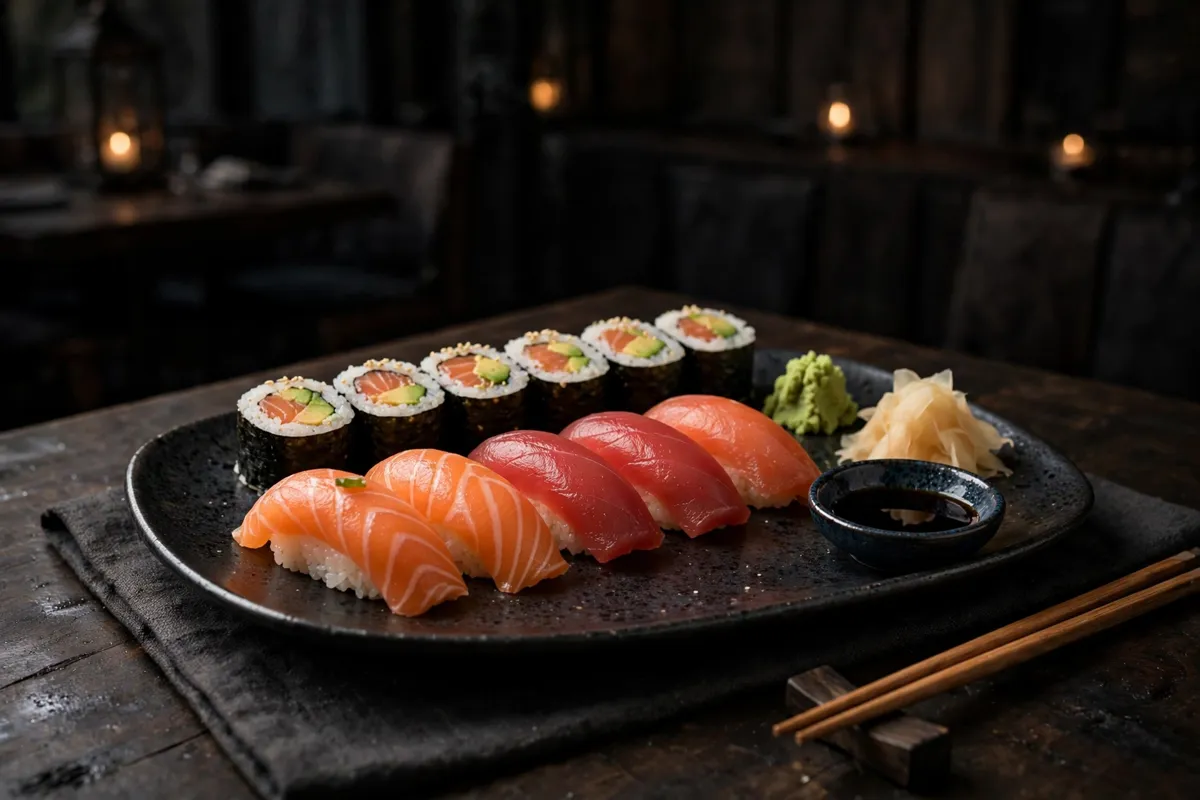
Los Angeles has a legitimate claim as America’s sushi capital, and the search for the best sushi in Los Angeles is enriched by the city’s deep Japanese heritage. Little Tokyo, the Japanese-American community, and generations of sushi chefs trained in Japan have created a scene that rivals New York’s in quality while maintaining a distinctly Californian character. From exclusive omakase counters to beloved neighborhood spots to the hand-roll bars that LA pioneered, this guide covers sushi in the city where America first fell in love with raw fish.
Sushi came to America through Los Angeles. The first American sushi bar opened here in the 1960s, and LA’s Japanese community nurtured the cuisine through decades when the rest of the country was still skeptical. That head start shows in the depth of talent: master chefs with decades of experience, apprenticeship lineages stretching back to Tokyo, and a dining public sophisticated enough to support serious craft. LA sushi respects tradition while embracing the city’s creativity.
Omakase in LA: Intimate Counters, Serious Craft
LA’s top omakase counters offer experiences that rival Tokyo’s best. Intimate rooms with eight to twelve seats, chefs who have spent decades perfecting rice and knife work, fish flown in from Japan’s Toyosu Market and top domestic sources. The progression moves from delicate white fish through richer cuts to the finale of tamago or hand roll, each piece timed to perfection.
What distinguishes LA omakase is a subtle California influence: pristine local seafood like Santa Barbara uni and spot prawns alongside Japanese imports, and a dining culture that is serious about food but relaxed about formality. The best counters balance reverence for tradition with warmth toward guests. For the New York comparison, our guide to the best sushi in New York covers the East Coast scene.
What Makes Great Sushi Rice
Connoisseurs judge sushi by the rice first. It should be warm, seasoned with a balanced vinegar blend, and packed loosely enough to separate in the mouth. The grains should be distinct, not mushy. At the finest counters, the rice alone is revelatory. If a restaurant gets the rice right, the fish is almost certainly excellent too. This principle holds from Tokyo to LA to everywhere serious sushi is served.
Little Tokyo and Japanese Community Favorites
Little Tokyo in downtown LA remains the spiritual heart of American sushi. The neighborhood’s restaurants range from historic institutions to modern specialists, serving a clientele that includes Japanese visitors with exacting standards. Eating here connects you to the cuisine’s American origins.
Beyond Little Tokyo, the South Bay, particularly Gardena and Torrance, has a dense concentration of Japanese restaurants serving the Japanese-American community. These neighborhood spots offer outstanding quality at prices well below the famous omakase counters. For sushi lovers, exploring the South Bay is essential; the regulars here know fish, and the restaurants deliver. Our guide to the Japanese food in Los Angeles complete guide explores the broader cuisine.
Hand Rolls: LA’s Signature Format
Los Angeles pioneered the dedicated hand-roll bar, and the format remains an LA signature. Crispy nori, warm rice, pristine fish, assembled to order and eaten within seconds. The best hand-roll spots source with omakase-level seriousness, offering sets that tour the day’s finest fish. It is interactive, relatively affordable, and deeply satisfying.
The hand-roll experience is about immediacy. Nori loses its crispness within minutes, so these bars are designed for speed: order, receive, eat, repeat. The format suits LA’s casual dining culture perfectly. A five-roll set makes an ideal lunch or light dinner. For more casual Japanese formats, our guide to the best ramen in Los Angeles covers the city’s noodle shops.
Spicy Tuna and California Rolls: LA Inventions
Love them or not, the California roll was invented in Los Angeles, and the city owns its legacy. The best versions use real crab, ripe avocado, and quality rice. Spicy tuna rolls, another LA-era innovation, remain beloved. Purists may scoff, but these rolls introduced millions of Americans to sushi and deserve respect. The finest LA sushi bars execute even these humble rolls with care.
Neighborhood Sushi Across LA
Great sushi hides across LA’s sprawl. The Westside has upscale options serving the entertainment industry. The Eastside offers creative, casual spots. The Valley holds beloved neighborhood institutions. Each area’s sushi reflects its clientele, but quality fish and skilled preparation are available citywide if you know where to look.
The key is finding chefs who care. Look for compact menus, daily specials, fish that gleams, and rice served at proper temperature. Avoid all-you-can-eat sushi; quality fish cannot be sold at those prices. Trust word of mouth from sushi-obsessed friends over generic review sites. For more LA dining, our guides to the best pizza in Los Angeles and best seafood in Los Angeles round out the picture.
What to Order: Building Your Sushi Knowledge
Start with the benchmarks: tuna, salmon, yellowtail. Then explore the traditional Edomae lineup: kohada, aji, saba, each testing the chef’s curing skills. Uni should be sweet and creamy, Santa Barbara uni being among the world’s finest. Hotate, ikura, and engawa offer varied textures. Tamago reveals the kitchen’s soul.
Seasonal specials are where great sushi bars shine. Ask what is special, what just arrived, what the chef is excited about. These questions unlock experiences beyond the menu. And do not neglect cooked dishes; the best sushi restaurants also excel at grilled fish, agedashi tofu, and other kitchen preparations. Our guide to the best sushi omakase in USA covers top counters nationwide.
Sushi Etiquette Essentials
Eat promptly, use fingers or chopsticks as you prefer, and do not drown nigiri in soy; quality counters pre-season each piece. Fresh wasabi is already placed; mixing wasabi into soy is unnecessary. Pace yourself through omakase and save room for the finale. Above all, trust the chef; omakase means surrendering to expertise, and the reward is a meal you could never have ordered yourself.
Sake Pairings for Sushi
Sake elevates sushi profoundly when chosen well. Junmai styles, with their rice-forward savoriness, complement nigiri beautifully. Ginjo’s aromatic delicacy suits white fish. Serve premium sake chilled; the nuance shows. The best sushi bars offer sake flights that progress with the meal, and knowledgeable staff guide selections.
What to avoid: hot sake with fine sushi, which overwhelms delicate flavors, and overly sweet styles that clash with seasoned rice. Ask the sommelier or chef; sake pairing is an art they love sharing. Our guide to the best wine bars in USA explores beverage programs, while our best craft cocktails in USA guide covers cocktail alternatives.
Japanese Whisky and Beer
Japanese whisky, with its refined character, pairs surprisingly well with sushi’s richness. A highball, whisky with soda over ice, is refreshing and palate-cleansing. Japanese lagers, crisp and clean, are the traditional casual pairing. Each has its moment; the highball before, sake during, whisky after is a fine progression.
Supermarket Sushi: A Realistic Guide
LA’s Japanese markets sell excellent takeout sushi made fresh throughout the day. Look for packages timestamped within hours, rice that is not refrigerator-hard, fish with vibrant color. It will not match a great counter, but it beats mediocre restaurants. The best markets have sushi chefs working visibly, making to order.
What to buy: nigiri sets with varied fish, chirashi bowls, hand-roll kits for home assembly. Avoid anything with dull fish or dried rice. Price reflects quality; suspiciously cheap sushi is suspicious. Our guide to the best farmers markets in USA helps source complementary ingredients for home sushi nights.
LA Sushi History: America’s First Bite
Los Angeles is where America first tasted sushi. Kawafuku Restaurant in Little Tokyo opened in the 1960s, introducing raw fish to adventurous Angelenos. The California roll, invented here, made sushi accessible to skeptics. Through the following decades, LA’s Japanese community nurtured authentic sushi culture while the city embraced it mainstream. This history gives LA sushi a depth no other American city claims.
What the history means today is a scene with genuine roots. Master chefs with decades in LA, apprenticeship lineages, a dining public that grew up with sushi. The pioneering spirit continues; LA still innovates within tradition. Understanding this heritage enriches every piece you eat. Our guide to the Japanese food in Los Angeles complete guide explores the broader culinary history.
Tokyo vs. LA: Friendly Comparison
Tokyo remains sushi’s pinnacle, but LA holds its own remarkably. The fish quality at top LA counters approaches Tokyo’s; the rice craft is comparable; the hospitality is warmer. What Tokyo offers is depth: hundreds of elite counters, seasonal micro-variations, centuries of tradition. LA offers accessibility and California touches. Both are worth experiencing; neither diminishes the other.
Churros and Mexican Desserts
End taco adventures with churros: crispy, cinnamon-sugared, perfect with chocolate or cajeta. Flan, tres leches, paletas, each offers sweet Mexican tradition. The best taquerias take desserts seriously; they complete the meal authentically. Save room; these are worth it.
Conclusion
The best sushi in Los Angeles draws on the city’s Japanese heritage, its access to pristine seafood, and its creative dining culture. From historic Little Tokyo to pioneering hand-roll bars to exclusive omakase counters, LA offers sushi at every level of seriousness. Learn to judge rice, follow the seasons, and trust the chefs. In the city where America discovered sushi, the next great meal is always close.
Whether you are a local or just visiting, exploring the food scene is one of the best ways to experience the culture and character of any American city. Take your time, try something new, and enjoy every bite of your culinary adventure.