If you are new to this aesthetic, the secret is balance. Learning how to combine embellished pieces with simple clothing, choose complementary colors, and select the right accessories can help you create a sophisticated look that feels modern rather than theatrical.
What Is Modern Baroque Fashion?
Modern baroque fashion is a contemporary interpretation of the elaborate clothing and decorative traditions associated with the European Baroque period, particularly the seventeenth century. Historical Baroque aesthetics emphasized grandeur, rich ornamentation, dramatic proportions, and intricate craftsmanship.
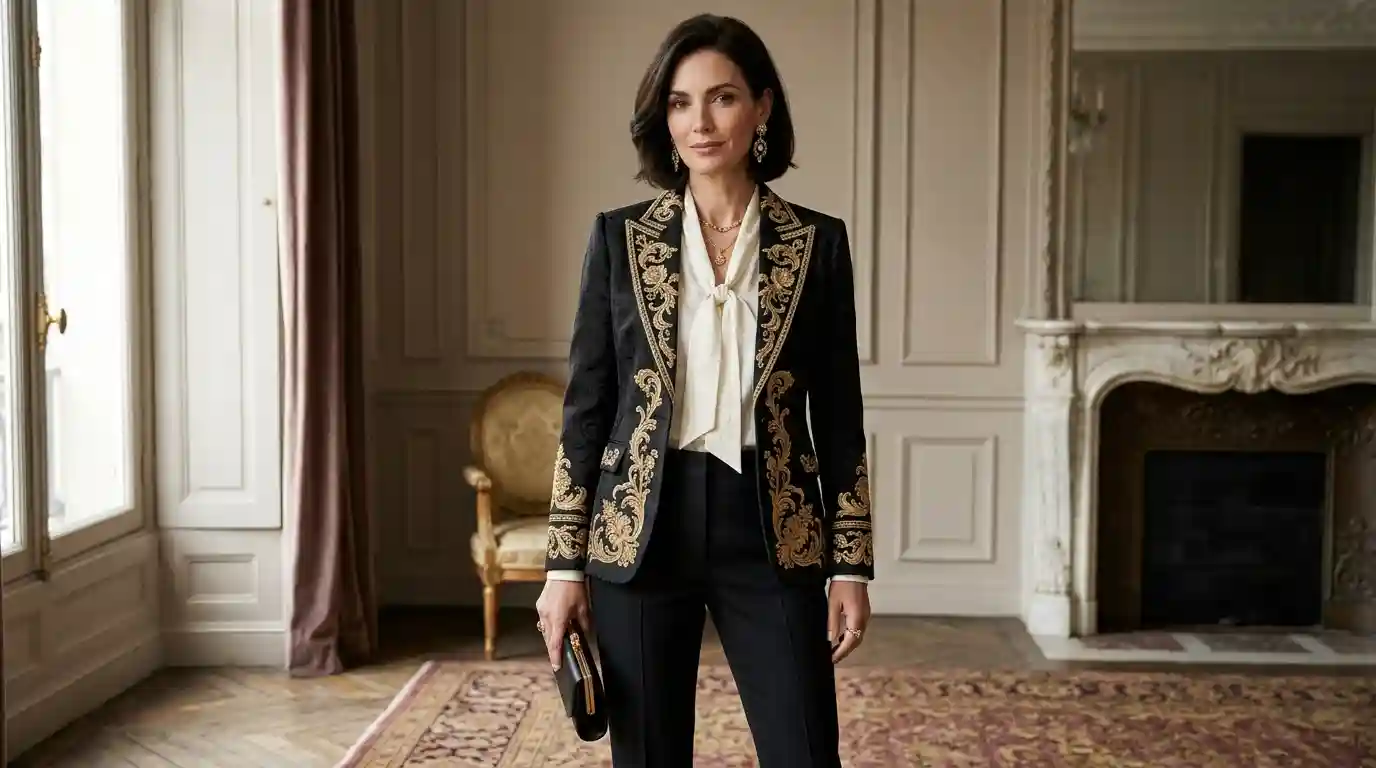
Today’s interpretation adapts those visual characteristics for modern wardrobes. Instead of reproducing historical costumes, designers and style enthusiasts incorporate decorative embroidery, brocade-inspired prints, velvet, metallic details, ornate buttons, and expressive accessories into wearable outfits.
The result can range from a tailored jacket with gold-colored detailing to an evening dress featuring rich fabric and elaborate embellishments. Some outfits make a bold statement, while others introduce just one decorative element to an otherwise understated look.
For a broader understanding of how historical influences shape clothing, explore Gangster 20s fashion and Rat Pack fashion for ladies. These styles have their own distinctive identities, but they demonstrate how vintage aesthetics can influence modern dressing.
Key Characteristics of Modern Baroque Fashion
Understanding the defining features of baroque-inspired clothing makes it easier to identify suitable pieces and combine them effectively.
1. Ornate Patterns and Decorative Details
Intricate patterns are among the most recognizable elements of baroque fashion. Common motifs include curling foliage, floral arrangements, damask-inspired designs, decorative scrollwork, and symmetrical ornamental patterns.
These details may appear across an entire garment or be limited to a collar, sleeve, front panel, or border. Beginners can start with a single patterned item instead of combining multiple elaborate designs immediately.
2. Rich and Tactile Fabrics
Texture plays an important role in creating a luxurious appearance. Velvet, brocade, jacquard, satin, and embroidered fabrics can add depth and visual interest. Their appearance varies with the weave, finish, lighting, and garment construction.
For everyday outfits, a textured jacket or patterned top can provide enough character without requiring several statement pieces.
3. Dramatic but Controlled Silhouettes
Modern baroque clothing may include structured shoulders, defined waists, flowing skirts, puff sleeves, wide-leg trousers, or tailored jackets. The goal is not necessarily to make every part of an outfit dramatic. A single structured or flowing element can establish the desired aesthetic.
4. Metallic Accents
Gold-colored buttons, decorative buckles, metallic thread, and jewelry can introduce visual richness. Use metallic elements deliberately so that they complement the outfit rather than compete with one another.
5. A Balance Between Vintage and Contemporary Style
The modern interpretation works best when traditional ornamentation is paired with contemporary cuts and practical clothing. A brocade-inspired blazer over a plain shirt, for example, feels more current than an outfit that attempts to recreate a complete historical ensemble.
Essential Clothing Pieces for a Modern Baroque Wardrobe
You do not need to replace your entire wardrobe to explore this style. Build around a few versatile pieces that can be worn in different combinations.
Statement Blazers and Jackets
A patterned blazer is one of the easiest ways to introduce baroque details. Look for ornamental prints, textured fabric, decorative buttons, or subtle metallic accents. Keep the remaining clothing simple to let the jacket stand out.
Embroidered Tops and Blouses
Embroidered tops offer a more accessible introduction to the aesthetic. Pair one with tailored trousers, a plain skirt, or dark denim. For a relaxed alternative, a simple graphic or printed top can provide a casual foundation; see these ideas in fashion T-shirts and everyday styling.
Statement Dresses and Skirts
For occasions that call for a more polished appearance, consider a dress with decorative fabric, a defined waist, or subtle embellishment. A patterned skirt can also become the focal point of an outfit when combined with a neutral blouse and understated shoes.
Tailored Trousers
Simple black, cream, charcoal, or navy trousers help ground ornate tops and jackets. Straight-leg and wide-leg cuts can both work, depending on the proportions of the outfit.
Luxury-Inspired Everyday Clothing
Baroque style does not require every item to be embellished. Quality basics create the foundation that makes statement pieces easier to wear. For ideas on refined clothing and comfort, explore luxury-inspired clothing and comfortable style.
Choosing Colors and Fabrics
Color selection can determine whether a baroque-inspired outfit looks harmonious, dramatic, or overwhelming. Start with a small palette and repeat selected colors across clothing and accessories.
Classic Baroque-Inspired Colors
- Black and gold: A dramatic combination suitable for evening outfits and statement jackets.
- Burgundy and cream: A rich, warm pairing that works for dresses, blouses, and tailored pieces.
- Emerald and black: A deep color combination that highlights texture and decorative details.
- Royal blue and metallic accents: An expressive option for jackets, skirts, and occasion wear.
- Ivory and champagne: A softer palette for elegant outfits with restrained embellishment.
- Neutral shades: Beige, taupe, gray, and white can balance more ornate patterns.
How to Mix Textures
Pairing different textures can make an outfit look considered and dimensional. Velvet can work with smooth cotton, while a patterned jacket can be balanced by a plain knit top. Satin-like finishes can complement matte fabrics when the colors and proportions remain cohesive.
For beginners, limit the outfit to two or three prominent textures. Too many competing finishes can make the overall appearance feel busy.
How to Wear Prints Without Overdoing Them
If your jacket features an elaborate pattern, choose a solid-colored top and simple trousers. If your skirt has a decorative print, repeat one of its colors in a blouse or accessory. Once you feel comfortable, experiment with mixing patterns that share a similar palette or scale.
Accessories That Complete the Look
Accessories can introduce baroque character without requiring an expensive or heavily embellished outfit. Choose pieces that complement the clothing’s color, texture, and level of detail.
Statement Jewelry
Decorative earrings, ornate rings, pendant necklaces, brooches, and cuffs can complement baroque-inspired clothing. If your outfit already has elaborate embroidery or metallic detailing, choose one prominent jewelry piece rather than wearing several competing accessories.
Belts and Decorative Hardware
A belt with an ornamental buckle can define the waist and add a focal point to a plain dress, tailored jacket, or high-waisted trousers. Coordinate the finish with other metallic details when possible.
Shoes and Bags
Classic loafers, simple heels, ankle boots, and understated formal shoes can balance a richly patterned outfit. A structured bag with restrained hardware often works better than an additional heavily embellished accessory.
Eyewear and Personal Styling
Eyewear can become part of the overall look when its frame shape and color complement your features and outfit. Explore fashionable eyeglasses and frame styles for ideas on coordinating eyewear with personal style.
Hair and Makeup
Simple hair styling can balance elaborate clothing. A sleek bun, soft waves, or a neatly styled haircut can work well, depending on the occasion. Makeup can remain understated for daytime wear or become more defined for evening events.
For general beauty and grooming inspiration, explore skincare and beauty routines and beauty and personal-care services.
How to Wear Modern Baroque Fashion Every Day
The easiest way to make baroque fashion practical is to adapt its decorative details to your routine. You can create casual, work-appropriate, and evening outfits without making every look equally dramatic.
Casual Daytime Outfit
Combine a patterned blouse with straight-leg jeans and simple loafers. Add small earrings or a restrained belt. This approach introduces an ornamental element while keeping the outfit comfortable and familiar.
Smart-Casual Outfit
Wear a dark tailored blazer with a plain top and neutral trousers. A decorative button, textured fabric, or subtle metallic accessory can provide the baroque influence without making the outfit unsuitable for everyday settings.
Evening Outfit
Choose a velvet jacket, a satin-finish top, or a richly patterned dress. Pair it with understated shoes and one or two complementary accessories. Darker colors and carefully controlled metallic accents can create a polished evening appearance.
Minimalist Baroque Outfit
If you usually prefer simple clothing, start with a plain monochrome outfit and add one ornate item, such as a brooch, patterned scarf, or decorative belt. This lets you experiment without changing your personal style completely.
Finding Your Personal Interpretation
Fashion is most useful when it reflects your preferences rather than following every trend. You might prefer dramatic evening pieces, vintage-inspired tailoring, or a more understated approach. For additional inspiration on developing a distinctive look, see personal style and modern lifestyle choices.
Styling Modern Baroque Fashion for Different Occasions
Office and Professional Settings
Choose restrained patterns, structured jackets, and neutral colors. A decorative blouse beneath a plain blazer can introduce the style without dominating a professional outfit. Consider workplace expectations before wearing very bold embellishments.
Weddings and Formal Events
Formal occasions allow more room for rich textures, statement jewelry, and dramatic silhouettes. Choose a focal garment first, then coordinate shoes, bags, and accessories around it. Follow the event’s dress code and avoid accessories that interfere with comfort.
Parties and Celebrations
For social occasions, experiment with metallic details, textured jackets, ornate jewelry, or decorative dresses. Choose pieces that allow you to move comfortably and suit the event’s atmosphere.
Travel and Special Outings
When packing, select one or two statement items that can work with several basic garments. A patterned jacket, for example, can be paired with different tops and trousers to create multiple looks without overpacking.
How to Dress in Baroque Style on a Budget
A luxurious appearance depends on thoughtful styling, not necessarily on expensive labels. Start with your existing wardrobe and identify pieces that can support the aesthetic.
1. Buy One Statement Piece at a Time
Choose an item you can wear in several combinations, such as an embroidered blouse or patterned jacket. This helps you test the style before committing to a complete wardrobe.
2. Explore Secondhand and Vintage Clothing
Thrift stores, resale platforms, and vintage shops may offer distinctive jackets, jewelry, belts, and patterned garments. Check fabric condition, seams, fastenings, and care instructions before buying.
3. Use Accessories Strategically
A decorative brooch, textured belt, or pair of statement earrings can change the appearance of basic clothing. Start with versatile accessories that work with multiple outfits.
4. Compare Quality Before Price
Examine stitching, fabric weight, lining, fit, and finishing. A less expensive garment that fits well and holds its shape may offer better long-term value than a more elaborate item that is difficult to wear.
5. Shop with a Clear Plan
Before buying, identify the outfits you want to create and the colors already in your wardrobe. Online retail and product discovery can help you compare options; for broader context, read about e-commerce terminology and online shopping and developments in the retail market.
Common Modern Baroque Fashion Mistakes to Avoid
Wearing Too Many Statement Pieces
Combining ornate prints, heavy jewelry, metallic shoes, and embellished bags can make an outfit visually crowded. Choose one main feature and let the other pieces support it.
Ignoring Fit and Proportion
Even beautiful fabric can look awkward if the garment does not fit comfortably. Balance a voluminous top with a simpler bottom or pair wide-leg trousers with a more structured upper layer.
Choosing Uncomfortable Clothing
Heavy embellishments, restrictive cuts, and delicate fabrics may not suit every situation. Consider the weather, the length of the event, and how much movement you need before choosing an outfit.
Confusing Baroque with Costume Dressing
Historical references can inspire modern outfits, but reproducing every period detail is not necessary. Contemporary cuts, practical footwear, and restrained accessories help keep the look wearable.
Following Trends Without Considering Personal Taste
Not every color, silhouette, or embellishment will suit your preferences. Use trends as inspiration rather than rules. If you enjoy a darker alternative aesthetic, you may also find it useful to explore dark and alternative fashion styles and compare their approach to color, texture, and ornamentation.
How to Care for Baroque-Inspired Clothing
Decorative fabrics and embellishments may require more attention than everyday basics. Correct care helps preserve the appearance and usability of your wardrobe.
- Read garment labels: Follow the manufacturer’s washing, drying, and pressing instructions.
- Check embellishments: Inspect embroidery, beads, decorative buttons, and metallic details before cleaning.
- Store garments carefully: Use suitable hangers for structured jackets and fold heavier knitwear to reduce stretching.
- Protect delicate fabrics: Keep embellished pieces away from rough surfaces and sharp accessories that may snag them.
- Clean stains promptly: Follow the fabric’s care instructions rather than applying strong cleaners without testing.
- Rotate statement pieces: Wearing garments in rotation can reduce unnecessary wear and give you more styling options.
When a garment is expensive, delicate, or heavily embellished, professional cleaning may be the safer choice if the care label recommends it.
A Beginner’s Checklist for Building a Modern Baroque Wardrobe
Use this simple checklist to create a wearable wardrobe without buying too much at once.
- Choose one statement garment, such as an embroidered blouse or patterned blazer.
- Select two or three neutral basics that coordinate with it.
- Pick a small color palette that suits your preferences.
- Add one accessory with decorative or metallic detailing.
- Check that your shoes and bag complement rather than compete with the outfit.
- Try the complete outfit in natural light and assess its proportions.
- Make sure each item is comfortable and suitable for the intended occasion.
- Care for delicate garments according to their labels.
- Buy additional statement pieces only after identifying gaps in your wardrobe.
If you are interested in the wider world of personal presentation, you can also explore fashion trends and deal discovery and this modern baroque fashion guide as you refine your approach.
Frequently Asked Questions About Modern Baroque Fashion
What is modern baroque fashion?
Modern baroque fashion is a contemporary clothing aesthetic inspired by the elaborate ornamentation, rich textures, decorative patterns, and dramatic silhouettes associated with the historical Baroque period.
How can beginners wear baroque fashion?
Start with one statement piece, such as a patterned blazer, embroidered blouse, or decorative accessory. Combine it with simple clothing in complementary colors and add more elaborate elements as you become comfortable.
Which colors work best for baroque-inspired outfits?
Black, gold, burgundy, emerald, royal blue, ivory, and other rich or neutral shades can work well. The best combination depends on the garment, the occasion, and your personal preferences.
Can modern baroque fashion be worn casually?
Yes. A patterned top with jeans, a textured jacket over a plain T-shirt, or simple clothing paired with an ornate accessory can introduce baroque details into casual outfits.
Is baroque fashion expensive?
It does not have to be. You can create the look with secondhand clothing, affordable patterned garments, simple basics, and a small number of statement accessories. Check garment quality and care requirements before purchasing.
How is modern baroque fashion different from historical clothing?
Historical clothing reflected the construction methods, social conventions, and dress practices of its period. Modern baroque fashion borrows selected visual elements while using contemporary cuts, fabrics, and styling techniques.
How do I avoid looking overdressed?
Limit the number of elaborate pieces, balance bold patterns with plain garments, and choose accessories according to the occasion. Fit, proportion, and comfort matter as much as decoration.
What accessories work best with baroque fashion?
Statement earrings, decorative brooches, ornate belts, structured bags, and understated shoes can complement baroque-inspired clothing. Select accessories that support the main garment rather than competing with it.
Final Thoughts
Modern baroque fashion offers a way to combine historical inspiration with contemporary clothing. Its defining elements include ornate patterns, rich textures, dramatic shapes, and carefully selected accessories, but successful styling depends on balance rather than excess.
For beginners, the most practical approach is to start with one statement piece, build around versatile basics, and experiment with colors and textures gradually. Choose clothing that suits your lifestyle, feels comfortable, and reflects your personality. With a thoughtful approach, baroque-inspired fashion can become a distinctive and wearable part of your everyday wardrobe.