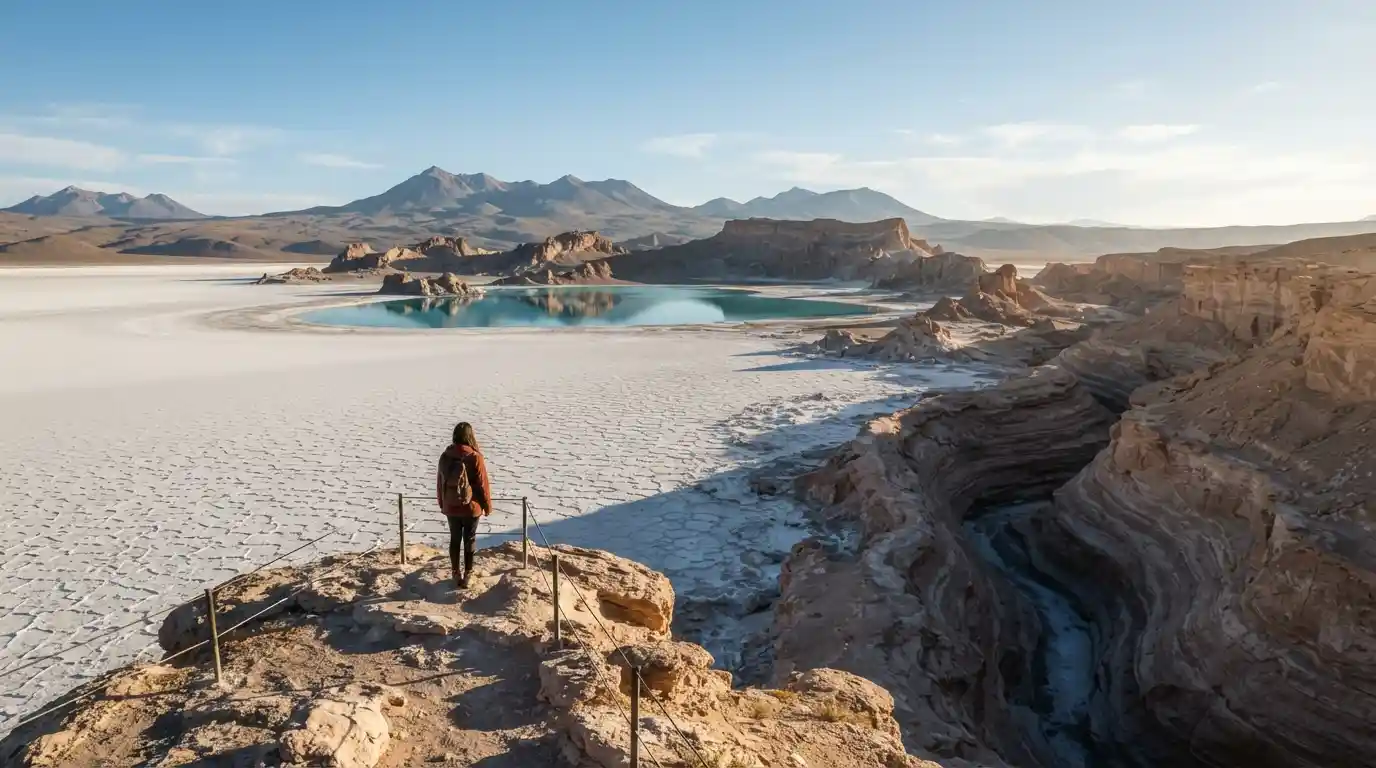
From a volcanic crater in Turkmenistan to colorful mineral landscapes, eerie abandoned islands, unusual rock formations, and remote natural wonders, these destinations show just how extraordinary the planet can be. Many are shaped by geology, while others were created through human activity, natural disasters, or centuries of cultural history.
If you enjoy unusual adventures, these destinations can also complement trips focused on unique places to visit in the states, scary places to visit in the US, and other less conventional travel experiences.
What Makes a Place Strange or Unusual?
A strange destination does not necessarily have to be frightening. It may have an unusual geological formation, an unexpected color, a bizarre history, an isolated location, or an appearance that seems almost otherworldly.
Some destinations are naturally strange, such as salt flats, volcanic landscapes, colorful lakes, and giant rock formations. Others became unusual because of abandoned communities, unusual architecture, industrial history, or legends that developed around them.
The destinations below cover a mixture of these experiences, making them ideal for travelers who want something different from conventional sightseeing.
25 Strange Places to Visit in the World
1. Socotra, Yemen
Socotra is one of the most visually distinctive islands on Earth. Its isolated location in the Arabian Sea has allowed unusual plant species to develop, including the famous dragon blood tree with its distinctive umbrella-like shape.
The island combines rugged mountains, limestone formations, caves, beaches, and unusual vegetation. Its landscapes can look more like science fiction than a conventional tropical destination.
2. Salar de Uyuni, Bolivia
Salar de Uyuni is the world’s largest salt flat and one of the most surreal landscapes travelers can experience. During the dry season, the enormous white surface stretches toward the horizon, creating a seemingly endless geometric landscape.
After rain, a thin layer of water can create a remarkable mirror effect in which the sky appears to continue across the ground. The combination of enormous scale, bright white salt, and reflections makes the area particularly unusual for photography.
3. Zhangjiajie, China
Zhangjiajie is famous for its towering sandstone pillars rising dramatically from a forested landscape. Mist frequently surrounds the formations, adding to their unusual appearance.
The region is an excellent destination for travelers interested in dramatic natural scenery, elevated viewpoints, hiking trails, and landscapes that appear almost imaginary.
4. Waitomo Glowworm Caves, New Zealand
New Zealand’s Waitomo cave system offers an underground experience unlike an ordinary sightseeing tour. Certain caves are illuminated by thousands of tiny glowworms, creating points of light across the cave ceilings.
The experience combines underground rivers, limestone formations, darkness, and natural bioluminescence-like illumination. It is one of the world’s most unusual cave experiences.
5. Pamukkale, Turkey
Pamukkale is recognized for its bright white terraces formed by mineral-rich thermal waters. The cascading formations create pools and slopes that look dramatically different from the surrounding landscape.
The site combines natural geology with ancient history, making it especially appealing to travelers who want an unusual destination with both scenic and cultural significance.
6. The Door to Hell, Turkmenistan
The Darvaza gas crater, widely known as the Door to Hell, became famous because of its fiery appearance. The large crater in the Karakum Desert has become one of the world’s most recognizable unusual attractions.
Its remote desert setting makes the experience even more striking. Travelers interested in unusual landscapes often include this destination among the world’s most extraordinary geological sights.
7. Catacombs of Paris, France
Below the streets of Paris lies an extensive network of underground passages containing the remains of millions of people. The Catacombs were created as part of efforts to address overcrowded cemeteries in the city.
The underground chambers provide a completely different perspective on Paris. Instead of grand boulevards and historic buildings, visitors encounter narrow corridors, stone walls, and a deeply atmospheric environment.
8. Hashima Island, Japan
Hashima Island, often called Gunkanjima or Battleship Island, is an abandoned industrial island near Nagasaki. Its dense concrete buildings and empty streets create an eerie contrast with the surrounding sea.
The island’s history is closely connected with Japan’s industrial development and coal mining. Today, its abandoned structures have made it an especially intriguing destination for travelers interested in unusual history.
9. Lake Hillier, Australia
Lake Hillier is known for its striking pink appearance. The lake sits on Middle Island in Western Australia and is surrounded by vegetation and coastal landscapes.
Its unusual color makes it one of the world’s most recognizable natural curiosities. The contrast between the pink water and the surrounding environment creates a landscape that looks almost digitally edited.
10. Fly Geyser, Nevada, USA
Fly Geyser in Nevada is an extraordinary geothermal formation known for its vivid mineral deposits and unusual cone-like structures. The colors and shapes developed through geothermal activity and mineral accumulation.
The destination is particularly interesting for travelers exploring unusual landscapes in the American West. It can also fit naturally into a broader trip focused on unique places to visit and unconventional American destinations.
11. Spotted Lake, Canada
Spotted Lake in British Columbia is famous for its unusual appearance during warmer months. As water evaporates, mineral-rich sections of the lake can create separate circular pools with contrasting colors.
The resulting pattern gives the lake a spotted appearance that makes it one of Canada’s most unusual natural attractions.
12. Giant’s Causeway, Northern Ireland
Giant’s Causeway is famous for thousands of interlocking basalt columns formed by ancient volcanic activity. The remarkably geometric shapes make the coastline appear almost constructed rather than naturally formed.
The destination is especially impressive when viewed from different angles along the coastal trails. Travelers planning broader UK trips can also explore places to visit on the east coast of the UK and free places to visit in London.
13. The Wave, Arizona, USA
The Wave in Arizona is famous for its flowing sandstone patterns. Wind and water erosion shaped the rock into sweeping curves that create a highly unusual visual landscape.
The destination is particularly attractive to photographers and hikers who enjoy geological formations. Because access is controlled, travelers should plan carefully before attempting to visit.
14. Darvaza and the Karakum Desert, Turkmenistan
The Karakum Desert itself can feel otherworldly because of its enormous scale, sparse vegetation, dunes, and remote environment. The Darvaza crater has helped make this part of Turkmenistan especially famous among travelers interested in strange landscapes.
Unlike conventional city sightseeing, exploring this environment is about experiencing isolation and extreme desert scenery.
15. The Crooked Forest, Poland
Near Gryfino in Poland is a collection of pine trees whose trunks curve sharply near their bases. The reason for the unusual growth pattern remains debated, which has contributed to the site’s mysterious reputation.
The forest is relatively small, but its unusual trees make it an interesting stop for travelers who enjoy strange natural formations and unexplained curiosities.
16. The Cat Island of Aoshima, Japan
Aoshima became internationally known because of its unusually large population of cats compared with the number of human residents. The small Japanese island has therefore attracted attention from animal lovers and curious travelers.
It offers a very different experience from Japan’s major urban destinations and can appeal to visitors looking for unusual cultural and animal-related experiences.
17. The Skeleton Coast, Namibia
Namibia’s Skeleton Coast is known for its stark Atlantic coastline, desert landscapes, shipwrecks, fog, and remote atmosphere. The meeting of the ocean and Namib Desert creates an environment that feels remarkably isolated.
The area is particularly appealing to adventurous travelers who prefer dramatic landscapes over conventional tourist attractions.
18. The Chocolate Hills, Philippines
The Chocolate Hills of Bohol consist of hundreds of distinctive rounded hills spread across the landscape. During the dry season, vegetation covering the hills can turn brown, producing the appearance that inspired their name.
The unusual repetition of similarly shaped hills makes the region one of the Philippines’ most recognizable natural landscapes.
19. Cappadocia, Turkey
Cappadocia is famous for its fairy chimneys, cave dwellings, underground cities, and volcanic rock formations. The landscape was shaped over long periods by volcanic deposits and erosion.
Visitors can explore valleys, rock-cut structures, historic settlements, and underground spaces. The region can also complement a wider itinerary focused on unusual European travel destinations and other distinctive landscapes.
20. The Blue City of Chefchaouen, Morocco
Chefchaouen is known for buildings, streets, stairs, and walls painted in varying shades of blue. The concentrated use of blue gives the mountain city a distinctive appearance unlike most destinations.
Walking through its narrow streets provides a visual experience centered around color, architecture, and mountain scenery.
21. The Underwater City of Shicheng, China
Shicheng is a submerged ancient city in Zhejiang Province. The settlement was flooded during the construction of a reservoir, leaving historic structures underwater.
Today, the underwater ruins have become an intriguing destination for divers and historians because streets, stone structures, and architectural details remain beneath the surface.
22. The Danakil Depression, Ethiopia
The Danakil Depression is known for extreme heat, salt flats, volcanic activity, colorful mineral deposits, and an exceptionally harsh environment. Its landscapes can include bright yellow, orange, green, and red mineral formations.
It is one of the most unusual destinations for travelers interested in geology and extreme natural environments. However, the conditions make careful planning and experienced local guidance especially important.
23. The Door of No Return, Ghana
Ghana’s coastal forts and historic sites contain some of the most powerful reminders of the transatlantic slave trade. Places associated with the so-called Door of No Return are significant not because they are mysterious attractions, but because of their difficult and important history.
Visiting sites like these can add historical depth to a trip and encourage travelers to understand the people and events connected to the locations rather than viewing them simply as unusual tourist attractions.
24. The Great Blue Hole, Belize
The Great Blue Hole is a massive marine sinkhole surrounded by the waters of Lighthouse Reef. Its almost perfectly circular shape and deep blue center make it one of the world’s most recognizable underwater formations.
Divers and marine enthusiasts are particularly interested in the geological structure and underwater environment. It is an excellent example of how strange landscapes can exist beneath the ocean rather than on land.
25. Antelope Canyon, Arizona, USA
Antelope Canyon is known for narrow sandstone passageways shaped by erosion. Light entering through openings above can create dramatic patterns across the curved walls.
The canyon demonstrates how water and time can transform relatively simple rock into a highly distinctive landscape. Travelers exploring unusual American destinations can pair it with other attractions in the Southwest.
Why Visit Strange Places Around the World?
Unusual destinations often provide experiences that feel more memorable than conventional sightseeing. Instead of simply visiting another city center or famous monument, travelers can discover geological formations, abandoned places, rare ecosystems, unusual architecture, and landscapes shaped by extraordinary natural forces.
These locations can also broaden the way people think about travel. A strange destination may teach visitors about geology, climate, history, ecology, architecture, or local culture while providing a memorable visual experience.
How to Plan a Trip to an Unusual Destination
Many unusual places are remote or environmentally sensitive, so planning is more important than it is for a typical city break.
- Research access rules: Some destinations require permits, guided tours, reservations, or special transportation.
- Check seasonal conditions: Weather can dramatically affect deserts, mountains, caves, salt flats, and remote roads.
- Respect local communities: Abandoned or historically sensitive locations may have important cultural significance.
- Follow conservation rules: Fragile geological and ecological sites can be damaged easily by visitors.
- Prepare for remote travel: Some destinations have limited transportation, food, accommodation, and communication services.
- Use qualified guides when necessary: Extreme environments such as deserts, caves, and volcanic areas may require specialist knowledge.
Travelers looking for more conventional destinations can also compare these unusual experiences with guides covering the world’s best places to visit, South America, Malaysia, and Barcelona.
Best Strange Places for Different Types of Travelers
For Adventure Travelers
The Danakil Depression, Skeleton Coast, Salar de Uyuni, and remote desert destinations are especially suitable for travelers who enjoy challenging environments and unusual scenery.
For History Lovers
Hashima Island, the Paris Catacombs, the Door of No Return in Ghana, and submerged historical sites offer opportunities to explore places shaped by complex human histories.
For Nature Lovers
Socotra, Lake Hillier, Zhangjiajie, the Great Blue Hole, and the Chocolate Hills demonstrate how diverse and unexpected natural environments can be.
For Photographers
Salar de Uyuni, Antelope Canyon, Cappadocia, Zhangjiajie, Pamukkale, and the Fly Geyser offer striking shapes, colors, reflections, and textures.
For Travelers Who Want Something Different
If your goal is simply to avoid ordinary tourist itineraries, abandoned islands, unusual forests, underground attractions, rare landscapes, and remote destinations can provide a much more distinctive travel experience.
Other Unusual Travel Ideas
Strange destinations are only one part of unconventional travel. Travelers can also explore unusual seasonal destinations, remote towns, dramatic natural environments, and lesser-known attractions. For example, haunted places in Colorado provide a different type of unusual experience, while places near Death Valley National Park showcase the extreme landscapes of the American Southwest.
For travelers interested in unusual seasonal scenery, guides to places to visit in September and October, winter destinations, and Switzerland in winter can also help build a more distinctive itinerary.
Final Thoughts
The world is filled with destinations that challenge our expectations of what a landscape, city, island, cave, or historic site should look like. From pink lakes and enormous salt flats to abandoned islands, underground chambers, unusual forests, and towering rock formations, strange places to visit in the world can turn an ordinary vacation into a memorable adventure.
The best unusual destination depends on your interests. Some travelers may prefer mysterious landscapes, while others may be drawn to unusual history, remote wilderness, geological formations, or destinations that simply look unlike anywhere they have visited before.
Whatever type of unusual travel experience you choose, responsible planning is essential. Respect local communities, follow access regulations, protect fragile environments, and take time to understand the history behind the places you visit.