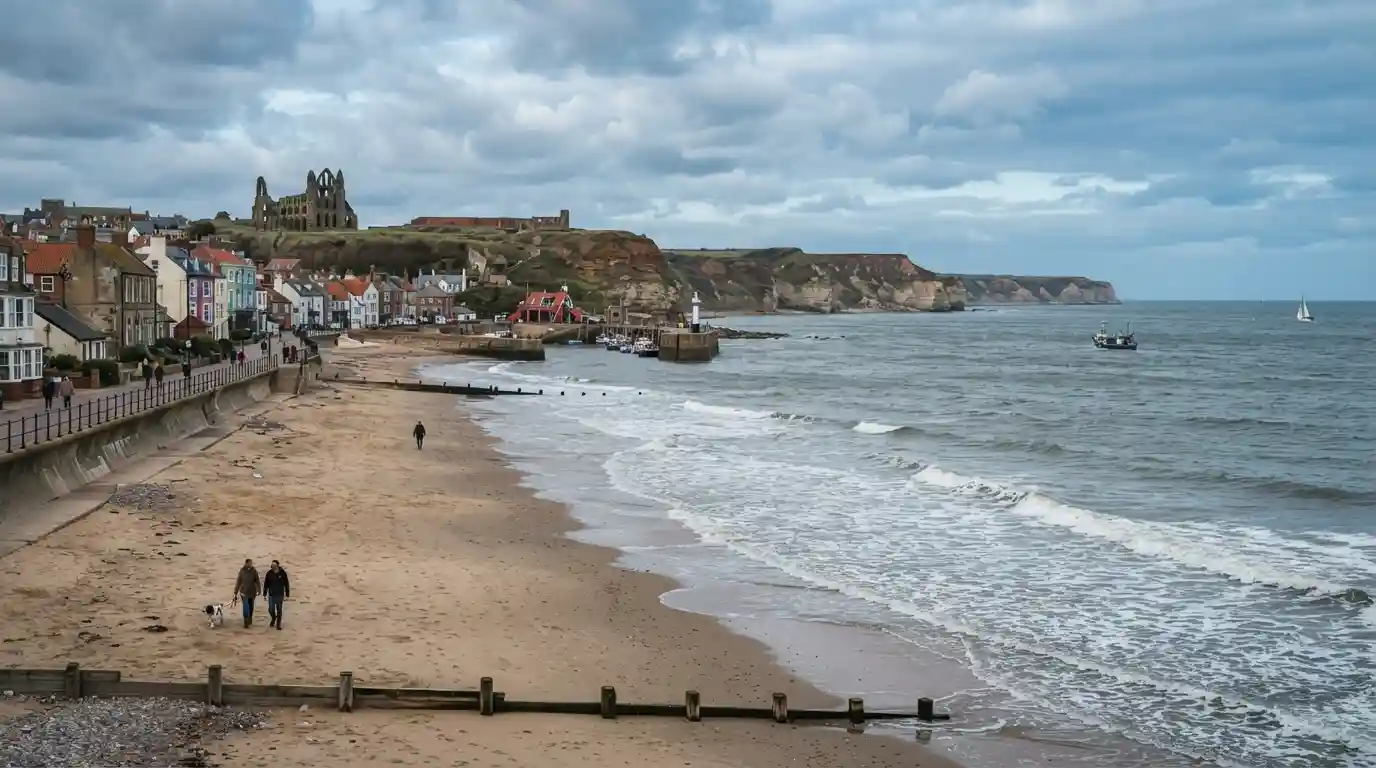
The East Coast UK is one of the most varied parts of Britain for a coastal trip. From wide sandy beaches and traditional seaside resorts to dramatic cliffs, historic towns, wildlife-rich landscapes, and quiet countryside, the eastern side of the country offers plenty of places to explore.
Whether you want to stroll along a Victorian promenade, explore a medieval town, watch seabirds from a cliff, or combine several coastal destinations into one road trip, the East Coast gives you plenty of options.
Why Visit the East Coast UK?
The East Coast has a different feel from Britain’s more heavily visited western and southern coastal areas. Many destinations combine traditional seaside attractions with nature reserves, historic architecture, fishing heritage, and long stretches of open coastline.
It is also a useful region for travelers who want to build a flexible itinerary. You can focus on one county, such as Norfolk or Suffolk, or travel farther north toward Yorkshire and Northumberland.
If you are planning a broader British getaway, you can also compare this coastal trip with other ideas in our guide to best places to visit in the UK for a weekend.
1. Cromer, Norfolk
Cromer is one of Norfolk’s best-known traditional seaside towns and an excellent starting point for an East Coast itinerary. Its combination of beach, promenade, pier, independent shops, and classic seaside atmosphere makes it appealing for both short visits and longer stays.
The town works particularly well for travelers who want a mixture of coastal scenery and traditional British seaside culture. A walk along the seafront provides opportunities to enjoy the coastline, while the town itself offers places to eat and explore.
Cromer is also a convenient base for exploring other parts of the Norfolk coast, making it a practical choice if you do not want to change accommodation every night.
2. Norfolk Coast and the Broads
Beyond Cromer, Norfolk offers a much broader coastal experience. The Norfolk coast includes beaches, dunes, salt marshes, wildlife habitats, and small coastal communities.
The Norfolk Broads add another dimension to the trip. Its network of waterways and surrounding countryside is particularly attractive to travelers interested in boating, birdwatching, walking, and peaceful landscapes.
For visitors who enjoy combining several destinations, Norfolk can easily fill several days of an East Coast UK itinerary without feeling repetitive.
3. Great Yarmouth, Norfolk
Great Yarmouth offers a more energetic version of the traditional British seaside holiday. The resort is known for its long seafront, entertainment, beaches, piers, and family-oriented attractions.
It can be a useful choice for families looking for a destination where beach time can be combined with amusement attractions and casual dining.
Travelers who prefer quieter scenery can pair Great Yarmouth with nearby coastal and countryside locations rather than spending the entire trip in the resort.
4. Southwold, Suffolk
Southwold is one of the most recognizable seaside destinations in Suffolk. Its colorful beach huts, promenade, pier, independent shops, and relaxed atmosphere make it particularly appealing for travelers seeking a slower coastal break.
The town is also a good option for visitors who enjoy walking. You can combine time on the seafront with exploration of the surrounding Suffolk countryside.
If you are planning a wider UK trip, Southwold fits naturally into an itinerary focused on coastal towns rather than major cities.
5. Aldeburgh, Suffolk
Aldeburgh provides another distinctive Suffolk coastal experience. The town is associated with its shingle beach, traditional seafront character, independent food spots, and cultural atmosphere.
It is particularly suitable for travelers who prefer scenic walks, local food, galleries, and quieter seaside surroundings rather than large resort attractions.
Aldeburgh can also be combined with other Suffolk destinations for a multi-day trip through eastern England.
6. Sutton Hoo and the Suffolk Coast
Travelers interested in history should consider adding Sutton Hoo to their East Coast itinerary. The site is associated with an important Anglo-Saxon ship burial and provides a different perspective on the region’s history.
Combining historical attractions with coastal towns is one of the strengths of traveling through Suffolk. You can spend part of the day exploring heritage sites before heading toward the coast for an evening walk.
7. Lavenham and Suffolk’s Historic Villages
The East Coast UK is not only about beaches. Suffolk is home to attractive historic towns and villages, including Lavenham, where timber-framed buildings and historic streets provide a strong contrast with the open coastline.
A visit to Lavenham works especially well for travelers who want to experience the architectural and cultural side of eastern England.
If you are interested in combining coastal scenery with picturesque inland communities, Suffolk is one of the strongest areas to include in your route.
8. Skegness, Lincolnshire
Skegness is one of the classic seaside resorts on the Lincolnshire coast. Its broad beach, promenade, family attractions, and traditional holiday atmosphere make it a popular choice for a straightforward seaside break.
The town can also be used as a base for exploring nearby coastal landscapes and nature areas.
Travelers who prefer traditional British seaside destinations may find Skegness particularly appealing, while those looking for quieter surroundings can continue along the Lincolnshire coast.
9. Lincolnshire Coast and Coastal Nature
Lincolnshire offers more than traditional resort towns. The coastline includes open beaches, wetlands, dunes, and important habitats for wildlife.
This makes the area useful for travelers who want to combine a beach holiday with birdwatching, walking, and nature photography.
For a broader regional itinerary, Lincolnshire can also be paired with historic destinations farther inland, creating a balance between coast and countryside.
10. Whitby, North Yorkshire
Whitby is one of the most atmospheric destinations on England’s northeastern coast. The town combines a historic harbor, dramatic coastal scenery, narrow streets, seafood, and the ruins of Whitby Abbey.
Its distinctive character makes it a particularly interesting stop for travelers who enjoy history and architecture alongside coastal views.
Whitby also works well as part of a North Yorkshire road trip, allowing visitors to explore several coastal towns and landscapes in the same journey.
11. Scarborough, North Yorkshire
Scarborough has a long-established seaside tradition and offers a combination of beaches, coastal viewpoints, historic attractions, and family-friendly activities.
The town is larger and busier than some of the smaller East Coast destinations, so it can be useful for travelers who want more accommodation, dining, and entertainment choices.
Its location also makes it practical for exploring other parts of North Yorkshire.
12. Flamborough Head and Bempton Cliffs
For dramatic coastal scenery and wildlife, the cliffs around Flamborough Head and Bempton are among the most memorable places to include in an East Coast itinerary.
The chalk cliffs create impressive viewpoints over the North Sea, while the surrounding coastline is particularly significant for seabirds.
This area is a strong choice for walkers, photographers, birdwatchers, and travelers who prefer natural landscapes to traditional resort entertainment.
13. Bridlington, East Yorkshire
Bridlington combines a traditional seaside atmosphere with long beaches, a working harbor, and access to some of East Yorkshire’s most scenic coastal areas.
It can be a convenient base for exploring the surrounding coastline, especially if you want to combine beach time with day trips to nearby natural attractions.
The destination is also worth considering for families because of its combination of open beach space and traditional seaside activities.
14. Alnwick, Northumberland
Moving farther north, Alnwick provides a change of pace from the traditional seaside towns. The town is closely associated with its historic castle and attractive surrounding countryside.
It is an excellent option for travelers who want to add history and architecture to an East Coast road trip.
Northumberland also gives visitors access to a wider range of landscapes, from coastal areas to countryside and protected natural environments.
15. Northumberland Coast
The Northumberland coast is ideal for travelers who prefer a combination of beaches, castles, walking routes, and open landscapes. The coastline feels noticeably different from the busier resort areas farther south.
Historic sites and coastal scenery can often be combined within the same day, making Northumberland especially attractive for road trips.
If your itinerary includes several regions, allow enough time to appreciate the area rather than treating it as a quick stop between destinations.
16. Bamburgh and the Northumberland Coast
Bamburgh is one of the most recognizable coastal locations in Northumberland. Its castle dominates the landscape and creates an impressive backdrop for views across the beach and North Sea.
The combination of historic architecture and open coastal scenery makes Bamburgh a memorable stop for photographers, history enthusiasts, and travelers looking for dramatic landscapes.
It can be incorporated into a wider Northumberland route alongside other coastal and historic attractions.
Best Time to Visit the East Coast UK
The best time for an East Coast UK trip depends on what you want to do.
- Spring: A good period for walking, countryside scenery, and wildlife-focused trips.
- Summer: Ideal for traditional seaside holidays, longer daylight hours, and beach activities.
- Early autumn: Useful for quieter coastal breaks, photography, and walking.
- Winter: Better suited to atmospheric coastal walks, historic towns, and travelers who prefer fewer crowds.
If your trip is planned around a particular month, our guide to places to visit in September and October can provide additional seasonal travel inspiration.
How to Plan an East Coast UK Road Trip
An East Coast road trip is easier when you divide the region into sections rather than attempting to cover the entire coastline in a few days.
Norfolk and Suffolk Route
Start around Cromer or another North Norfolk location, explore the coast, and then travel south toward Great Yarmouth and Suffolk. Southwold, Aldeburgh, and historic inland towns can form the middle section of the trip.
Lincolnshire Route
Travel north or south through the Lincolnshire coast, using Skegness and nearby coastal communities as stops. This section is especially suitable for combining traditional seaside attractions with nature reserves and open landscapes.
Yorkshire Route
Whitby, Scarborough, Bridlington, Flamborough Head, and the surrounding East Yorkshire coast can form a separate multi-day itinerary.
Northumberland Route
Travelers continuing north can build an itinerary around Alnwick, Bamburgh, coastal villages, beaches, castles, and walking routes.
If you are interested in other UK road-trip ideas, you can also explore places to visit near Bath and Bristol or compare your plans with places to visit in Scotland.
East Coast UK for Families
Families have plenty of choices along the coast. Traditional resorts such as Great Yarmouth, Skegness, Scarborough, and Bridlington provide accessible beaches and entertainment, while places such as Norfolk and Northumberland offer opportunities for nature walks and wildlife experiences.
Families who want a mixture of education and sightseeing can combine historic towns, castles, museums, and coastal attractions within the same itinerary.
For families considering other destinations, our guide to places to visit in the Philippines for families provides another type of family-travel comparison, while family destinations in Vietnam offers ideas for longer international trips.
East Coast UK for Nature Lovers
Nature is one of the strongest reasons to explore the East Coast. Norfolk’s coast and waterways, Suffolk’s coastal landscapes, Lincolnshire’s wetlands, East Yorkshire’s cliffs, and Northumberland’s beaches all provide opportunities to experience different environments.
Birdwatching is particularly rewarding in several coastal areas, while walkers can choose from promenades, beaches, cliff paths, countryside trails, and longer coastal routes.
If nature-focused travel is your priority, you can also explore our guide to relaxing places to visit in Europe for ideas beyond Britain.
East Coast UK for History Lovers
History is another major theme of an East Coast trip. Suffolk offers Anglo-Saxon heritage and historic villages, Yorkshire provides abbeys and coastal heritage, while Northumberland is known for castles and its Roman-era landscape.
Historic attractions are often close enough to coastal destinations that travelers can combine heritage sightseeing with a beach walk on the same day.
Those planning a larger European history itinerary may also want to explore Normandy and Brittany or the best places to visit in Germany.
What to Pack for an East Coast UK Trip
Coastal weather can change quickly, so practical clothing is useful throughout the year.
- Water-resistant outer layer
- Comfortable walking shoes
- Warm layers for exposed coastal areas
- Sun protection for summer trips
- Reusable water bottle
- Small day bag for walks
- Camera or phone for coastal photography
If you are visiting during colder months, layering is especially useful because temperatures can feel lower near exposed beaches and cliffs.
East Coast UK vs. Other Coastal Trips
The East Coast is particularly useful for travelers who want variety rather than a single type of holiday. One trip can include seaside resorts, historic towns, wildlife habitats, castles, countryside, and long coastal walks.
For travelers comparing international coastal destinations, our guides to the East Coast of Canada and South America’s travel destinations provide alternative ideas for future trips.
For European travel planning, you can also compare the East Coast UK experience with European winter destinations or Switzerland travel ideas.
Frequently Asked Questions
What are the best places to visit on the East Coast UK?
Popular choices include Cromer, Great Yarmouth, Southwold, Aldeburgh, Skegness, Whitby, Scarborough, Bridlington, Flamborough Head, Alnwick, and Bamburgh.
Which part of the East Coast UK is best for families?
Norfolk, Lincolnshire, East Yorkshire, and parts of North Yorkshire offer a combination of beaches, traditional seaside attractions, nature experiences, and family-friendly activities.
Is the East Coast UK good for a road trip?
Yes. The coastline contains many distinct destinations, and a road trip makes it easier to combine seaside towns, countryside, historic sites, and nature reserves.
What is the best time to visit the East Coast UK?
Late spring through early autumn is generally convenient for coastal sightseeing and walking, while winter can appeal to travelers who enjoy quieter beaches and atmospheric coastal scenery.
Can you visit the East Coast UK without a car?
Some destinations are accessible by train and bus, particularly larger towns and cities. However, a car can make it easier to reach smaller coastal villages, viewpoints, beaches, and rural attractions.
Final Thoughts
The best places to visit East Coast UK are not limited to one type of traveler. Norfolk offers beaches and waterways, Suffolk combines coastal scenery with historic towns, Lincolnshire provides traditional seaside experiences and nature, Yorkshire brings dramatic cliffs and historic coastal communities, and Northumberland adds castles and expansive landscapes.
The best itinerary depends on whether your priority is beaches, history, wildlife, walking, family activities, or a mixture of everything. Rather than trying to see the entire coastline in one short trip, choose one or two regions and explore them properly.
For travelers planning future trips beyond Britain, you can continue exploring WordTrailZone’s wider travel collection, including free places to visit in London, UK weekend destinations, and affordable places to visit in Europe.