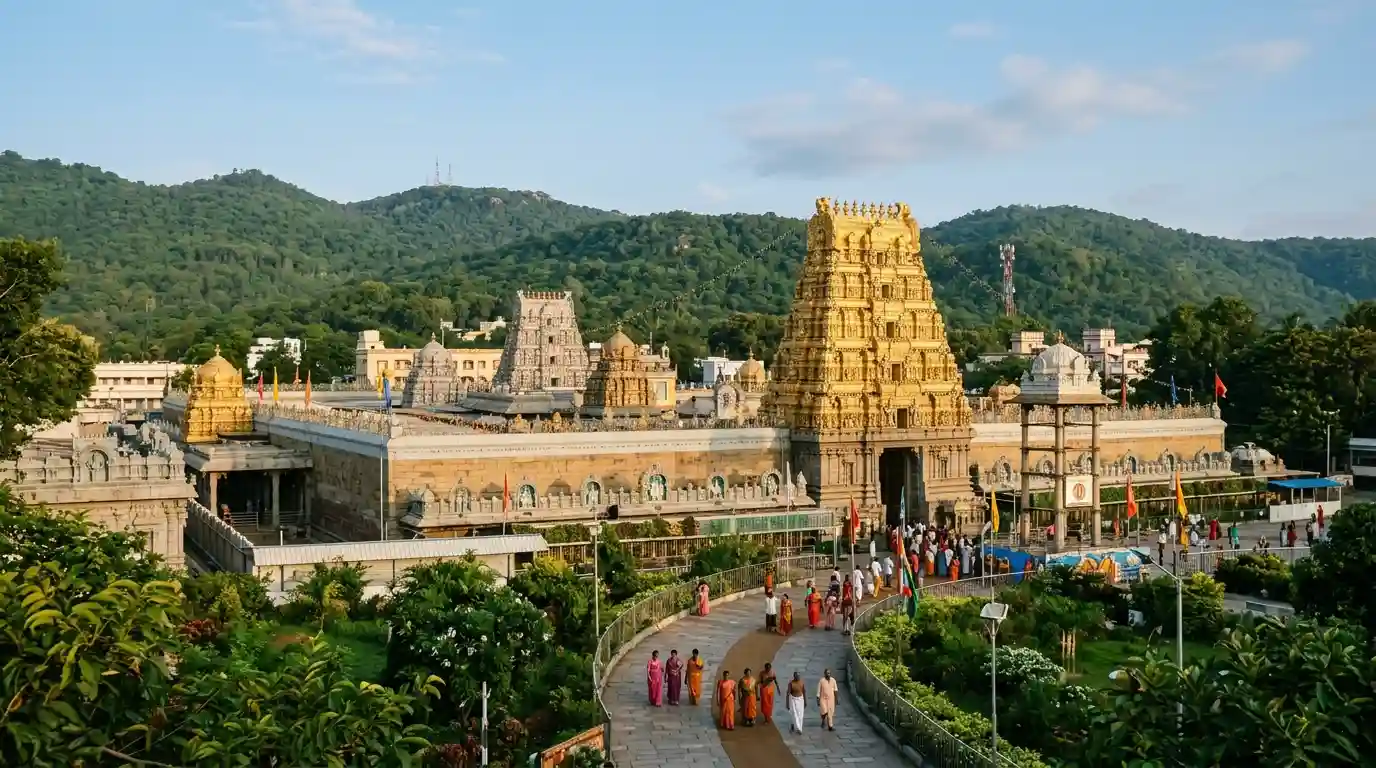
Tirupati, in Andhra Pradesh, is one of India’s most important pilgrimage destinations, known for its sacred temples, spiritual traditions, scenic hills, waterfalls, and historic landmarks. Although many visitors come primarily to seek blessings at Tirumala Venkateswara Temple, the surrounding region offers plenty of opportunities to explore nature, discover local heritage, and enjoy a memorable South Indian getaway.
This guide covers 15 worthwhile attractions in and around Tirupati, along with practical travel tips to help you plan your visit efficiently.
1. Tirumala Venkateswara Temple
Tirumala Venkateswara Temple is the most famous attraction in the region and the primary reason millions of devotees travel to Tirupati. Located in the Seshachalam Hills, the temple is dedicated to Lord Venkateswara, a form of Lord Vishnu.
The temple is renowned for its Dravidian architecture, sacred traditions, elaborate rituals, and the spiritual atmosphere surrounding the complex. Visitors can experience the significance of the pilgrimage while observing the customs followed by devotees.
Things to know: Darshan arrangements, reporting times, and entry requirements can vary. Check the current official booking information before travelling, particularly during weekends, holidays, and major festivals. Dress modestly and allow sufficient time for queues and security procedures.
- Best for: Pilgrims, families, and spiritual travellers.
- Suggested time: Several hours, depending on your darshan arrangements.
2. Sri Padmavathi Ammavari Temple, Tiruchanur
Located in Tiruchanur, a short drive from central Tirupati, Sri Padmavathi Ammavari Temple is dedicated to Goddess Padmavathi, traditionally regarded as the consort of Lord Venkateswara.
Many devotees include this temple in their pilgrimage itinerary alongside the Tirumala temple. The shrine has a distinctive spiritual atmosphere and provides an opportunity to learn about the region’s religious traditions.
Visitors should check temple timings and special-event schedules before setting out. If you are visiting several shrines in one day, plan your transport around expected waiting times.
- Best for: Pilgrims and visitors interested in Hindu traditions.
- Suggested time: Around one to two hours, subject to queues.
3. Sri Govindaraja Swamy Temple
Sri Govindaraja Swamy Temple is an important historic temple in Tirupati town. Its traditional architecture, colourful gopuram, religious ceremonies, and busy surrounding streets make it a rewarding stop for visitors interested in South Indian temple culture.
The temple offers a different experience from the hilltop shrine at Tirumala because it is located within the town itself. You can explore the surrounding market areas and observe local life while respecting the customs of worshippers.
Allow extra time during festivals and religious celebrations, when the area may become particularly busy.
4. Kapila Theertham
Kapila Theertham is a sacred site at the base of the Tirumala Hills, known for its Shiva temple and natural waterfall. The setting combines religious significance with a landscape framed by rocky hills and greenery.
During the rainy season, the waterfall can become more impressive, although water levels and access conditions depend on rainfall. Visitors often come to offer prayers, spend a quiet moment in the surroundings, and appreciate the area’s natural beauty.
Take care on wet steps and slippery surfaces, and follow local safety instructions whenever water levels are high.
- Best for: Temple visits, nature photography, and peaceful sightseeing.
- Suggested time: Approximately 45 minutes to 90 minutes.
5. Sri Venkateswara Zoological Park
Sri Venkateswara Zoological Park is a family-friendly attraction on the outskirts of Tirupati. Set within a substantial natural landscape, the zoo provides an opportunity to learn about wildlife and conservation while enjoying a break from temple sightseeing.
The park is suitable for families travelling with children and visitors who prefer outdoor activities. Because the grounds are extensive, comfortable walking shoes, drinking water, and sun protection can make the experience more enjoyable.
Check opening hours, ticket arrangements, and animal-viewing areas before visiting. The time needed depends on the exhibits available and how much of the park you wish to explore.
6. Talakona Waterfall
Talakona Waterfall, located in the forested region of Tirupati district, is a popular nature destination for travellers looking beyond the city’s temples. Surrounded by green hills and woodland, the waterfall offers a refreshing change of scenery.
The area is especially attractive during and after the monsoon, when the landscape becomes greener. Depending on local conditions, visitors may enjoy nature walks and designated viewpoints. Forest access, trail availability, and bathing permissions can change, so confirm the latest local guidance before your visit.
Talakona is farther from central Tirupati than the town’s main temples. Start early, plan your transport in advance, and avoid unsafe water areas or restricted forest trails.
- Best for: Nature lovers, photographers, and outdoor enthusiasts.
- Suggested time: Half a day or longer, including travel.
7. Chandragiri Fort
Chandragiri Fort is a historic attraction near Tirupati that appeals to travellers interested in architecture and regional history. The fort complex is associated with the Vijayanagara period and reflects the area’s importance in South Indian political and cultural history.
Visitors can explore the fort grounds, examine the surviving structures, and learn about the historical setting. The surrounding landscape also offers opportunities for photography, particularly in softer morning or late-afternoon light.
Check the current opening arrangements before travelling, and allow enough time to explore the complex without rushing.
- Best for: History enthusiasts, architecture lovers, and families.
- Suggested time: Around one to two hours.
8. Sri Venkateswara National Park
Sri Venkateswara National Park protects a large area of the Seshachalam Hills and is known for its rugged terrain, forest habitats, and biodiversity. It offers a glimpse of the natural environment surrounding Tirupati.
Wildlife and nature enthusiasts may find the region particularly interesting because of its varied habitats and conservation importance. However, this is a protected natural area rather than a conventional city park, so access is subject to forest regulations.
Do not assume that every forest road or trail is open to visitors. Verify permitted access, available guided experiences, and current restrictions before planning an excursion.
9. Srikalahasti Temple
Srikalahasti, located within a manageable road journey from Tirupati, is known for the Sri Kalahasteeswara Temple, dedicated to Lord Shiva. The temple is closely associated with the Pancha Bhoota tradition and is particularly recognised for its connection with the element of air.
The complex is notable for its traditional South Indian architecture and religious importance. Pilgrims frequently include Srikalahasti as an additional stop when visiting Tirupati, making it a practical option for a broader temple itinerary.
Confirm temple schedules and any special-puja requirements in advance. If you intend to participate in a particular ritual, verify the arrangements directly before travelling.
- Best for: Pilgrims and visitors interested in temple architecture.
- Suggested time: Two to three hours, depending on your plans.
10. Kanipakam Vinayaka Temple
Kanipakam Vinayaka Temple, in the Chittoor region, is a well-known shrine dedicated to Lord Ganesha. It is an option for travellers who have additional time and wish to explore another important religious destination in the wider Tirupati region.
The temple is associated with traditional accounts of a self-manifested Ganesha idol and attracts devotees throughout the year. Its popularity means that queues can increase during festivals and auspicious occasions.
Since Kanipakam requires additional road travel, consider it a separate excursion rather than trying to fit it into an already crowded temple schedule.
11. Nagalapuram
Nagalapuram is known for its historic temple and scenic surroundings in the wider Tirupati region. Visitors interested in combining heritage with nature may consider the area for a longer day trip.
The surrounding hills and seasonal streams can be attractive to outdoor enthusiasts, but hiking routes and water access should never be assumed to be open or safe. Local conditions, weather, and restrictions can affect the experience.
Arrange reliable transport, check the forecast, and follow local guidance before exploring beyond established visitor areas.
12. Tada Falls and the Ubbalamadugu Forest Area
The Tada Falls area, also associated with the Ubbalamadugu forest region, attracts people looking for a more adventurous excursion from the Tirupati area. The landscape includes rocky terrain, forest scenery, and seasonal water features.
This destination is better suited to travellers who are comfortable with outdoor walking and can plan around changing conditions. Routes may involve uneven ground, and access can be restricted during heavy rain or for conservation and safety reasons.
Before setting out, confirm whether the intended route is currently accessible, whether permissions or local guides are required, and what level of physical effort the trail involves. Avoid attempting difficult routes without suitable preparation.
13. Horsley Hills
Horsley Hills is a hill destination in Andhra Pradesh that offers cooler surroundings, scenic viewpoints, and a break from the heat of the plains. It is a longer excursion rather than a quick stop within Tirupati town.
Visitors can enjoy the hill scenery, take photographs, and spend time away from busy urban areas. The destination may suit travellers planning an extended Andhra Pradesh road trip, especially those who enjoy elevated landscapes.
Check driving times, accommodation availability, and weather conditions before deciding whether to include Horsley Hills in your itinerary.
14. Vellore Fort
Vellore Fort, in neighbouring Tamil Nadu, is a worthwhile option for travellers extending their journey beyond Andhra Pradesh. Its historic fortifications and associated heritage make it appealing to visitors interested in South Indian history.
The fort can be combined with other stops around Vellore if you have enough time. However, it is not an attraction to squeeze into a short Tirupati temple visit without accounting for the road journey.
For travellers exploring destinations across state borders, our guide to places to visit in Kanchipuram, Tamil Nadu offers another idea for a heritage-focused South Indian trip.
15. Chennai
Chennai is a major city in Tamil Nadu and a useful transport hub for visitors travelling to and from Tirupati. Depending on your route and available time, you can extend your trip with beaches, historic buildings, cultural institutions, shopping districts, and South Indian food experiences.
Chennai is not a nearby attraction for a quick sightseeing stop, so it is best treated as a separate part of your travel plan. If you are continuing through the city, explore our guide to the best places to visit in Chennai with friends for additional ideas.
Travellers who want to explore more of the southern region can also consider the hill scenery covered in our guide to the best places to visit in Ooty and Coonoor, or the coastal attractions featured in our guide to places to visit in Kovalam and Trivandrum. These are separate destinations and require additional travel time.
Other South Indian and Indian Destinations to Consider
If your holiday extends beyond Tirupati, you can build a larger itinerary around different regions of India. The following WordTrailZone travel guides provide inspiration for other types of trips, although these destinations are not all close to Tirupati and should not be treated as day trips from the city.
- Places to visit in Lavasa City, Pune for a different style of scenic getaway.
- Best places to visit in Maharashtra in winter for seasonal travel planning.
- Places to visit in Uttarakhand with family for a family holiday in northern India.
- Jaipur or Udaipur: which is the best place to visit? for comparing two historic Indian destinations.
- Best places to visit in Hunza Valley for mountain scenery in Pakistan.
- Must-visit places in the Andaman and Nicobar Islands for an island holiday.
Best Time to Visit Tirupati
The most comfortable time for many visitors is generally during the cooler months, from around October to February. Temperatures can be more manageable for temple visits and outdoor sightseeing, although popular dates may bring larger crowds.
Summer can be hot, especially when walking outdoors or visiting exposed viewpoints. If you travel during this period, start early, carry water, and schedule outdoor activities around the heat.
The monsoon can bring greener scenery and stronger waterfalls, but heavy rain may affect roads, hiking routes, and access to forest areas. Check the forecast and local advisories before planning nature excursions.
How Many Days Are Enough for Tirupati?
The ideal length of your trip depends on whether your priority is temple darshan, local sightseeing, or a wider road trip.
- One day: Focus on your planned Tirumala darshan and one or two attractions in Tirupati town, allowing sufficient time for queues and transport.
- Two days: Explore the principal temples, Kapila Theertham, and a nearby historic attraction such as Chandragiri Fort.
- Three days: Add a carefully planned nature excursion or a nearby temple destination, depending on weather and road conditions.
- Four days or more: Consider farther destinations such as Horsley Hills, Kanipakam, or an onward journey to Chennai, provided you account for travel time.
These are planning suggestions rather than fixed schedules. Temple waiting times, festival crowds, and road conditions can change how much you can comfortably see each day.
How to Travel Around Tirupati
Tirupati has road, rail, and air connections, making it accessible for domestic travellers. Once in the city, your choice of transport will depend on the destinations you want to visit.
- Local taxis and cabs: Useful for visiting several attractions in one day or travelling to places outside the town.
- Auto-rickshaws: Convenient for shorter trips within urban areas. Confirm the fare before starting if a meter is not used.
- Buses: Public and regional services may provide economical transport, but routes and schedules should be checked for your intended stops.
- Private vehicles: Offer flexibility for longer excursions, particularly when visiting waterfalls, hill destinations, and multiple temples.
For Tirumala, check the current transport and entry arrangements before travelling. Road access, vehicle rules, and queue management can differ from ordinary city travel.
Travel Tips for Visiting Tirupati
- Plan darshan first: Build the rest of your itinerary around confirmed temple arrangements instead of assuming you can visit every attraction on a fixed timetable.
- Dress respectfully: Follow the dress code and conduct requirements of each religious site.
- Start early: Morning departures can help you avoid some of the daytime heat and leave more time for sightseeing.
- Check seasonal conditions: Rain can affect waterfalls, forest trails, and hill roads.
- Carry essentials: Bring drinking water, sun protection, comfortable footwear, and any personal medication you need.
- Respect local customs: Follow photography restrictions, maintain cleanliness, and observe rules around sacred areas.
- Allow travel buffers: Traffic, queues, and special religious events can cause delays.
- Confirm details before departure: Opening hours, entry policies, transport schedules, and access conditions can change.
Frequently Asked Questions
What are the best places to visit in Tirupati?
Popular options include Tirumala Venkateswara Temple, Sri Padmavathi Ammavari Temple, Sri Govindaraja Swamy Temple, Kapila Theertham, Sri Venkateswara Zoological Park, and Chandragiri Fort.
Which places near Tirupati are best for nature lovers?
Talakona Waterfall, the forested surroundings of Sri Venkateswara National Park, and the wider Nagalapuram area are options for nature-focused outings. Always verify access, weather, and safety conditions before leaving.
Can I visit Tirupati and Tirumala in one day?
It may be possible to visit Tirumala and selected attractions in Tirupati in one day, but the schedule depends heavily on darshan arrangements and waiting times. Avoid planning too many stops around a fixed temple appointment.
Is Tirupati suitable for a family trip?
Yes. Families can combine temple visits with attractions such as the zoological park, Kapila Theertham, and Chandragiri Fort. Choose activities based on children’s ages, walking ability, weather, and the time available.
Are there waterfalls near Tirupati?
Talakona Waterfall and the Tada Falls area are popular nature-oriented options in the wider region. Conditions and access may change seasonally, so check local guidance before visiting.
What should I wear when visiting Tirupati temples?
Wear modest clothing and follow the specific dress code of the temple you plan to visit. Check current instructions in advance, especially for Tirumala darshan and special ceremonies.
What is the best way to explore places around Tirupati?
A taxi or private vehicle can be convenient for combining several stops, particularly those outside the city. For a lower-cost trip, investigate available bus and regional transport services and allow extra time between destinations.
Final Thoughts
Tirupati offers far more than a single temple visit. Its sacred shrines, historic landmarks, waterfalls, wildlife attractions, and surrounding hills provide several ways to experience the region. With careful planning, visitors can combine spiritual activities with history and nature without making the itinerary unnecessarily rushed.
Prioritise your temple arrangements, choose nearby attractions that fit your available time, and check current travel conditions before heading into forested or hilly areas. Whether you are visiting for one day or planning a longer South Indian journey, Tirupati can be a meaningful starting point for discovering the cultural and natural diversity of the region.