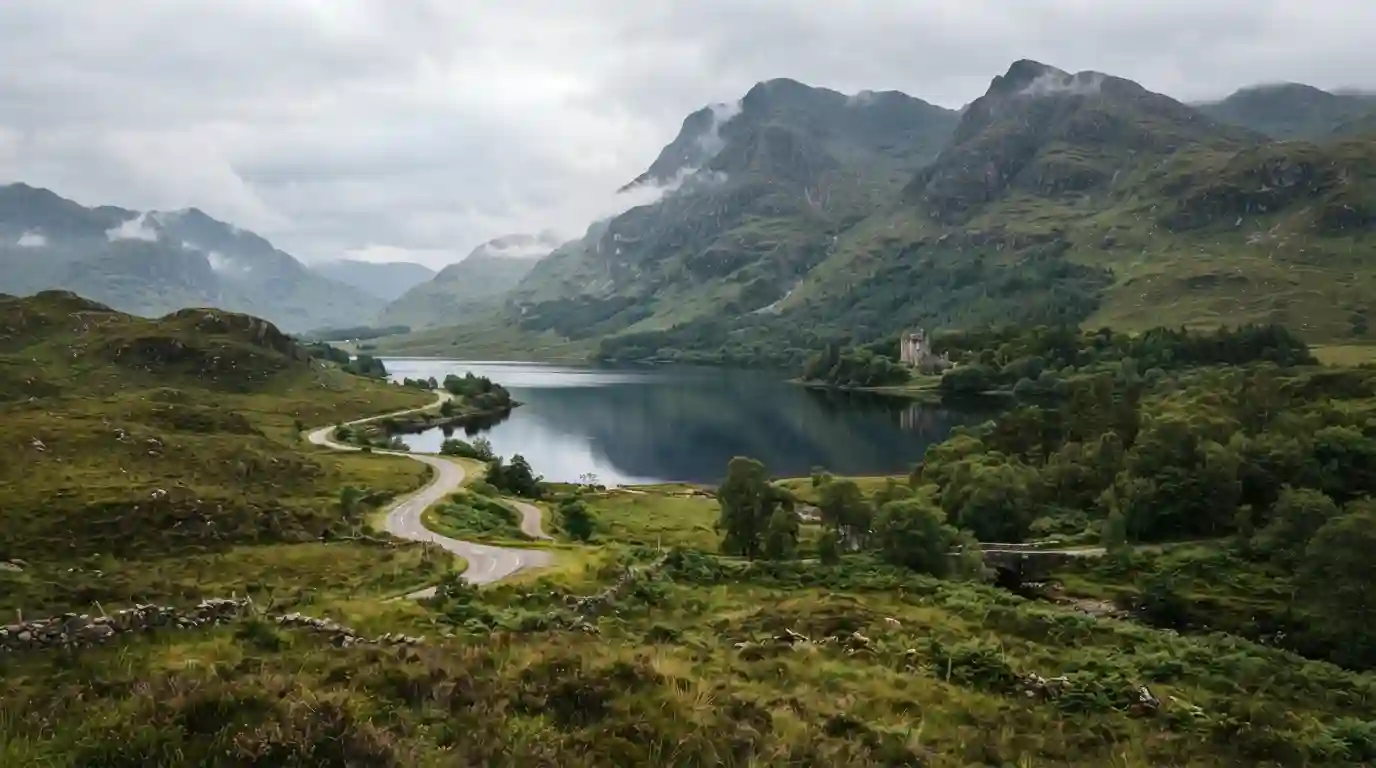
For a first trip, Edinburgh is one of the easiest places to start because it combines historic attractions, museums, architecture, restaurants, and walkable neighborhoods. However, travelers searching for dramatic landscapes may prefer the Isle of Skye, Glencoe, Loch Lomond, or the Cairngorms.
Scotland is also a great choice for travelers who enjoy exploring different types of destinations. If you are comparing international trips, you may also find our guides to the world’s best places to visit and affordable places to visit in Europe useful when planning your wider travel ideas.
What Is the Best Place to Visit in Scotland?
Edinburgh is the best all-around destination for many first-time visitors, while the Isle of Skye is one of the best choices for dramatic natural scenery. Glencoe is ideal for mountain landscapes, Loch Lomond works well for nature and outdoor activities, and Inverness provides a convenient base for exploring the Scottish Highlands.
Rather than choosing one destination simply because it appears on a popular list, consider what you want from your trip. Scotland’s destinations offer very different experiences, so matching the location with your travel style can make the trip much more enjoyable.
1. Edinburgh – Best for First-Time Visitors
Edinburgh is arguably the easiest answer to the question of where is the best place in Scotland to visit for a first-time traveler. Scotland’s capital combines centuries of history with a lively modern atmosphere.
The city’s most famous attractions include Edinburgh Castle, the Royal Mile, Holyrood Palace, Arthur’s Seat, Calton Hill, and the historic Old Town. The New Town provides a contrasting experience with elegant Georgian architecture, shopping streets, restaurants, and galleries.
Edinburgh is particularly convenient for travelers who do not want to rent a car. Many major attractions are within walking distance, while public transportation makes it possible to explore areas farther from the center.
Visitors interested in seasonal travel can also compare Edinburgh with other European destinations through our guide to the best places to visit during winter in Europe and our guide to the best places to visit in Europe in January.
2. Isle of Skye – Best for Dramatic Scenery
If your idea of the perfect Scottish vacation involves mountains, cliffs, waterfalls, sea views, and remote landscapes, the Isle of Skye should be near the top of your list.
Skye is famous for its striking natural scenery. The Old Man of Storr, Quiraing, Fairy Pools, Neist Point, and the Cuillin mountains provide some of the most memorable landscapes in Scotland.
The island is particularly attractive to photographers, hikers, couples, and travelers who enjoy road trips. Because many of the best sights are spread across the island, staying for several nights is usually more rewarding than attempting to see everything in one day.
Travelers who enjoy scenic destinations can also explore our guide to the best places to visit in South Sweden for another destination known for natural landscapes, historic towns, and outdoor experiences.
3. Glencoe – Best for Highland Landscapes
Glencoe is one of Scotland’s most impressive Highland areas. The valley is surrounded by steep mountains, dramatic ridges, waterfalls, and open landscapes that create a powerful sense of wilderness.
It is an excellent destination for hiking and photography, but even travelers who prefer sightseeing rather than strenuous outdoor activities can enjoy the scenery from the roads and viewpoints.
Glencoe is also conveniently positioned for travelers building a wider Highland itinerary. It can be combined with Fort William, Loch Ness, the Isle of Skye, and other destinations in the western Highlands.
4. Loch Lomond – Best for Lakes, Hiking, and Relaxation
Loch Lomond is one of Scotland’s most recognizable natural destinations. Located within Loch Lomond & The Trossachs National Park, the area offers a combination of water, woodland, hills, villages, walking trails, and scenic viewpoints.
Visitors can enjoy boat trips, hiking, photography, cycling, wildlife watching, and peaceful walks beside the water. The area is also practical for travelers based in Glasgow because it can be reached relatively easily for a day trip or longer stay.
If you enjoy destinations centered around lakes, mountains, and outdoor scenery, you may also want to explore our guide to the best places to visit in Switzerland.
5. Inverness – Best Base for the Highlands
Inverness is a practical choice for travelers who want to explore the Scottish Highlands while staying in a city with restaurants, accommodations, shops, and transportation connections.
The city itself is compact, but its greatest advantage is its location. It provides access to destinations such as Loch Ness, Urquhart Castle, the surrounding Highland countryside, and areas farther north.
Inverness can therefore work particularly well for visitors who want a balance between comfortable city accommodation and access to dramatic Highland scenery.
6. Cairngorms National Park – Best for Outdoor Adventures
The Cairngorms are ideal for travelers who want to spend more time outdoors. The national park contains mountains, forests, rivers, lochs, wildlife habitats, and attractive Highland communities.
Depending on the season, visitors can enjoy hiking, cycling, wildlife watching, skiing, scenic drives, and other outdoor activities. The region also offers a quieter alternative to some of Scotland’s busiest tourist destinations.
Nature lovers who enjoy national parks may also appreciate our guide to places to visit near Death Valley National Park when comparing different outdoor travel experiences.
7. Glasgow – Best for Culture, Food, and Music
Glasgow offers a different experience from Edinburgh. It is a larger, energetic city known for its music scene, museums, architecture, restaurants, shopping, and cultural attractions.
Kelvingrove Art Gallery and Museum, the Riverside Museum, Glasgow Cathedral, the West End, and the city’s live music venues are among the attractions that can fill a city break.
Glasgow is also useful as a starting point for exploring western Scotland. Travelers can combine a city stay with trips toward Loch Lomond, the Trossachs, and the Highlands.
8. St Andrews – Best for History and Coastal Charm
St Andrews is a beautiful coastal town with a strong historical identity. It is particularly famous for golf, but there is much more to the town than its golf courses.
Visitors can explore the ruins of St Andrews Cathedral, walk along the coastline, discover historic streets, and enjoy the atmosphere of one of Scotland’s most recognizable university towns.
Its compact size makes St Andrews suitable for a day trip, although staying overnight gives visitors more time to enjoy the town after the busiest daytime period.
9. Stirling – Best for Scottish History
For travelers interested in Scotland’s history, Stirling is one of the most rewarding destinations. Stirling Castle dominates the city from its elevated position, while the surrounding area is closely connected with important chapters of Scottish history.
The Wallace Monument provides another major attraction, and the nearby historic battle sites help visitors understand the importance of the region in Scotland’s past.
Stirling is also conveniently located between Edinburgh and the Highlands, making it an easy addition to a broader Scotland itinerary.
10. Isle of Arran – Best for a Compact Island Escape
The Isle of Arran is sometimes described as Scotland in miniature because it combines mountains, coastline, villages, forests, beaches, and countryside within a relatively manageable area.
Arran is a good choice for travelers who want an island experience without committing to a much longer journey into the more remote Hebrides.
Visitors can explore coastal scenery, hiking routes, historic sites, local communities, and mountain landscapes while enjoying a slower pace than in Scotland’s major cities.
11. Oban – Best for Coastal Trips and Island Connections
Oban is a picturesque coastal town that works particularly well as a base for exploring western Scotland and nearby islands.
The town has a strong maritime atmosphere, seafood restaurants, scenic waterfront views, and easy access to ferry routes. Travelers can use Oban as part of a wider journey through Argyll and the west coast.
It is especially appealing to visitors who want a combination of coastal scenery, local food, and access to island adventures.
12. The Outer Hebrides – Best for Beaches and Remote Landscapes
The Outer Hebrides offer some of the most remote and beautiful scenery in Scotland. Travelers can discover long sandy beaches, turquoise water, rugged coastlines, traditional communities, archaeological sites, and open landscapes.
The islands are particularly suitable for travelers who prefer quiet destinations and want to spend time away from large cities and heavily developed tourist areas.
Because the journey requires more planning, the Outer Hebrides are best suited to visitors who have enough time to slow down and explore rather than trying to fit the islands into a short itinerary.
Best Places in Scotland by Travel Style
The answer to where is the best place in Scotland to visit becomes easier when you match destinations to your interests.
- Best for first-time visitors: Edinburgh
- Best for dramatic scenery: Isle of Skye
- Best for mountain landscapes: Glencoe
- Best for lakes and nature: Loch Lomond
- Best Highland base: Inverness
- Best for outdoor adventures: Cairngorms National Park
- Best for culture and music: Glasgow
- Best for golf and coastal history: St Andrews
- Best for Scottish history: Stirling
- Best for an island escape: Isle of Arran
- Best for the west coast: Oban
- Best for remote beaches: Outer Hebrides
Where Should You Go in Scotland for a First Trip?
If you have never visited Scotland before, Edinburgh is usually the simplest starting point. Two or three days can provide enough time to explore the Old Town, Edinburgh Castle, the Royal Mile, museums, viewpoints, and several neighborhoods.
After Edinburgh, travelers with additional time can head toward Loch Lomond and Glencoe before continuing into the Highlands or toward the Isle of Skye.
A longer trip can include Inverness, Cairngorms National Park, Stirling, or a western coastal destination. The important thing is not to pack too many locations into a short schedule because driving times can be longer than they appear on a map.
Best Time to Visit Scotland
The best time to visit Scotland depends on the experience you want. Late spring and early autumn can provide a good balance between comfortable sightseeing conditions and manageable visitor numbers, while summer offers long daylight hours and plenty of opportunities for outdoor activities.
Autumn can be especially attractive for travelers who enjoy changing foliage and quieter landscapes. Winter creates a different atmosphere, particularly in cities and mountain areas, although weather conditions can affect outdoor plans.
If you enjoy seasonal travel planning, our guides to places to visit in winter, the best places to visit in September and October, and choosing destinations based on weather can provide additional ideas.
How Long Do You Need in Scotland?
A long weekend is enough for Edinburgh, but seeing more of Scotland requires additional time.
- 3 days: Focus on Edinburgh and nearby attractions.
- 5 days: Combine Edinburgh with Stirling and Loch Lomond.
- 7 days: Add Glencoe, Fort William, Inverness, or another Highland base.
- 10 to 14 days: Consider Edinburgh, the Highlands, Isle of Skye, and a western or island destination.
Trying to cover every famous Scottish destination in a few days can make the trip exhausting. A slower itinerary often provides a better experience because Scotland’s scenery is one of the main reasons to visit.
Scotland Travel Tips for First-Time Visitors
Plan Around Geography
Scotland may look compact on a map, but mountain roads, single-track routes, ferry crossings, and scenic stops can make journeys take longer than expected. Build realistic travel days into your itinerary.
Choose Your Transport Carefully
Edinburgh, Glasgow, Stirling, and several other cities are relatively easy to explore without a car. A rental car becomes more useful when visiting remote Highland and island destinations.
Allow Time for the Weather
Scottish weather can change quickly, especially in mountainous areas. Flexible plans are helpful when hiking or traveling through remote regions.
Do Not Try to See Everything
One of the biggest mistakes first-time visitors make is creating an itinerary with too many stops. Choose a few areas and give yourself enough time to experience them properly.
Book Popular Accommodation Early
Accommodation in popular destinations such as Edinburgh, Skye, and parts of the Highlands can become limited during busy periods. Booking ahead is especially important when traveling during summer.
Is Scotland Good for Families?
Yes. Scotland offers attractions and activities for families with different interests. Cities provide museums, castles, parks, and educational attractions, while rural destinations offer opportunities for scenic walks, wildlife watching, beaches, and outdoor adventures.
Families should choose destinations according to the children’s ages and the amount of driving they are comfortable with. Edinburgh and Glasgow can be easier for younger children who need a mixture of indoor and outdoor activities, while older children may enjoy Highland hikes, castles, and island adventures.
Is Scotland Worth Visiting?
Scotland is worth visiting for travelers who enjoy history, dramatic landscapes, outdoor activities, architecture, local culture, and scenic road trips. Few destinations combine medieval cities, rugged mountains, ancient castles, islands, lochs, beaches, and remote countryside within one relatively compact country.
The best experience comes from choosing destinations that match your interests rather than simply following a checklist of famous attractions.
Final Thoughts
So, where is the best place in Scotland to visit? For most first-time travelers, Edinburgh is the strongest all-around choice because it combines history, culture, architecture, food, and easy sightseeing. However, travelers searching for Scotland’s most dramatic scenery may find the Isle of Skye or Glencoe more rewarding.
Loch Lomond is excellent for nature and relaxation, Inverness is a useful Highland base, Cairngorms National Park is ideal for outdoor adventures, and Stirling is a strong choice for history lovers. For travelers with more time, destinations such as Arran, Oban, and the Outer Hebrides can add a completely different side of Scotland to the journey.
Ultimately, Scotland is best experienced at a relaxed pace. Choose a few destinations, allow time for unexpected scenic stops, and leave room to enjoy the landscapes rather than rushing from one attraction to another.