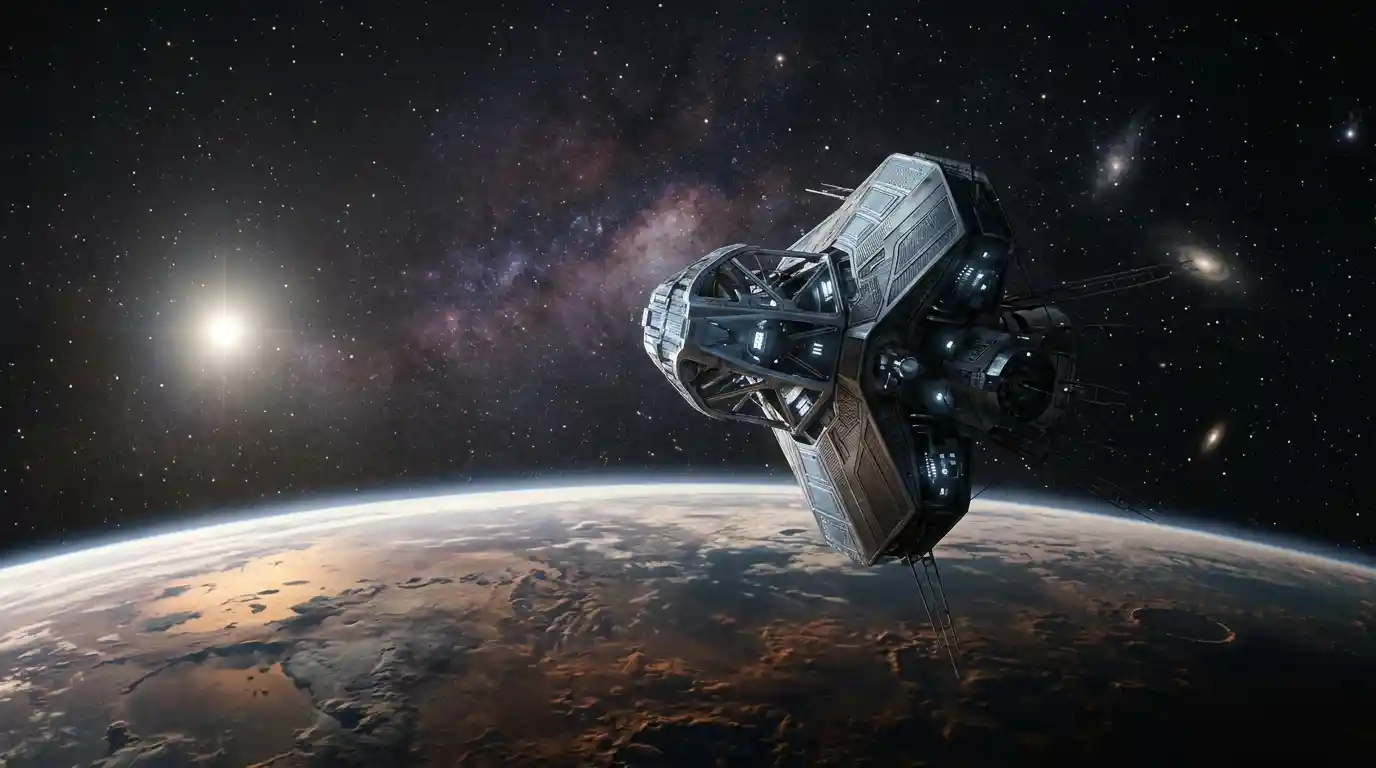
Imagine discovering a technology so advanced that it could travel between distant stars, harness the energy of entire solar systems, or communicate across unimaginable distances. Would such technology look familiar to us, or would it challenge everything humanity understands about science? These questions sit at the center of the debate surrounding timeless alien technology and the possibility that intelligent extraterrestrial civilizations may exist somewhere in the universe.
What Does Timeless Alien Technology Mean?
Timeless alien technology is an imaginative term for technologies that might remain extraordinarily advanced or useful across enormous spans of time. It often describes hypothetical inventions developed by civilizations that began exploring the universe millions or even billions of years before humans existed.
Such technology might not resemble a spacecraft with engines, windows, and control panels. It could involve autonomous machines, self-repairing materials, advanced computing systems, or methods of transmitting information that humanity has not yet discovered.
The concept is not an established scientific category. Instead, it provides a framework for considering how technological development might unfold under different physical conditions and over much longer periods than human civilization has experienced.
Why Scientists Consider the Possibility of Alien Civilizations
The observable universe contains an enormous number of galaxies, stars, and planetary systems. Astronomers have also identified thousands of planets beyond our solar system, demonstrating that planets are common rather than exceptional features of the cosmos.
Some of these worlds orbit within regions where temperatures could permit liquid water under suitable atmospheric conditions. Water alone does not establish that a planet supports life, but it is one factor scientists consider when evaluating potential habitability.
The scientific search for extraterrestrial life includes studying planetary atmospheres, examining environments within our own solar system, and listening for possible technological signals. Researchers also investigate how life might emerge from nonliving chemistry.
These efforts connect with broader discussions about alien technology and the search for extraterrestrial intelligence, while keeping an important distinction clear: a universe capable of supporting life does not automatically prove that intelligent civilizations exist.
The Possibility of Civilizations Far Older Than Humanity
Earth is approximately 4.5 billion years old, and the universe is approximately 13.8 billion years old. Those timescales leave open the possibility that life could have emerged on another world long before humans appeared.
If an intelligent civilization developed millions of years earlier than ours, it might have experienced technological advances that are difficult for us to imagine. Even a civilization only thousands of years ahead could potentially possess capabilities that seem extraordinary by present-day standards.
However, technological age does not guarantee survival or unlimited progress. Civilizations could face environmental challenges, resource limitations, social instability, or physical barriers that restrict what they can accomplish. A very old civilization might also choose not to expand across the galaxy.
Considering these possibilities helps frame the debate around long-term innovation, including developments discussed in GPS and marine electronics technology and modern turbine technology and industrial energy systems. These human technologies are not evidence of alien inventions, but they illustrate how engineering changes when people discover new ways to measure, control, and use physical systems.
What Might Advanced Extraterrestrial Technology Look Like?
1. Autonomous Interstellar Probes
One plausible concept is an uncrewed probe designed to travel between star systems. Because interstellar distances are immense, sending human passengers would introduce significant challenges involving propulsion, radiation exposure, life support, and travel duration.
An autonomous probe could potentially operate for long periods, collect scientific observations, and transmit data without carrying a human crew. More advanced designs might include systems that diagnose faults, conserve energy, and adapt to changing conditions.
Humanity already uses robotic spacecraft to explore distant environments. The idea of increasingly independent machines is therefore an extension of a recognizable engineering direction, although self-replicating interstellar probes and extremely advanced alien versions remain speculative.
2. Artificial Intelligence Beyond Human Capabilities
A technologically mature civilization might develop artificial intelligence capable of analyzing scientific problems, coordinating complex infrastructure, or operating spacecraft with limited human intervention.
Such systems could be especially useful for missions lasting centuries, when biological crews would face difficult survival requirements. Nevertheless, intelligence, autonomy, and reliability are separate properties. A highly capable system would still need to operate within physical constraints and manage uncertainty.
Human research into automation and digital systems provides a useful comparison. Developments in technology for modern operational systems demonstrate how interconnected tools can improve coordination. Similarly, business technology and digital innovation show how software and information systems are changing everyday processes. Neither field establishes extraterrestrial contact, but both illustrate the broader direction of technological integration.
3. Self-Repairing Materials and Machines
Equipment designed for deep space would need to withstand radiation, temperature changes, micrometeoroid impacts, and long periods without maintenance. Materials that detect damage and repair limited defects could help extend the useful life of such equipment.
Self-healing materials are already an area of human scientific research, although their capabilities vary and remain limited compared with many science-fiction portrayals. A hypothetical advanced civilization might improve these systems significantly, but there is no verified evidence of extraterrestrial self-repairing technology.
4. New Ways to Produce and Store Energy
Energy is one of the central challenges of space exploration. Moving a spacecraft over interstellar distances would require enormous engineering advances, particularly if the goal were to reduce travel times substantially.
Potential concepts include more efficient propulsion, advanced energy storage, and ways of collecting energy from a star. Scientists can evaluate many of these ideas using known physical principles, but the practical feasibility of any particular design depends on energy requirements, material limits, and engineering constraints.
Hypothetical civilizations sometimes appear in discussions of large-scale energy use, including the idea of a structure that captures a substantial portion of a star’s output. Such concepts can help researchers consider what a distant technological civilization might make observable. They do not demonstrate that such structures have been built.
The Fermi Paradox: If Aliens Exist, Where Is Everyone?
The Fermi paradox describes the tension between the apparent opportunities for extraterrestrial civilizations and the absence of confirmed evidence that such civilizations are communicating with or visiting Earth.
If life can emerge on many planets and some civilizations become technologically advanced, why have we not clearly detected them? There is no universally accepted answer, but several explanations are possible.
- Interstellar distances: Even nearby stars are separated by distances that make travel and communication difficult.
- Limited observation: Humanity has examined only a small portion of the possible signals, frequencies, locations, and time periods that could be relevant.
- Different communication methods: Other civilizations might use signals or technologies that current instruments cannot easily identify.
- Short technological lifetimes: Civilizations may not remain detectable for long periods.
- Rare origins of life: The emergence of life or intelligence might require conditions that are uncommon.
- Different priorities: An advanced civilization might have little interest in broadcasting its existence or expanding into other star systems.
These explanations remain possibilities rather than confirmed solutions. The absence of a detected signal does not prove that extraterrestrial intelligence is impossible, but it also cannot be treated as evidence that hidden civilizations are already interacting with humanity.
Could Alien Technology Explain Unidentified Aerial Phenomena?
Reports of unusual objects in the sky frequently generate speculation about extraterrestrial spacecraft. Some observations remain unidentified because available information is incomplete, image quality is poor, sensor readings are ambiguous, or investigators cannot reconstruct the event with confidence.
However, an unidentified observation is not automatically an extraterrestrial object. A lack of immediate explanation does not establish a particular cause. Investigators must consider ordinary aircraft, balloons, satellites, atmospheric effects, optical illusions, sensor limitations, and other possibilities before drawing conclusions.
Reliable evidence of alien technology would require more than unusual footage or a witness account. Strong evidence would need to be independently examined, carefully documented, and consistent with measurements that alternative explanations could not adequately account for.
The same critical approach applies to claims involving secret inventions, unusual materials, or alleged discoveries. Scientific curiosity is valuable, but extraordinary claims require evidence proportionate to their significance.
How Human Technology Shapes Our Ideas About Alien Intelligence
People often imagine extraterrestrial technology by extending the technologies they already understand. Earlier generations might have pictured mechanical machines, while modern audiences tend to imagine autonomous spacecraft, sophisticated computing, and interconnected digital systems.
Entertainment and interactive media also influence these expectations. For example, discussions of modern gaming experiences and advances in sound and music technology illustrate how digital tools can create experiences that once seemed impossible.
Fiction can inspire useful questions, but it should not be confused with scientific evidence. A fictional faster-than-light engine may provide an engaging story device, while a real scientific proposal must account for energy, momentum, causality, and other established constraints.
Technological progress also depends on the ability to communicate discoveries and reproduce results. technology news and emerging digital developments provide a reminder that new inventions are usually evaluated through reporting, testing, comparison, and continued investigation rather than excitement alone.
Could Humanity Recognize a Truly Advanced Civilization?
One challenge in searching for extraterrestrial intelligence is deciding what counts as a technological signal. Researchers cannot assume that an advanced civilization would build familiar spacecraft, send recognizable radio messages, or use energy in ways that resemble modern human industry.
Scientists can instead search for observable effects that might be difficult to explain through natural processes. These potential indicators, sometimes called technosignatures, could include unusual electromagnetic emissions, artificial atmospheric chemicals, or patterns of energy use that warrant further investigation.
Each candidate signal requires careful analysis. Natural astronomical processes can produce complex observations, and instrumental errors can imitate unusual patterns. Independent confirmation is essential before a finding can support a claim about extraterrestrial technology.
Humanity’s experience with navigation and measurement technology offers a useful analogy. Systems such as those explored in digital navigation technology depend on interpreting signals, accounting for errors, and translating measurements into meaningful information. Searching the cosmos requires the same discipline on a far greater scale.
What Would Confirm the Discovery of Alien Technology?
A credible discovery would need to move beyond speculation and provide a clear, testable explanation of the observations. Scientists would want access to reliable data, independent measurements, and enough information to assess competing hypotheses.
Depending on the discovery, useful evidence might include:
- Repeated observations of a signal with characteristics that strongly suggest an artificial origin.
- Independent confirmation using different instruments or research teams.
- Measurements that rule out plausible natural, human-made, and instrumental explanations.
- Transparent documentation of how the data were collected, processed, and interpreted.
- Follow-up observations that allow researchers to test predictions derived from the original finding.
Even a confirmed artificial signal would not immediately establish the identity, location, age, or intentions of its creator. It could take years of additional investigation to understand what the evidence actually reveals.
Why the Debate Matters for the Future of Science
The search for alien technology is valuable even without a confirmed discovery. It encourages improvements in telescopes, data analysis, signal processing, planetary science, materials research, and our understanding of how life might develop.
Questions about distant civilizations also encourage researchers to examine the long-term consequences of technology. How might intelligence change over millions of years? Could machines outlast their creators? What limits would remain even after extraordinary scientific progress?
These questions overlap with wider investigations into industrial systems, computing, and innovation, including modern business technology solutions and the evolution of digital commerce. These subjects concern human development rather than alien discoveries, yet they demonstrate how technological change can reshape societies, economic systems, and expectations about the future.
Researchers and engineers must also recognize the difference between what is physically possible, what might become possible with future advances, and what remains unsupported speculation. This distinction makes the search for extraterrestrial intelligence more rigorous, not less imaginative.
Final Thoughts: Curiosity Without Confusing Possibility With Proof
Timeless alien technology remains a compelling subject because it brings together the possibility of life beyond Earth, the limits of human knowledge, and the extraordinary scale of cosmic time. An older civilization could conceivably possess technologies far beyond our current capabilities, but its existence and achievements cannot be assumed without evidence.
The most productive approach combines imagination with scientific discipline. Researchers can explore advanced propulsion, autonomous probes, unusual energy systems, and possible technosignatures while testing each idea against observations and established physical principles.
For now, the question of whether extraterrestrial civilizations exist remains unanswered. Continued exploration may eventually provide evidence that changes our understanding of life in the universe. Until then, the debate about alien technology is best treated as an invitation to investigate carefully, question assumptions, and remain open to discoveries without mistaking speculation for fact.