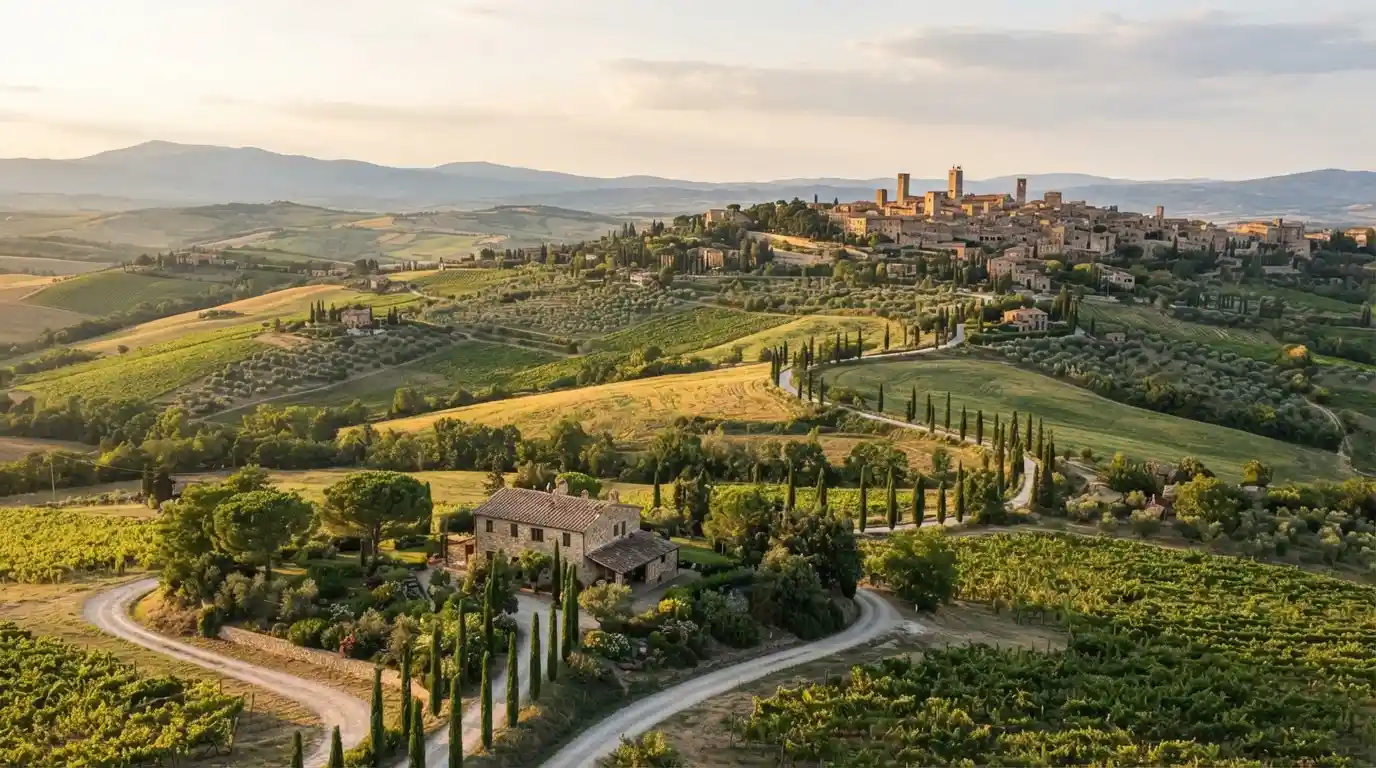
Choosing the best places to visit in Tuscany and Umbria depends on the type of experience you want. Tuscany is famous for Florence, Siena, rolling countryside, wine regions, and art-filled towns, while neighboring Umbria offers a quieter atmosphere, historic hilltop communities, religious heritage, and beautiful rural scenery.
A trip through both regions can combine major cultural attractions with slower countryside experiences. Whether you are planning a first visit to Italy, a romantic getaway, a road trip, or a longer European vacation, these destinations provide plenty of variety.
Best Places to Visit in Tuscany and Umbria
1. Florence, Tuscany
Florence is one of the most important cultural destinations in Tuscany and an excellent starting point for exploring the region. The city is closely associated with Renaissance art and architecture, with landmarks such as the Duomo, Ponte Vecchio, Palazzo Vecchio, and the Uffizi Gallery defining its historic center.
Spend at least two days exploring Florence if your itinerary allows. Walk through the historic streets, visit major museums, enjoy views from Piazzale Michelangelo, and leave time for Tuscan food and local markets.
2. Siena, Tuscany
Siena offers a different experience from Florence, with a medieval atmosphere that remains central to its identity. The Piazza del Campo is the city’s most recognizable public space and hosts the famous Palio horse race.
The Siena Cathedral, narrow historic streets, and surrounding countryside make the city an excellent choice for travelers who want architecture, history, and authentic Tuscan scenery in one destination.
3. San Gimignano, Tuscany
San Gimignano is famous for its medieval towers rising above the Tuscan countryside. The town’s compact historic center makes it particularly enjoyable for walking.
Visitors can explore Piazza della Cisterna, Piazza del Duomo, historic churches, small shops, and panoramic viewpoints. San Gimignano is also a natural addition to a Tuscany road trip because of its location between several major destinations.
4. Pisa, Tuscany
Pisa is best known for its Leaning Tower, but the city offers more than one iconic landmark. The Piazza dei Miracoli brings together the cathedral, baptistery, cemetery, and famous tower in a remarkable architectural complex.
Pisa works well as a day trip, particularly for travelers who want to combine its major attractions with other Tuscan destinations. If you are interested in scenic European destinations beyond Italy, you can also explore popular places to visit in Barcelona for another architecture-rich city experience.
5. Lucca, Tuscany
Lucca is one of Tuscany’s most charming historic cities. Its preserved Renaissance walls create an unusual ring around the old town and provide an enjoyable walking and cycling route.
Inside the walls, visitors can discover attractive squares, historic churches, traditional streets, cafés, and local shops. Lucca is a good choice for travelers who prefer a relaxed city experience instead of a packed sightseeing schedule.
6. Val d’Orcia, Tuscany
Val d’Orcia is the kind of landscape many travelers picture when they imagine Tuscany. Rolling hills, cypress-lined roads, vineyards, farmhouses, and golden fields create an especially scenic setting.
The area is ideal for a road trip, photography, countryside walks, and slow travel. Towns such as Pienza and Montalcino provide convenient stops while exploring the valley.
7. Pienza, Tuscany
Pienza is a small hill town in Val d’Orcia known for its Renaissance planning and panoramic views across the surrounding countryside. Its historic center is compact enough to explore on foot.
The town is also known for Pecorino cheese, making it an appealing stop for travelers interested in Tuscan food traditions as well as architecture and scenery.
8. Montalcino, Tuscany
Montalcino sits on a hill surrounded by vineyards and is closely associated with Brunello di Montalcino wine. Even travelers who are not particularly interested in wine can appreciate the town’s medieval character and countryside views.
It is a strong choice for a scenic Tuscany itinerary, especially when combined with other destinations in Val d’Orcia.
9. Arezzo, Tuscany
Arezzo is an excellent option for travelers looking beyond Tuscany’s most famous tourist centers. The city combines medieval architecture, historic churches, museums, traditional squares, and a strong artistic heritage.
Its location in eastern Tuscany also makes it useful for travelers building a broader route through central Italy.
10. Cortona, Tuscany
Cortona is a picturesque hill town overlooking the Val di Chiana. Steep streets, stone buildings, small piazzas, and expansive countryside views give it a distinctive Tuscan character.
The town is especially appealing for travelers who enjoy slower itineraries, photography, local restaurants, and scenic walks.
11. Perugia, Umbria
Perugia is one of the best places to begin exploring Umbria. The regional capital combines medieval streets, historic architecture, museums, lively squares, and a strong university atmosphere.
The city’s elevated position also provides attractive views across the Umbrian landscape. Perugia can serve as a convenient base for exploring several nearby hill towns.
12. Assisi, Umbria
Assisi is one of the most important cultural and religious destinations in Umbria. The town is associated with Saint Francis and is home to the impressive Basilica of Saint Francis.
Beyond the basilica, Assisi rewards visitors with stone streets, historic buildings, churches, viewpoints, and peaceful corners overlooking the surrounding countryside. It is an essential stop for travelers interested in Italian heritage and religious history.
13. Orvieto, Umbria
Orvieto sits dramatically on a volcanic plateau and is one of Umbria’s most distinctive hill towns. Its cathedral is the centerpiece of the historic city, while the surrounding streets are filled with restaurants, shops, churches, and historic buildings.
Orvieto is also known for its underground tunnels and caves, which reveal another layer of the town’s long history. Its elevated setting makes it particularly memorable for first-time visitors to Umbria.
14. Spello, Umbria
Spello is a small Umbrian hill town known for its stone architecture, historic streets, Roman remains, and colorful seasonal displays. It is easy to explore on foot and works well as a quieter alternative to larger tourist destinations.
The town’s location between Assisi and Foligno makes it convenient for travelers exploring central Umbria by car.
15. Gubbio, Umbria
Gubbio is one of Umbria’s most atmospheric medieval towns. Built against the slopes of Mount Ingino, it features stone buildings, steep streets, historic palaces, and impressive views.
The Palazzo dei Consoli and Piazza Grande are among the highlights. Gubbio is a particularly good choice for travelers who enjoy medieval architecture and less crowded destinations.
16. Todi, Umbria
Todi sits on a hill above the Tiber Valley and combines historic architecture with sweeping views of the Umbrian countryside. Its central Piazza del Popolo is surrounded by important medieval and Renaissance buildings.
Todi’s slower pace makes it suitable for travelers who want to experience Umbria without rushing between major attractions.
17. Spoleto, Umbria
Spoleto blends Roman, medieval, and later architectural influences. The town is particularly known for its cathedral, fortress, historic bridges, and cultural events.
Its dramatic hillside setting adds to the appeal, while the surrounding countryside provides opportunities for scenic drives and outdoor exploration.
18. Montefalco, Umbria
Montefalco is sometimes called the “balcony of Umbria” because of its elevated position and broad views over the surrounding countryside. The town is closely connected with local wine production and traditional Umbrian cuisine.
It is an excellent stop for travelers interested in food, wine, rural landscapes, and small historic towns.
19. Lake Trasimeno, Umbria
Lake Trasimeno offers a change of scenery from the hill towns and historic cities of central Italy. The lake is surrounded by villages, countryside, walking areas, and viewpoints.
It can be a relaxing addition to an Umbria itinerary, especially during warmer months when travelers want time near the water. For travelers comparing different seasonal destinations, the broader September and October travel ideas can also help with planning.
20. Spello and the Umbrian Countryside
One of the best ways to experience Umbria is not to focus exclusively on individual towns. The countryside between destinations is part of the attraction, with olive groves, vineyards, farms, wooded hills, and quiet roads connecting historic communities.
A flexible road trip allows travelers to combine larger destinations such as Perugia and Assisi with smaller towns such as Spello, Montefalco, and Todi.
Tuscany vs. Umbria: Which Should You Visit?
Tuscany is usually the better choice for first-time visitors who want major Renaissance attractions, famous art museums, iconic countryside, and well-known wine destinations. Florence, Siena, San Gimignano, and the Val d’Orcia provide a wide range of experiences.
Umbria is often better suited to travelers who prefer a quieter atmosphere, medieval hill towns, religious heritage, local food, and rural scenery. The region can feel less hurried while still offering significant cultural attractions.
If you have enough time, combining both regions is the strongest option. Their proximity makes it possible to create an itinerary that moves between major cultural centers and smaller countryside destinations.
How Many Days Do You Need for Tuscany and Umbria?
A short trip of five to seven days can cover several major destinations, but a longer itinerary of 10 to 14 days allows for a more relaxed experience.
For a week, consider spending several nights in Tuscany before continuing to Umbria. For two weeks, you can include Florence, Siena, the Val d’Orcia, smaller Tuscan towns, Perugia, Assisi, Orvieto, and several Umbrian villages without making every day feel rushed.
Travelers who enjoy slow tourism should consider staying in one or two countryside accommodations rather than changing hotels every night. This makes it easier to explore local villages, vineyards, restaurants, and scenic roads.
Best Time to Visit Tuscany and Umbria
Spring and fall are among the most appealing seasons for exploring Tuscany and Umbria. Temperatures are generally comfortable for walking, countryside drives, and sightseeing, while the landscapes can be particularly attractive.
Summer brings longer days and lively tourism, but popular destinations can become busy. Winter is quieter and can work well for travelers focused on historic cities, museums, food, and slower travel.
If you are planning a wider European trip, you may also want to compare these regions with European destinations to visit in January, European winter destinations, and relaxing places to visit in Europe.
Tips for Exploring Tuscany and Umbria
- Use Florence as a starting point: The city is a convenient gateway to many Tuscan attractions.
- Consider renting a car: A vehicle is especially useful for countryside destinations and smaller hill towns.
- Do not overpack your itinerary: Tuscany and Umbria are best experienced at a slower pace.
- Stay outside major cities: Countryside accommodations can provide a more immersive experience.
- Plan around interests: Art lovers, food travelers, wine enthusiasts, photographers, and history fans can all build different itineraries.
- Reserve popular attractions: Major museums and famous landmarks can become busy during peak travel periods.
- Allow time for spontaneous stops: Small villages, viewpoints, cafés, and countryside roads can become some of the highlights of the trip.
More European Travel Inspiration
Tuscany and Umbria are only part of a much larger European travel experience. If you are extending your trip, consider exploring Switzerland, Germany, Normandy and Brittany, Scotland, and Southern Italy.
For travelers looking for affordable options, cheap places to visit in Europe can provide additional ideas. Those interested in dramatic landscapes can also explore the Black Forest and other scenic European regions.
Final Thoughts
The best places to visit in Tuscany and Umbria combine famous cultural landmarks with smaller destinations that reward travelers who take their time. Florence and Siena provide world-class history and architecture, while San Gimignano, Val d’Orcia, and Montalcino showcase Tuscany’s countryside character.
Across the regional border, Perugia, Assisi, Orvieto, Spello, Gubbio, Todi, and Montefalco offer medieval streets, historic churches, local traditions, and beautiful Umbrian landscapes.
Rather than trying to see everything in one rushed itinerary, choose a mix of major attractions and smaller towns. That balance is what makes traveling through Tuscany and Umbria such a memorable experience.