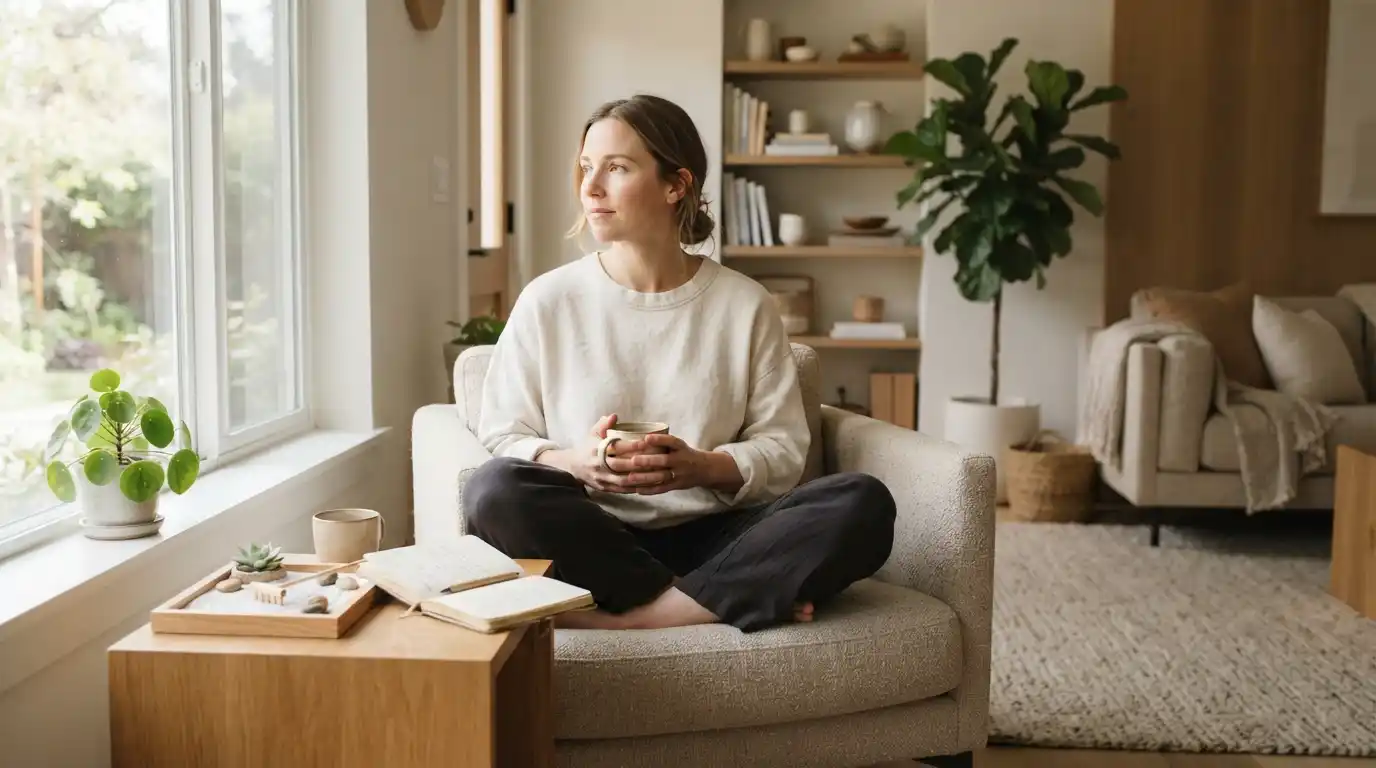
Mindful living does not require completely changing your schedule or spending hours meditating. It can begin with small habits such as taking a few intentional breaths, creating a calmer home environment, stepping away from your phone, enjoying a quiet cup of tea, or spending a few minutes reflecting on what matters most.
The goal is not perfection. It is to make your daily life more deliberate, peaceful, and present.
What Is a Zenify Lifestyle?
A Zenify lifestyle can be understood as an intentional approach to everyday living that emphasizes mindfulness, simplicity, balance, and awareness. Instead of rushing from one task to another, you create small opportunities to slow down and pay attention to the present moment.
This approach can influence many parts of your day, including your morning routine, workspace, home environment, personal habits, digital behavior, and evening routine.
For example, you might begin your morning without immediately checking your phone, spend five minutes breathing quietly, organize your surroundings before starting work, or take a short walk without listening to notifications. These small decisions can make ordinary routines feel more intentional.
Mindful living can also complement other lifestyle interests. If you enjoy exploring different lifestyle approaches, mindfulness can become another practical layer of your everyday routine rather than a separate activity.
Why Mindful Living Matters in a Busy World
Constant stimulation can make it difficult to focus on one thing at a time. Phones, computers, social media, work messages, and entertainment compete for attention throughout the day.
A mindful lifestyle creates intentional pauses between those demands. Instead of allowing every notification or responsibility to determine where your attention goes, you become more deliberate about how you spend your time.
This does not mean avoiding technology, work, or social activities. It means creating a healthier relationship with them.
A simple five-minute breathing exercise, a quiet meal, a short walk, or an organized workspace can become a useful transition between periods of activity.
Start Your Day With Intention
The first part of the day can strongly influence how the rest of the day feels. A rushed morning often creates a sense of urgency before important tasks have even started.
Instead, consider building a simple morning ritual around a few repeatable actions:
- Wake up without immediately checking social media.
- Drink a glass of water.
- Take several slow, deliberate breaths.
- Stretch or walk for a few minutes.
- Write down one priority for the day.
- Spend a few quiet minutes without digital distractions.
You do not need to complete a long checklist. The purpose is simply to give yourself a calm starting point before the demands of the day take over.
Create a Calmer Home Environment
Your surroundings can influence how easy it feels to relax and concentrate. A crowded or disorganized environment may create additional visual stimulation, while a simple and intentional space can make quiet moments easier to enjoy.
Start with one small area rather than attempting to reorganize your entire home.
- Remove unnecessary objects from a frequently used surface.
- Keep a comfortable chair or cushion available for quiet time.
- Add a plant or natural element.
- Use softer lighting when you want to relax.
- Keep journals or other mindfulness tools within easy reach.
People interested in creating a more intentional living environment may also enjoy ideas such as minimalist home decor inspired by nature. The same principle applies to mindfulness: your surroundings should support the experience you want to create.
Make Meditation Easier to Maintain
Meditation does not have to involve a complicated setup. Beginners can start with just a few minutes and gradually increase the length of their practice as it becomes more comfortable.
Find a quiet location, sit comfortably, and focus your attention on your natural breathing. When your thoughts wander, notice that they have wandered and gently return your attention to your breath.
The important part is repetition. A short practice that you actually maintain is generally more useful than an ambitious routine that becomes difficult to sustain.
If you are interested in combining mindfulness with physical wellness, simple movement can also complement meditation. For broader wellness inspiration, you can explore health and fitness lifestyle ideas alongside your mindfulness routine.
Practice Mindfulness During Ordinary Activities
One of the most useful aspects of mindful living is that it does not have to happen in a meditation session.
You can practice awareness during activities you already perform every day.
Mindful Eating
Instead of eating while scrolling through your phone or watching television, occasionally give your full attention to the meal. Notice the smell, texture, temperature, and flavor of the food.
Mindful Walking
During a short walk, notice your surroundings rather than automatically reaching for your phone. Pay attention to your footsteps, breathing, weather, sounds, and movement.
Mindful Work
When possible, focus on one task at a time. Silence unnecessary notifications and take short pauses between major tasks.
Mindful Conversations
Give people your attention when they are speaking. Listening without simultaneously checking your phone or preparing your next response can make everyday conversations more meaningful.
Build a Mindful Digital Routine
Technology is useful, but constant digital stimulation can make it difficult to experience genuine quiet. A mindful lifestyle therefore includes being intentional about when and how you use screens.
Try a few practical changes:
- Keep your phone away during meals.
- Turn off nonessential notifications.
- Set specific times to check email and social media.
- Take short screen-free breaks during the workday.
- Avoid unnecessary scrolling before bed.
- Replace some digital entertainment with reading, walking, journaling, or conversation.
If digital habits are taking up too much of your attention, creating a structured break can make the transition easier. The goal is not to eliminate technology but to prevent it from controlling every quiet moment.
Bring Mindfulness Into Your Workspace
Your workspace is another opportunity to make mindful living practical. Whether you work from home or in an office, small environmental changes can create useful reminders to pause.
Keep your immediate workspace reasonably organized and establish a short reset ritual between tasks. This might involve standing up, stretching, taking several breaths, or simply looking away from your screen for a moment.
People who spend long periods at a desk can also incorporate small wellness habits throughout the workday. For example, choosing practical equipment for your daily setup can help make work and commuting more comfortable, while intentional breaks can help you mentally separate work from personal time.
Use Nature as a Mindfulness Anchor
Nature can provide a simple way to slow down and reconnect with the present. You do not need to plan an elaborate outdoor trip. A nearby park, garden, walking trail, or even a quiet outdoor space can provide a change of pace.
When spending time outdoors, try temporarily putting your phone away and observing your surroundings. Notice the movement of trees, changes in light, sounds, temperature, and the sensation of walking.
Travel can also provide opportunities for mindful experiences. If you enjoy exploring destinations, consider incorporating quiet scenic stops rather than filling every part of your itinerary with activities. Guides such as spring destinations in Wisconsin or summer destinations in Idaho can inspire slower, nature-focused travel ideas.
Turn Everyday Rituals Into Mindful Moments
One of the easiest ways to build a sustainable routine is to attach mindfulness to something you already do.
For example:
- After waking up, take five slow breaths.
- While coffee or tea is brewing, stand quietly instead of checking your phone.
- Before starting work, write down your top priority.
- After lunch, take a short walk.
- Before dinner, pause and take a few breaths.
- Before bed, write down one thing you appreciated about the day.
These small anchors make mindfulness part of your existing schedule instead of creating another demanding task.
Try a Simple Evening Wind-Down
A mindful lifestyle should not stop when the workday ends. An evening routine can help create a clear transition from productivity to rest.
Consider dimming bright lights, putting devices aside, preparing your belongings for the following day, reading a few pages of a book, stretching gently, or writing in a journal.
Some people also enjoy reflective or creative activities in the evening. A relaxing coloring activity, for example, can provide a simple screen-free break. The therapeutic approach to coloring and mindful relaxation can fit naturally into a slower evening routine.
Mindfulness Does Not Have to Be Perfect
A common mistake is assuming that mindful living means remaining calm and focused all day. Real life does not work that way.
You will become distracted. You will have stressful days. You may skip your routine for several days. You may spend too much time on your phone or lose patience with someone.
None of these experiences means that the practice has failed.
The useful question is simply: Can I return to the present moment?
That return can happen at any time. Take a breath, notice your surroundings, recognize what you are feeling, and decide what deserves your attention next.
Create a Sustainable Zenify Lifestyle
The best routine is one that fits your actual life. Instead of copying someone else’s elaborate morning or evening schedule, identify a few practices that feel realistic for you.
A simple weekly framework could look like this:
- Daily: Five minutes of quiet breathing or reflection.
- Daily: One screen-free meal.
- Daily: A short outdoor walk or movement break.
- Several times a week: Journaling or another reflective activity.
- Weekly: A longer period without unnecessary digital stimulation.
- Weekly: Time spent organizing your home or workspace.
If you enjoy fitness as part of your overall routine, mindful movement can also complement activities such as those discussed in building a more active lifestyle or finding inspiration through sports and personal challenges.
Simple Zenify Lifestyle Ideas for Different Parts of the Day
Morning
Start slowly, avoid immediate digital stimulation, drink water, stretch, breathe, and choose one clear priority.
Workday
Take short pauses between tasks, keep your workspace organized, and intentionally separate focused work from digital distractions.
Afternoon
Use a short walk, breathing exercise, or quiet drink break to reset your attention rather than automatically reaching for social media.
Evening
Reduce stimulation, spend time on a relaxing offline activity, and reflect on the day before preparing for sleep.
Weekend
Allow more space for nature, hobbies, family, reading, travel, or other activities that help you feel present rather than rushed.
Mindful Living Can Be Simple
The idea behind a Zenify lifestyle is not to create another demanding productivity system. It is almost the opposite. The purpose is to make room for awareness within the life you already have.
You do not need expensive equipment, a perfect home, a completely empty schedule, or hours of free time. Start with one small habit and repeat it consistently.
Over time, those small moments can change how you experience ordinary activities. Drinking coffee can become a pause. Walking can become an opportunity to observe. Cleaning can become a reset. A quiet room can become a place to breathe.
That is where mindful living becomes practical: not by escaping everyday life, but by experiencing more of it with intention.
Conclusion
A Zenify lifestyle is ultimately about creating more awareness, balance, and calm within everyday life. You can begin with a few minutes of meditation, a screen-free meal, a quieter morning, a more intentional workspace, or a simple evening reflection.
The most important step is to start small enough that you can continue. Choose one habit today, repeat it tomorrow, and gradually build from there.
Mindfulness does not require you to live a completely different life. It simply invites you to become more present in the life you already have.