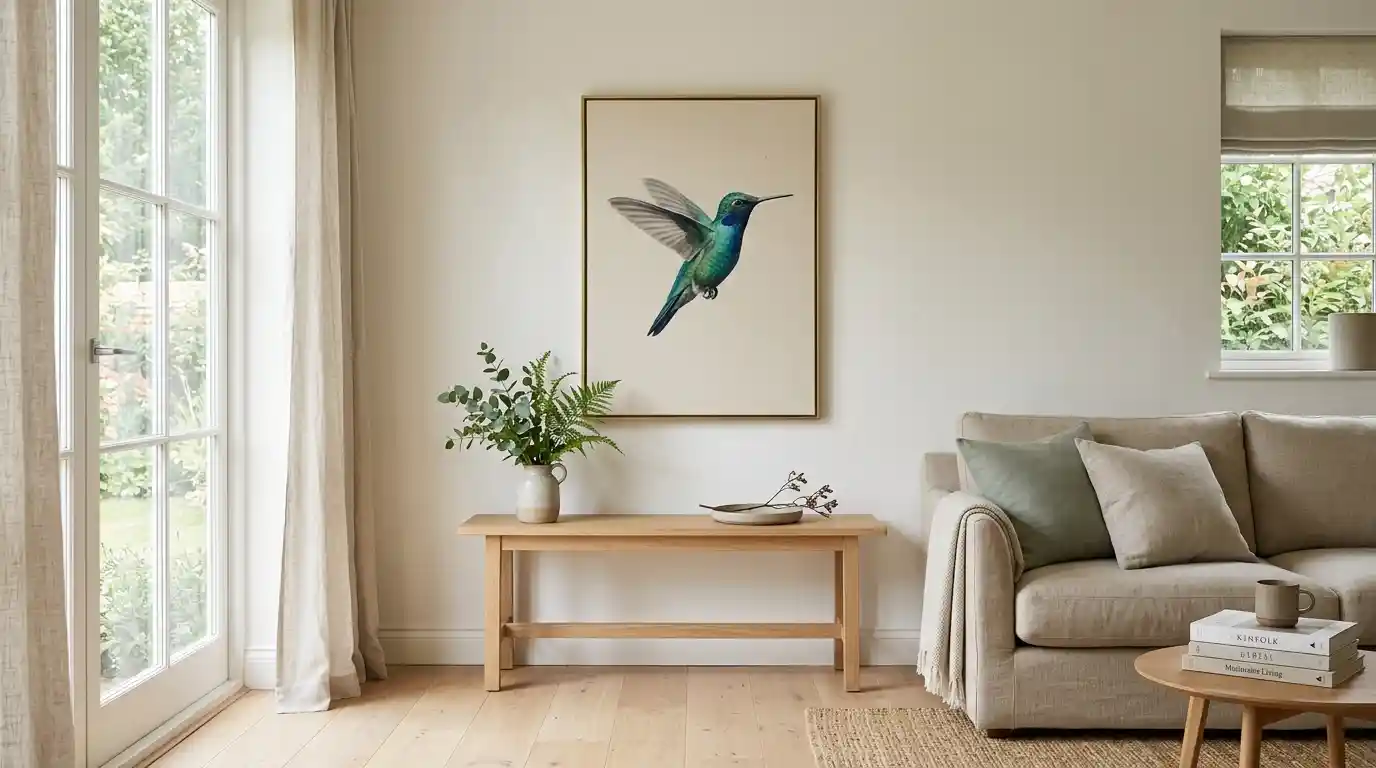
Whether you are refreshing a living room, decorating a bedroom, or adding personality to a small apartment, minimalist design provides a practical starting point. Instead of filling every surface with ornaments, focus on a few meaningful details, natural materials, and functional furniture. These principles also complement broader home improvement ideas when you want your space to feel more cohesive.
What Makes Hummingbird Home Decor Special?
Hummingbirds are admired for their small size, delicate features, and shimmering feathers. In interior design, their shapes and colors can introduce movement and visual interest without requiring bold patterns or oversized decorations.
Popular options include framed hummingbird illustrations, ceramic figurines, embroidered cushions, glass ornaments, metal wall sculptures, and understated botanical prints. Each works best when it complements the existing furniture and color scheme.
The goal is not to create a themed room in which every object features a bird. Instead, use one or two recognizable hummingbird elements alongside neutral furnishings, natural textures, and simple decorative accessories.
Choose a Calm, Nature-Inspired Color Palette
Color is one of the easiest ways to establish a natural atmosphere. Hummingbird-inspired interiors can draw from soft greens, muted teal, warm white, pale blush, sandy beige, and gentle metallic accents.
- Soft green: Creates a connection with foliage and works well with wood furniture.
- Muted teal: Adds a cool accent without overwhelming a neutral room.
- Warm white: Keeps walls and larger surfaces bright and visually uncluttered.
- Blush and lavender: Introduce delicate color through artwork, cushions, or small accessories.
- Brass or copper: Adds warmth when used sparingly in frames, lamps, or decorative details.
For additional nature-inspired color ideas, landscapes such as the Black Forest and the Hunza Valley offer examples of how forest greens, earthy browns, mountain neutrals, and natural light can work together visually.
Use Natural Materials and Interesting Textures
Minimalist decor becomes more inviting when different textures create depth. Pair smooth ceramic objects with linen cushions, woven baskets, natural wood, or a soft wool rug. These materials help prevent a neutral interior from feeling flat.
Glass and crystal hummingbird ornaments can catch daylight, while brushed metal sculptures provide a more understated alternative. Wooden frames and handmade ceramics suit rooms where warmth and craftsmanship are priorities.
When choosing materials, consider durability, maintenance, and the room’s everyday use. If you are updating several elements at once, practical home improvement planning can help you coordinate finishes, furniture, and decorative details.
Minimalist Hummingbird Decor for Every Room
Living Room
Choose one focal point, such as a framed hummingbird illustration above a sofa or a small metal sculpture on a console table. Keep surrounding surfaces relatively clear and repeat one accent color through a cushion or vase.
Floating shelves can display a few carefully selected objects, but avoid filling every available space. If your living room opens onto a garden or patio, use similar colors indoors and outdoors to create a natural visual connection.
Bedroom
Bedrooms benefit from soft fabrics, restrained patterns, and gentle lighting. A hummingbird print above a bedside table, embroidered pillowcases, or a subtle botanical design can introduce the theme without making the room feel busy.
Combine these accents with neutral bedding, a simple bedside lamp, and uncluttered storage. A calm arrangement can also complement a mindful daily routine, particularly when paired with ideas from mindful lifestyle design.
Kitchen and Dining Area
In kitchens, hummingbird motifs work well on a small serving tray, ceramic mug, framed print, or decorative plate. Keep frequently used counters clear so that the decor does not interfere with food preparation.
For dining spaces, a simple centerpiece with fresh greenery and a small decorative accent can create a natural focal point. Choose washable fabrics and durable surfaces wherever spills and frequent use are likely.
Bathroom and Entryway
A framed bird illustration, a small wall accent, or a muted botanical print can brighten a bathroom or entryway. In damp rooms, choose artwork and materials suitable for humidity, and avoid placing delicate ornaments where they may be knocked over.
Entryways also benefit from practical storage. Hooks, baskets, and a slim console keep everyday items organized while allowing a single decorative piece to stand out.
Bring Nature Indoors Without Creating Clutter
Nature-inspired design does not depend on collecting many decorations. A healthy-looking houseplant, a wooden accessory, natural daylight, and a carefully placed hummingbird motif can establish the desired atmosphere.
Consider how your windows, garden, and outdoor spaces influence the interior. A well-maintained boundary or patio can extend the visual theme beyond the room, while home fencing considerations may be relevant when planning a more cohesive outdoor living area.
Travel landscapes can also inspire the use of color and texture. The blues and greens associated with the Great Barrier Reef, for example, may suggest a restrained teal accent, while the natural scenery of Switzerland in winter can inspire a palette of white, gray, and muted natural tones. Use these ideas as inspiration rather than attempting to reproduce an entire landscape indoors.
Lighting and Placement Matter
Natural light can reveal the subtle color shifts in glass, ceramic glazes, and metallic finishes. Place reflective ornaments where they receive comfortable daylight, but avoid positioning them where glare becomes distracting.
For evening use, warm or neutral-white lighting can create a welcoming atmosphere. A table lamp or adjustable fixture can highlight a small display without illuminating every decorative object equally.
Before hanging wall art, consider its size relative to the furniture beneath it. A small illustration may disappear above a large sofa, while an oversized piece can overwhelm a compact wall. Measure the area first and maintain enough empty space around the artwork.
Keep the Home Functional and Pet-Friendly
Decorative choices should suit the people and animals who use the space. Glass ornaments, tiny figurines, and unsecured sculptures may be unsuitable for homes with curious pets or young children. Choose sturdy materials and place fragile objects on secure shelves away from edges.
Pet owners can explore general pet-supply considerations and pet-friendly living ideas when planning a comfortable household. Keep potentially toxic plants out of pets’ reach and verify plant safety before bringing new greenery indoors.
For larger home projects, professional home service options may be useful when repairs or installation work falls outside your own skills. The right balance combines attractive styling with safe, practical everyday use.
Artisan Pieces Versus Mass-Produced Decorations
Handcrafted hummingbird decor may offer distinctive textures, small variations, and individual character. Mass-produced pieces can be more affordable and easier to replace. Neither option is automatically better; the right choice depends on your budget, preferred style, and intended use.
Before buying an item, consider its material, finish, construction, cleaning requirements, and relationship to the rest of the room. A single well-made ornament that you genuinely enjoy may provide more lasting value than several inexpensive accessories that quickly become clutter.
For a broader approach to thoughtful living, explore lifestyle ideas for everyday spaces and consider whether each new purchase contributes to comfort, function, or personal meaning.
Common Hummingbird Decor Mistakes to Avoid
- Using too many motifs: Repeating hummingbirds on every surface can make the theme feel overwhelming.
- Mixing too many colors: Select a small palette and repeat it consistently.
- Ignoring scale: Match artwork and accessories to the size of the room and furniture.
- Choosing fragile items carelessly: Consider children, pets, foot traffic, and placement.
- Buying without a plan: Measure spaces and decide where each piece will go before purchasing it.
- Neglecting organization: Use drawers, baskets, and storage solutions to preserve clear surfaces.
When clutter is the main problem, reviewing storage and space-management options can help you decide what to keep accessible and what to store elsewhere. The objective is a home that feels intentional, not a room that simply contains fewer objects.
Care and Maintenance for Long-Lasting Decor
Dust delicate sculptures and framed pieces regularly with suitable materials. Clean glass according to the manufacturer’s instructions, polish metal only when appropriate, and wash patterned textiles according to their care labels.
Check wall fixings periodically and keep fragile ornaments away from high-traffic areas. Avoid prolonged direct sunlight on materials that may fade or discolor. If you are refreshing a room, coordinate maintenance with any planned repairs so that artwork and accessories are not exposed to dust or accidental damage.
Final Thoughts
Hummingbird home decor brings nature-inspired detail into a home through delicate motifs, organic textures, thoughtful color, and carefully controlled visual accents. Its success depends less on the number of decorations you own and more on how well each item works with the surrounding space.
Start with one meaningful hummingbird piece, build a restrained color palette, and introduce natural materials where they serve a purpose. With appropriate lighting, practical storage, and regular care, you can create an interior that feels personal, peaceful, and functional without sacrificing the simplicity of minimalist design.