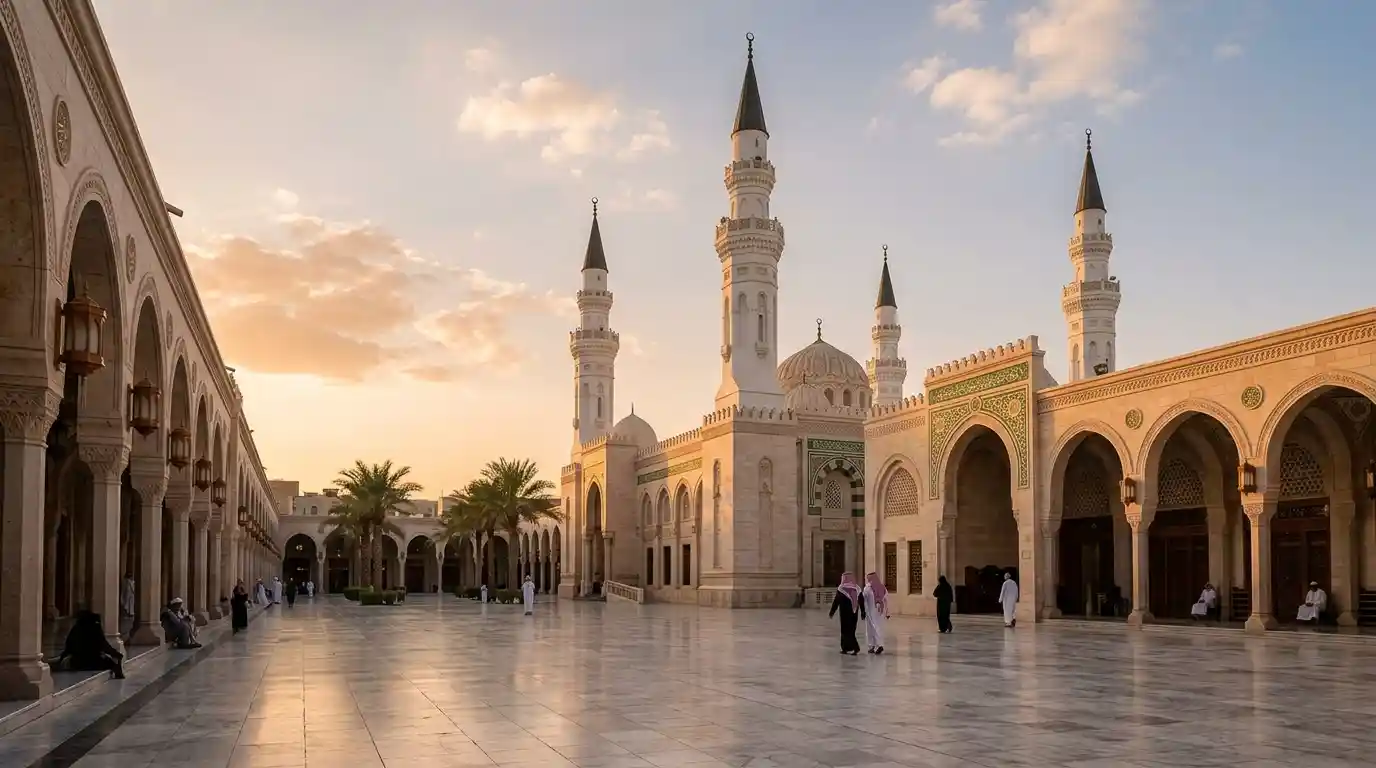
Saudi Arabia is home to some of the most significant destinations in Islamic history, from the holy cities of Makkah and Madinah to historic mosques, ancient pilgrimage routes, and traditional settlements that preserve the Kingdom’s cultural identity. For Muslim travelers, these places offer opportunities for worship, reflection, and a deeper understanding of the events that shaped Islam. For history and culture enthusiasts, they reveal centuries of architecture, scholarship, community life, and regional traditions.
This guide explores important Islamic landmarks and cultural destinations across Saudi Arabia, explains what makes each place special, and offers practical tips for planning a respectful and rewarding journey.
1. Masjid al-Haram, Makkah
Masjid al-Haram, also known as the Grand Mosque, is the holiest mosque in Islam and the focal point of Hajj and Umrah. At its center stands the Kaaba, toward which Muslims around the world turn during their daily prayers. For pilgrims, visiting this sacred sanctuary is a profound spiritual experience.
The mosque has expanded over many centuries to accommodate worshippers arriving from across the world. Its vast prayer areas, surrounding courtyards, and organized pilgrimage facilities reflect both the enduring importance of the site and the practical needs of millions of visitors.
What makes it special?
- The Kaaba: The central symbol of Muslim prayer and the focal point of circumambulation during Tawaf.
- Hajj and Umrah: The Grand Mosque is central to the principal rites of these pilgrimages.
- Islamic heritage: The sanctuary connects contemporary worshippers with a religious tradition spanning many generations.
Visitor tip: Plan prayer times, transport, and walking routes in advance, particularly during Ramadan, Hajj, and other busy periods. Follow official pilgrimage instructions and local guidance throughout your visit.
2. Al-Masjid an-Nabawi, Madinah
Al-Masjid an-Nabawi, or the Prophet’s Mosque, is one of Islam’s most revered places. Located in Madinah, it is closely associated with Prophet Muhammad’s life after the Hijrah from Makkah and the development of the early Muslim community.
The mosque is known for its expansive prayer spaces, distinctive green dome, elegant architecture, and welcoming atmosphere for worshippers. Its historical importance extends beyond its physical structure: Madinah became a center of religious learning, community organization, and Islamic scholarship during the early years of Islam.
Highlights of a visit
- Spend time in prayer and reflection within the mosque’s designated worship areas.
- Learn about the Hijrah and Madinah’s role in early Islamic history.
- Explore the surrounding area while respecting the mosque’s religious significance.
Visitors should observe the mosque’s current access arrangements and instructions, particularly for restricted areas and visits associated with Rawdah. A calm, considerate approach helps maintain a respectful environment for everyone.
3. Quba Mosque, Madinah
Quba Mosque is widely recognized as the first mosque established in Islam. Situated in the Quba area of Madinah, it is associated with Prophet Muhammad’s arrival in the region during the Hijrah. Its importance makes it a meaningful stop for pilgrims and anyone interested in the earliest history of the Muslim community.
The mosque has undergone extensive development over time, combining its historical significance with facilities designed to welcome modern-day worshippers. Its courtyards and prayer areas provide space for visitors to pray and reflect on the foundations of Muslim community life.
Why visit Quba Mosque?
- Understand its connection with the Hijrah and the beginning of the Muslim community in Madinah.
- Experience a landmark associated with early Islamic worship.
- Include an important historical mosque in a broader Madinah itinerary.
Visitor tip: Check current visiting arrangements and prayer facilities before traveling. Dress modestly, maintain quiet around worshippers, and avoid obstructing entrances or prayer areas when taking photographs.
4. Al-Masjid Al-Qiblatain, Madinah
Al-Masjid Al-Qiblatain, commonly called the Mosque of the Two Qiblas, is associated with the change in the direction of Muslim prayer from Jerusalem toward the Kaaba in Makkah. This event is an important part of Islamic history and gives the mosque its distinctive name.
The mosque offers visitors a chance to connect a familiar aspect of everyday Muslim worship with a major development in the early Muslim community. Although the building has changed through renovation and expansion, its historical association remains central to its significance.
For travelers exploring Madinah’s religious heritage, Al-Masjid Al-Qiblatain complements visits to the Prophet’s Mosque and Quba Mosque. Together, these sites help illustrate the city’s place in the development of Islam.
5. Mount Uhud and the Uhud Battlefield, Madinah
Mount Uhud is one of the best-known natural landmarks associated with early Islamic history. The area is connected with the Battle of Uhud, fought between the early Muslim community and the Quraysh of Makkah. The battle is remembered for its lessons about discipline, perseverance, leadership, and the human cost of conflict.
Many visitors include the area in a Madinah heritage itinerary to reflect on the events described in Islamic historical accounts. The surrounding landscape also offers a different perspective on the geography of the city and its historic outskirts.
What to keep in mind
- Approach the site as a place of historical and religious importance rather than simply a sightseeing stop.
- Follow local guidance around designated visitation areas and memorial locations.
- Carry water and sun protection when exploring outdoor areas, especially in warm weather.
Mount Uhud is particularly meaningful for travelers who want to understand the challenges faced by the first Muslim community and the lasting lessons associated with the battle.
6. Jannat al-Baqi, Madinah
Jannat al-Baqi is a historic cemetery near the Prophet’s Mosque. It is associated with numerous early Muslims and members of the Prophet’s family, making it an important location in the religious history of Madinah.
The cemetery is not a conventional tourist attraction. Its significance lies in remembrance, reflection, and its connection with generations of the early Muslim community. Visitors should treat the area with particular respect and follow the rules governing access and conduct.
Because access arrangements may vary, check current official guidance before planning a visit. Avoid assuming that every section is open to the public, and do not disrupt people who are praying or paying their respects.
7. The Hira Cultural District and Jabal al-Nour, Makkah
Jabal al-Nour, or the Mountain of Light, is associated with the Cave of Hira, where Islamic tradition places the beginning of the first revelation received by Prophet Muhammad. The mountain has a prominent place in accounts of the early history of Islam.
The Hira Cultural District near the mountain offers a way to explore this heritage through visitor-oriented cultural and educational experiences. Depending on available facilities and current arrangements, visitors may find exhibitions or interpretive resources that explain the setting and its importance.
Reaching the cave involves a steep and physically demanding climb. Visitors should assess their fitness, weather conditions, and available time before attempting the ascent. The mountain is not suitable for everyone, and no one should feel obliged to climb it to appreciate its historical importance.
Visitor tip: Wear suitable footwear, carry water, avoid the hottest hours, and follow all safety instructions. Check local access rules before making the journey.
8. Jabal Thawr, Makkah
Jabal Thawr is associated with the Hijrah, when Prophet Muhammad and Abu Bakr sought shelter in the Cave of Thawr during their journey from Makkah to Madinah. The story is an enduring part of Islamic history and is often remembered for its themes of trust, patience, and perseverance.
The mountain is a rugged natural landmark south of Makkah. Its historical importance makes it of interest to pilgrims and travelers studying the events surrounding the migration. However, visiting the mountain should be approached with realistic expectations: the terrain can be demanding, and the climb requires preparation.
Visitors who do not wish to undertake the ascent can still learn about the Hijrah through educational resources and guided historical programs. Check current local guidance before planning an outdoor visit.
9. Historic Jeddah, Al-Balad
Historic Jeddah, commonly known as Al-Balad, reveals a different dimension of Saudi Arabia’s Islamic heritage. For centuries, Jeddah served as an important gateway for travelers and pilgrims heading toward Makkah by sea. Trade, migration, and pilgrimage helped shape the district’s distinctive architecture and cosmopolitan character.
Traditional buildings, narrow lanes, historic merchant houses, and ornate wooden rawashin window screens give Al-Balad its recognizable appearance. The district also reflects the ways local communities adapted buildings to the coastal climate while accommodating commercial and residential life.
What to explore in Al-Balad
- Traditional architecture: Observe the wooden balconies, historic facades, and coral-stone building traditions.
- Historic streets: Walk through the old urban fabric to appreciate the relationship between homes, shops, and public spaces.
- Local culture: Discover traditional crafts, regional food, and the stories preserved by local businesses and cultural spaces.
Historic Jeddah is especially valuable for understanding how pilgrimage, trade, and everyday life influenced the development of a Saudi coastal city. Allow time to explore respectfully, and check the opening hours of individual museums, historic houses, and cultural venues.
10. At-Turaif District, Diriyah
Located near Riyadh, At-Turaif District in Diriyah is a major heritage destination associated with the first Saudi state. The district’s traditional Najdi mud-brick architecture, historic palaces, and urban remains preserve an important chapter in the political, religious, and cultural history of central Arabia.
At-Turaif is recognized as a UNESCO World Heritage Site. Its historic structures demonstrate how buildings and settlements were adapted to the local environment using materials and architectural traditions suited to the region.
Although it is not a pilgrimage site in the same sense as the holy mosques of Makkah and Madinah, At-Turaif is important for visitors seeking a broader understanding of Saudi history, Islamic-era governance, and the cultural setting in which the modern Kingdom developed.
What makes Diriyah worth visiting?
- Explore historic Najdi architecture and preserved settlement patterns.
- Learn about Diriyah’s role in the first Saudi state.
- Experience a heritage district where conservation and contemporary cultural activities meet.
Allow enough time to explore the designated visitor areas, and check current ticketing, opening hours, and access arrangements before your visit.
11. AlUla Old Town and the Historic Pilgrimage Landscape
AlUla is known for its dramatic sandstone landscapes, archaeological heritage, and historic settlements. Its story extends across many periods, including pre-Islamic civilizations and the development of Islamic pilgrimage routes. This makes the region an excellent destination for travelers interested in the wider history of the Arabian Peninsula.
AlUla Old Town preserves the remains of a traditional settlement whose streets and buildings reflect the needs of a community living in an oasis environment. The wider region also contains archaeological sites and inscriptions that help researchers and visitors understand the movement of people, trade, languages, and religious traditions through the area.
AlUla should not be described solely as an Islamic religious destination. Its value comes from the many historical layers that coexist across the landscape, including evidence from periods before Islam and from later centuries when routes through the region served travelers and pilgrims.
Visitor tip: Use authorized access arrangements for archaeological areas, follow site-preservation rules, and avoid touching or climbing on historic structures and rock inscriptions.
12. Makkah Museum and Islamic Heritage Exhibitions
Museums and cultural exhibitions in and around Makkah can provide additional context for visitors who want to understand the history of the holy city beyond the rituals of pilgrimage. Depending on the venue and its current program, exhibitions may explore the development of the Grand Mosque, Islamic manuscripts, architectural features, historical objects, or the growth of pilgrimage infrastructure.
These experiences can be especially useful for families and first-time visitors who want to connect religious sites with the historical events and cultural practices associated with them.
Before planning a museum visit, confirm the venue’s current name, location, opening hours, admission requirements, and available exhibitions. Not every collection or cultural venue is open every day, and displays can change over time.
13. The Traditional Heritage of Madinah’s Markets and Date Farms
Islamic heritage is preserved not only in mosques and historic landmarks but also in the everyday traditions of communities. Madinah’s date-growing culture, markets, and local food traditions offer visitors a way to explore the region’s relationship with agriculture, hospitality, and commerce.
Dates have long held cultural and practical importance throughout the Arabian Peninsula. Exploring a local market can introduce visitors to different varieties, regional products, and customary ways of welcoming guests. The experience also provides an opportunity to support local businesses and learn about contemporary life in the city.
Choose reputable vendors, ask permission before photographing people or private business areas, and respect local customs when shopping or interacting with residents.
14. Abha and the Cultural Heritage of Asir
For travelers who want to discover Saudi Arabia beyond its most famous religious landmarks, the Asir region offers a distinctive cultural perspective. Abha and nearby heritage settlements are known for mountain landscapes, traditional architecture, local crafts, and regional customs that differ from those found in the central and western parts of the country.
Asir’s built heritage, decorative traditions, and historic villages demonstrate the diversity of Saudi culture. Visiting this region can help travelers understand that the Kingdom’s identity includes a wide range of local histories and architectural styles, alongside its central Islamic heritage.
Although Abha is not a primary Islamic pilgrimage destination, it can be a worthwhile addition to a longer cultural journey through Saudi Arabia. Check travel distances and seasonal weather before combining it with visits to Makkah, Madinah, or Riyadh.
How to Plan a Saudi Arabia Islamic Heritage Trip
Saudi Arabia is a large country, and its major religious and cultural destinations are spread across different regions. A well-planned itinerary makes it easier to balance worship, historical exploration, transport, and rest.
Choose destinations by region
- Makkah: Focus on Masjid al-Haram and relevant historical locations, subject to access and safety guidance.
- Madinah: Explore the Prophet’s Mosque, Quba Mosque, Al-Masjid Al-Qiblatain, Mount Uhud, and other historic sites.
- Jeddah: Reserve time for Al-Balad and the city’s historic connection with pilgrimage and trade.
- Riyadh and Diriyah: Discover At-Turaif and the architectural heritage of central Arabia.
- AlUla and Asir: Add archaeological landscapes, historic settlements, and regional cultural experiences if your schedule permits.
Understand access and religious requirements
Entry requirements and access rules differ by location. Makkah has specific restrictions for non-Muslims, while mosque facilities, archaeological areas, and cultural venues may have their own visitor policies. Confirm the current rules before booking transport or accommodation, and follow official instructions during religious seasons.
Choose a suitable season
Weather can affect outdoor sightseeing, mountain visits, and walking between landmarks. Cooler months are often more comfortable for extended outdoor exploration, but travel demand can rise around religious holidays and peak pilgrimage periods. Check current forecasts and local schedules before finalizing an itinerary.
Dress respectfully and observe local customs
Wear modest clothing appropriate to religious and cultural settings. Follow specific mosque requirements, remove footwear where instructed, and ask before photographing people. Keep noise low in prayer areas and avoid blocking paths, entrances, or other visitors’ access.
Allow time for rest and transport
Do not underestimate the distances between cities or the time needed to navigate busy religious sites. Build breaks into your itinerary, keep essential travel documents accessible, and arrange transport in advance where possible. If you are visiting for Umrah or Hajj, prioritize the required rites and use additional sightseeing time only when it fits your schedule.
Frequently Asked Questions
What are the most important Islamic places to visit in Saudi Arabia?
Masjid al-Haram in Makkah and Al-Masjid an-Nabawi in Madinah are the most prominent sacred destinations. Other significant locations include Quba Mosque, Al-Masjid Al-Qiblatain, Mount Uhud, Jannat al-Baqi, and sites associated with the Hijrah.
Which places in Saudi Arabia are best for Islamic history?
Makkah and Madinah are central to the history of Islam. Historic Jeddah adds insight into pilgrimage and trade, while Diriyah and At-Turaif offer important context about the history and architecture of central Arabia. AlUla provides a wider archaeological perspective on the region’s long history.
Can non-Muslims visit Islamic heritage sites in Saudi Arabia?
Access depends on the destination. Makkah is restricted to Muslims, while many other heritage areas and cultural attractions have different access arrangements. Visitors should verify current official requirements before traveling.
How many days should I plan for an Islamic heritage trip?
The ideal duration depends on whether you are performing Umrah, visiting Madinah, or exploring cultural sites across the country. A short trip may focus on one city, while a broader itinerary covering Makkah, Madinah, Jeddah, and Diriyah requires additional travel time. Check distances and transport options before deciding.
What should I wear when visiting mosques and historic religious sites?
Choose modest, comfortable clothing and follow each site’s specific dress requirements. Visitors should be prepared to remove footwear in designated areas and observe any additional instructions provided by mosque staff.
Are Saudi Arabia’s heritage destinations suitable for families?
Many mosques, museums, historic districts, and cultural attractions can be included in family trips. However, steep climbs, long walks, heat, and crowded pilgrimage areas may be challenging for some visitors. Choose activities according to the needs of everyone in your group.
Explore More Travel Guides
If you enjoy discovering historic destinations, religious heritage, and cultural landscapes, these additional travel guides can help you plan future journeys:
- Places to Visit in Riyadh for Families and Cultural Experiences
- Islamic Places to Visit in Saudi Arabia That Showcase Heritage and Culture
- Best Places to Visit in Aswan, Egypt
- Jaipur or Udaipur: Which Destination Should You Visit?
- Places to Visit in Hunza Valley
- Places to Visit in Japan for History, Culture, and Scenery
- Places to Visit in Kovalam and Trivandrum
- Places to Visit in Kanchipuram, Tamil Nadu
- Historic Towns and Scenic Places to Visit in South Africa
- Places to Visit in Prince Edward County for Historic Sites and Scenic Views
- Places to Visit in Normandy and Brittany
- Places to Visit in the Philippines for Families
- Where Is the Best Place to Visit in Sri Lanka?
- Most Popular Places to Visit in Barcelona
- Top Places to Visit in Southern Italy
- The Best Places to Visit in Malaysia
Conclusion
Saudi Arabia offers a remarkable range of destinations for travelers interested in Islamic faith, history, and cultural heritage. The sacred mosques of Makkah and Madinah remain central to the spiritual journeys of Muslims, while historic sites such as Mount Uhud, Jabal al-Nour, and Jabal Thawr help visitors explore events associated with the early Muslim community.
Beyond the holy cities, Historic Jeddah, Diriyah, AlUla, and the Asir region reveal the architectural traditions, trade connections, and regional identities that have shaped the Kingdom over centuries. By planning carefully, respecting local customs, and learning about each destination before arriving, visitors can experience Saudi Arabia’s heritage in a thoughtful and rewarding way.